Acids, Bases and Salt — Important Questions
Gujarat Board · Class 7 · Science
45 important questions from Acids, Bases and Salt for Gujarat Board Class 7 Science, with answers. Includes multiple choice questions.
Interactive on Super Tutor
Studying Acids, Bases and Salt? Get the full interactive chapter.
Quizzes, flashcards, AI doubt-solver and a step-by-step study plan — built for important questions and more.
Free trial, no card needed.
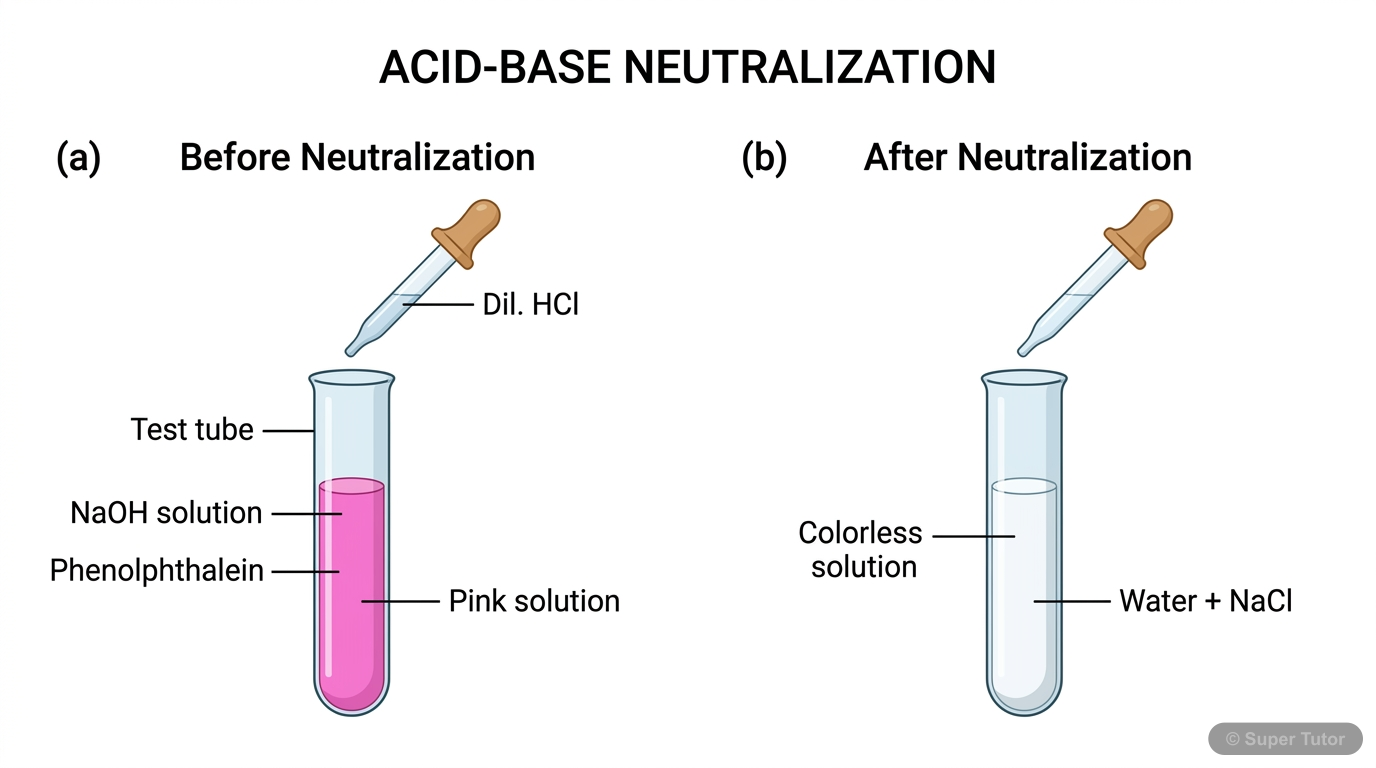
Learn better with visuals Super Tutor pairs illustrations like this with notes and quizzes for Acids, Bases and Salt.
Important Questions from Acids, Bases and Salt
China rose (Gudhal) is used as a natural indicator. What colour does it turn when added to an acidic solution?
Show answer
Dark pink (magenta)
Step 1: China rose petals are used to prepare a natural indicator by soaking them in warm water. Step 2: The coloured water obtained acts as an indicator. Step 3: When this indicator is added to an acidic solution, it turns dark pink or magenta in colour. Step 4: When added to a basic solution, it turns green. Step 5: Neutral solutions do not produce a significant colour change. So magenta = acid, green = base for China rose indicator.
A solution does not change the colour of either red or blue litmus paper. What can you conclude about the nature of this solution?
Show answer
The solution is neutral
Step 1: Litmus is a reliable indicator that changes colour based on the nature of the solution. Step 2: Acids turn blue litmus red. Bases turn red litmus blue. Step 3: If NEITHER red nor blue litmus changes colour, the solution is neither acidic nor basic. Step 4: Such a solution is called a neutral solution. Step 5: Common examples of neutral substances include pure water (distilled water) and sugar solution — they have no effect on litmus paper.
Which acid is injected into the skin when an ant bites?
Show answer
Formic acid
Step 1: When an ant bites, it releases a liquid into the skin. Step 2: This liquid is acidic in nature and causes a burning or stinging sensation. Step 3: The acid found in an ant's sting is called formic acid. Step 4: This acid irritates the skin and causes pain. Step 5: To neutralise formic acid, we apply a base like moist baking soda (sodium hydrogencarbonate) or calamine solution (which contains zinc carbonate) — this neutralisation reaction reduces the pain.
When an acid reacts with a base, the products formed are:
Show answer
Salt and water
Step 1: When an acid and a base are mixed, they react with each other. Step 2: This reaction is called neutralisation because the acid neutralises the base and vice versa. Step 3: The products of this reaction are always salt and water, along with the release of heat. Step 4: The general equation is: Acid + Base → Salt + Water (+ Heat). Step 5: Example: Hydrochloric acid (HCl) + Sodium hydroxide (NaOH) → Sodium chloride (NaCl) + Water (H₂O). Sodium chloride is common table salt!
+41 more questions on Acids, Bases and Salt (Gujarat Board Class 7 Science)
Practise AllFrequently Asked Questions
What are the important topics in Acids, Bases and Salt for Gujarat Board Class 7 Science?
How many important questions are there in Acids, Bases and Salt?
Sources & Official References
Content is aligned to the official syllabus. Refer to the board website for the latest curriculum.
More resources for Acids, Bases and Salt
For serious students
Get the full Acids, Bases and Salt chapter — start free.
Quizzes, flashcards, an AI doubt solver and a study plan for Gujarat Board Class 7 Science. Free to start, no card needed.