Acids, Bases and Salt — Syllabus
Gujarat Board · Class 7 · Science
What Acids, Bases and Salt covers in Gujarat Board Class 7 Science: 4 topics, for the 2026-27 session. Part of the Gujarat Board Class 7 Science syllabus.
Interactive on Super Tutor
Studying Acids, Bases and Salt? Get the full interactive chapter.
Quizzes, flashcards, AI doubt-solver and a step-by-step study plan — built for syllabus and more.
Free trial, no card needed.
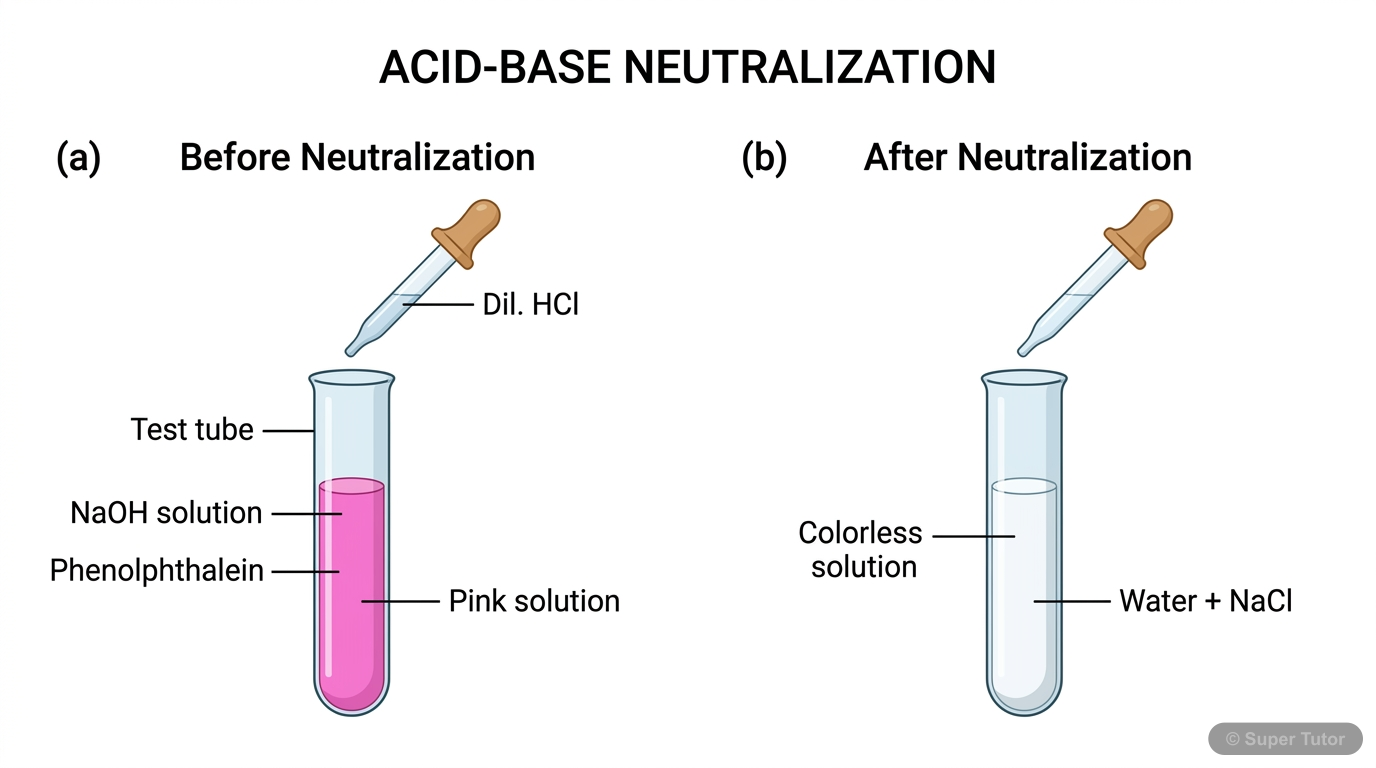
Learn better with visuals Super Tutor pairs illustrations like this with notes and quizzes for Acids, Bases and Salt.
Topics in Acids, Bases and Salt
4.1 Acids and Bases — Meaning and Properties
- Acids are substances that taste sour. The word 'acid' comes from the Latin word 'acere' meaning sour.
- Examples of acids found in nature: citric acid (lemons, oranges), lactic acid (curd), acetic acid (vinegar), tartaric acid (tamarind, grapes), oxalic acid (spinach), ascorbic acid/Vitamin C (amla, cit
- Bases are substances that taste bitter and feel soapy or slippery when touched.
4.2 Natural Indicators — Litmus, Turmeric, and China Rose
- Litmus is the most commonly used natural indicator. It is extracted from lichens (a plant-like organism).
- Litmus has a mauve (purple) colour in distilled water.
- In an acidic solution, litmus turns RED. In a basic solution, litmus turns BLUE.
4.3 Neutralisation — The Reaction Between Acids and Bases
- When an acid and a base are mixed in suitable amounts, they cancel out each other's properties. This process is called NEUTRALISATION.
- In neutralisation, both the acidic nature and the basic nature are destroyed.
- The resulting solution is neither acidic nor basic — it is neutral.
4.4 Neutralisation in Everyday Life
- INDIGESTION: Stomach contains hydrochloric acid (HCl) for digestion. Too much acid causes indigestion (acidity). Antacid medicines like milk of magnesia (magnesium hydroxide) neutralise excess stomach
- ANT BITE: When an ant bites, it injects formic acid (an acidic liquid) into the skin. Applying moist baking soda (sodium hydrogencarbonate) or calamine solution (contains zinc carbonate) neutralises t
- SOIL TREATMENT: Excessive use of chemical fertilisers makes soil acidic. Plants do not grow well in highly acidic or highly basic soil. If soil is too acidic: treat with quick lime (calcium oxide) or
Key Concepts
Work through every topic in Acids, Bases and Salt with notes and quizzes
Start This ChapterFrequently Asked Questions
What are the important topics in Acids, Bases and Salt for Gujarat Board Class 7 Science?
How should I revise Acids, Bases and Salt for Class 7 exams?
Sources & Official References
Content is aligned to the official syllabus. Refer to the board website for the latest curriculum.
More resources for Acids, Bases and Salt
For serious students
Get the full Acids, Bases and Salt chapter — start free.
Quizzes, flashcards, an AI doubt solver and a study plan for Gujarat Board Class 7 Science. Free to start, no card needed.