A Poison Tree
ICSE · Class 10 · English Literature-Treasure Chest ( Poems and Short Stories)
Flashcards for A Poison Tree — ICSE Class 10 English Literature-Treasure Chest ( Poems and Short Stories). Quick Q&A cards covering key concepts, definitions, and formulas.
Interactive on Super Tutor
Studying A Poison Tree? Get the full interactive chapter.
Quizzes, flashcards, AI doubt-solver and a step-by-step study plan — built for flashcards and more.
1,000+ Class 10 students started this chapter today
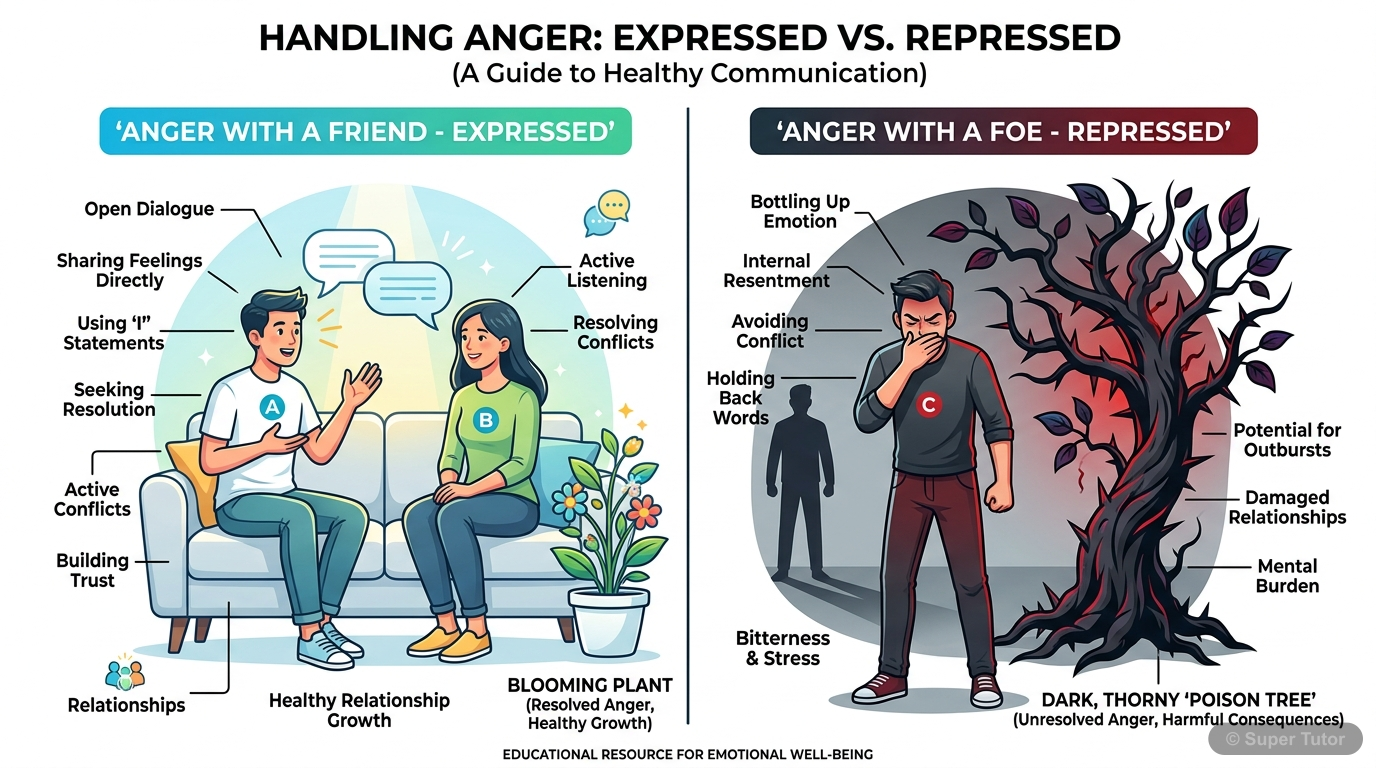
Super Tutor has 5+ illustrations like this for A Poison Tree alone — flashcards, concept maps, and step-by-step visuals.
See them allWho wrote A Poison Tree?
Answer
A Poison Tree was written by William Blake, an English poet and painter. He is known for his strong imagination, symbolic style, and important place in Romantic and Pre-Romantic poetry.
What is the original title of A Poison Tree?
Answer
The original title was Christian Forbearance. This title suggests patience and self-control, but the poem shows a darker result when anger is hidden instead of resolved.
When was A Poison Tree published?
Answer
A Poison Tree was published in 1794. It is part of William Blake's Songs of Experience, a collection that presents the more troubled side of human emotions and life.
Which collection does A Poison Tree belong to?
Answer
A Poison Tree belongs to Songs of Experience. This collection shows painful truths, emotional conflict, and the darker side of human nature.
What happens when the speaker is angry with a friend?
Answer
When the speaker tells his anger to a friend, the anger ends. The poem shows that open expression can reduce hostility and prevent bitterness from growing.
What happens when the speaker is angry with a foe?
Answer
When the speaker does not tell his anger to a foe, the anger grows. Hidden anger is allowed to fester, and this becomes the central danger of the poem.
Why does the poem say that hidden anger grows?
Answer
Hidden anger grows because it is not spoken out, cleared, or resolved. Instead of disappearing, it is fed by fear, tears, false smiles, and deceit, making it stronger and more harmful.
What does the speaker mean by watering the anger with fears and tears?
Answer
This means the speaker keeps feeding his anger with negative feelings. Fear and tears act like water to a plant, helping the anger grow bigger and more dangerous.
+22 more flashcards available
Practice AllFrequently Asked Questions
What are the important topics in A Poison Tree for ICSE Class 10 English Literature-Treasure Chest ( Poems and Short Stories)?
How to score full marks in A Poison Tree — ICSE Class 10 English Literature-Treasure Chest ( Poems and Short Stories)?
How many flashcards are available for A Poison Tree?
Sources & Official References
Content is aligned to the official syllabus. Refer to the board website for the latest curriculum.
More resources for A Poison Tree
Practice Quiz
Test yourself with a quick quiz
Important Questions
Practice with board exam-style questions
Revision Notes
Key points for last-minute revision
Formula Sheet
All formulas in one place
Chapter Summary
Understand the chapter at a glance
Concept Maps
See how topics connect visually
Study Plan
Step-by-step plan to ace this chapter
Syllabus
What topics to cover
NCERT Solutions
Every textbook question solved step by step
For serious students
Get the full A Poison Tree chapter — for free.
Quizzes, flashcards, AI doubt-solver and a step-by-step study plan for ICSE Class 10 English Literature-Treasure Chest ( Poems and Short Stories).