The Boy who Broke the Bank
ICSE · Class 10 · English Literature-Treasure Chest ( Poems and Short Stories)
Step-by-step guide to study The Boy who Broke the Bank in ICSE Class 10 English Literature-Treasure Chest ( Poems and Short Stories). Topics to cover, practice strategy, and time allocation.
Interactive on Super Tutor
Studying The Boy who Broke the Bank? Get the full interactive chapter.
Quizzes, flashcards, AI doubt-solver and a step-by-step study plan — built for study plan and more.
1,000+ Class 10 students started this chapter today
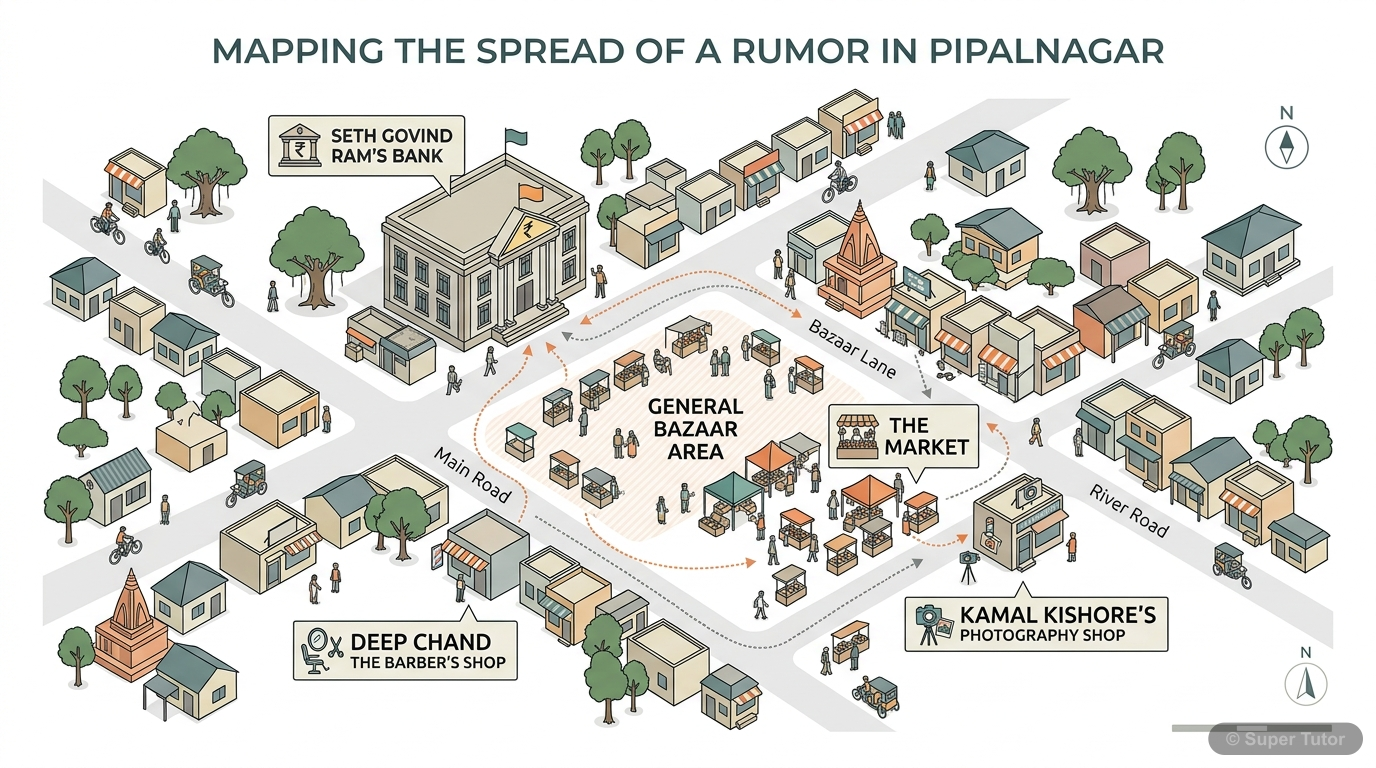
Super Tutor has 7+ illustrations like this for The Boy who Broke the Bank alone — flashcards, concept maps, and step-by-step visuals.
See them allStudy Plan
Learn the Theory
Read the textbook chapter carefully. Note down definitions, formulas, and key concepts.
Practice Problems
Solve textbook exercises and additional practice questions. There are 62 questions available for this chapter.
Revise & Test
Revise key formulas and concepts without looking at notes. Take a practice quiz to test your understanding. Mark weak areas for re-revision.
Spaced Revision
Revisit The Boy who Broke the Bank after a week. Use flashcards for quick recall. Solve previous year questions from this chapter.
What to Focus On
- Ruskin Bond is a major Indian English-language writer.
- He writes about ordinary life with humour and warmth.
- His stories often show small-town life in northern India.
- Genre: short story, comedy, satire.
- Setting: Pipalnagar, a small Indian town.
- Tone: humorous and ironic.
- The story starts with a simple salary complaint.
- The complaint becomes a rumour through careless retelling.
- The rumour causes panic in the town.
Common Mistakes to Avoid
Nathu deliberately spread the rumour and wanted to ruin the bank.
Sitaram is the main villain because he first tells others about the complaint.
The story is mainly about Seth Govind Ram doing something wrong because he is absent in Kashmir.
Memory Tips
The central theme: the destructive power of rumours
The rumour chain in order
Nathu’s complaint is innocent and justified
Sitaram as the first link in the chain after Nathu
Want a personalised study plan?
Super Tutor creates a day-by-day plan for ICSE Class 10 English Literature-Treasure Chest ( Poems and Short Stories) that adapts to your exam date and pace.
Create My Study Plan — FreeFrequently Asked Questions
What are the important topics in The Boy who Broke the Bank for ICSE Class 10 English Literature-Treasure Chest ( Poems and Short Stories)?
How to score full marks in The Boy who Broke the Bank — ICSE Class 10 English Literature-Treasure Chest ( Poems and Short Stories)?
Sources & Official References
Content is aligned to the official syllabus. Refer to the board website for the latest curriculum.
More resources for The Boy who Broke the Bank
Practice Quiz
Test yourself with a quick quiz
Important Questions
Practice with board exam-style questions
Revision Notes
Key points for last-minute revision
Formula Sheet
All formulas in one place
Chapter Summary
Understand the chapter at a glance
Concept Maps
See how topics connect visually
Flashcards
Quick-fire cards for active recall
Syllabus
What topics to cover
NCERT Solutions
Every textbook question solved step by step
For serious students
Get the full The Boy who Broke the Bank chapter — for free.
Quizzes, flashcards, AI doubt-solver and a step-by-step study plan for ICSE Class 10 English Literature-Treasure Chest ( Poems and Short Stories).