The Power of Music
ICSE · Class 10 · English Literature-Treasure Chest ( Poems and Short Stories)
Step-by-step guide to study The Power of Music in ICSE Class 10 English Literature-Treasure Chest ( Poems and Short Stories). Topics to cover, practice strategy, and time allocation.
Interactive on Super Tutor
Studying The Power of Music? Get the full interactive chapter.
Quizzes, flashcards, AI doubt-solver and a step-by-step study plan — built for study plan and more.
1,000+ Class 10 students started this chapter today
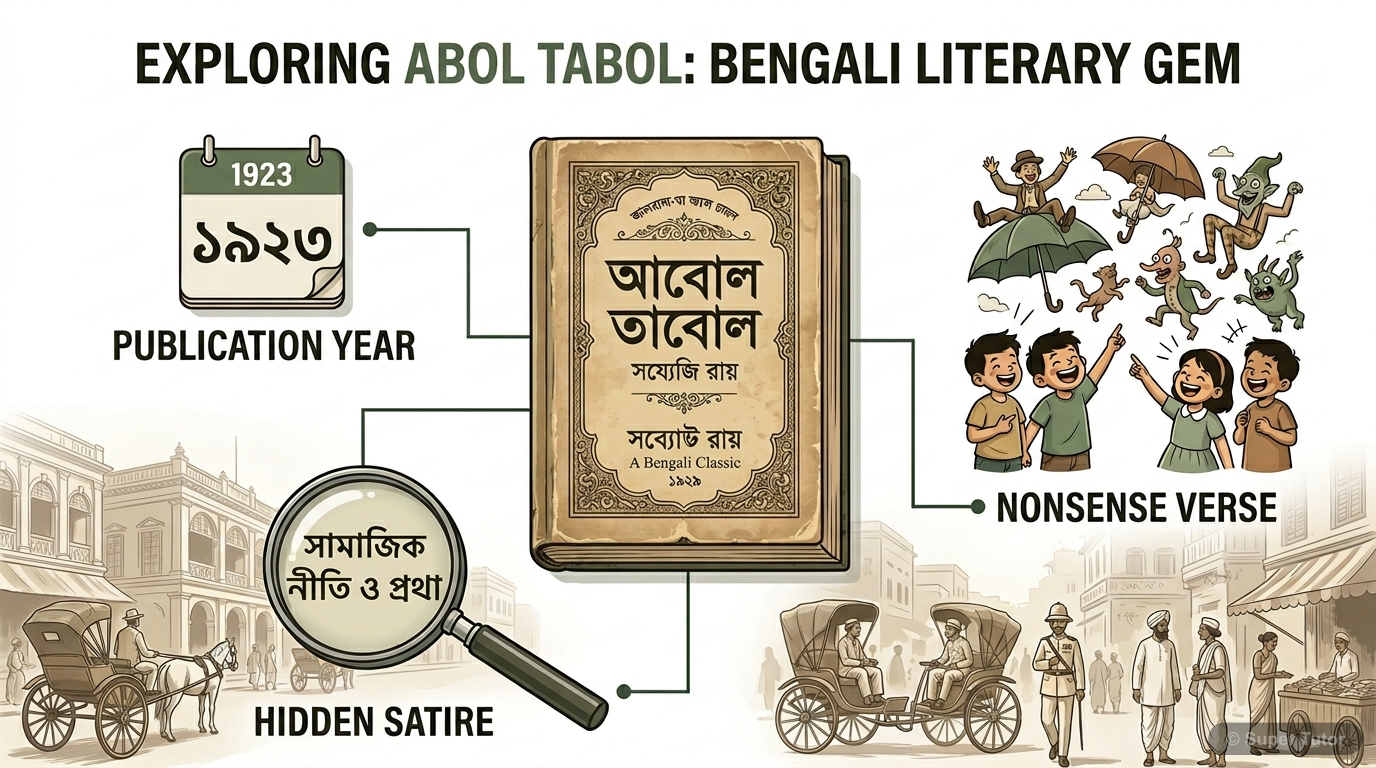
Super Tutor has 5+ illustrations like this for The Power of Music alone — flashcards, concept maps, and step-by-step visuals.
See them allStudy Plan
Learn the Theory
Read the textbook chapter carefully. Note down definitions, formulas, and key concepts.
Practice Problems
Solve textbook exercises and additional practice questions. There are 59 questions available for this chapter.
Revise & Test
Revise key formulas and concepts without looking at notes. Take a practice quiz to test your understanding. Mark weak areas for re-revision.
Spaced Revision
Revisit The Power of Music after a week. Use flashcards for quick recall. Solve previous year questions from this chapter.
What to Focus On
- Sukumar Ray wrote Ganer Gunto.
- Abol Tabol is a collection of nonsense verse published in 1923.
- Prof. Sukanta Chaudhury translated the collection into English.
- Bhisma Lochan’s singing is tuneless and persistent.
- The poem uses exaggerated effects for comic impact.
- Human pleading fails to stop him.
- Bhisma Lochan is the main character.
- He sings persistently every summer.
- He is unaware of the suffering he causes.
Common Mistakes to Avoid
The poem praises music and presents Bhisma Lochan as a great singer.
Bhisma Lochan is a cruel man who deliberately wants to harm others.
The people stop Bhisma Lochan’s singing by pleading with him.
Memory Tips
The poem is a humorous/nonsense account, not a serious praise of music
Bhisma Lochan Sharma sings every summer across a huge area from Delhi to Burma
People react with panic, dazed amazement, and repeated pleas to stop
The people plead twice, but Bhisma Lochan does not listen
Want a personalised study plan?
Super Tutor creates a day-by-day plan for ICSE Class 10 English Literature-Treasure Chest ( Poems and Short Stories) that adapts to your exam date and pace.
Create My Study Plan — FreeFrequently Asked Questions
What are the important topics in The Power of Music for ICSE Class 10 English Literature-Treasure Chest ( Poems and Short Stories)?
How to score full marks in The Power of Music — ICSE Class 10 English Literature-Treasure Chest ( Poems and Short Stories)?
Sources & Official References
Content is aligned to the official syllabus. Refer to the board website for the latest curriculum.
More resources for The Power of Music
Practice Quiz
Test yourself with a quick quiz
Important Questions
Practice with board exam-style questions
Revision Notes
Key points for last-minute revision
Formula Sheet
All formulas in one place
Chapter Summary
Understand the chapter at a glance
Concept Maps
See how topics connect visually
Flashcards
Quick-fire cards for active recall
Syllabus
What topics to cover
NCERT Solutions
Every textbook question solved step by step
For serious students
Get the full The Power of Music chapter — for free.
Quizzes, flashcards, AI doubt-solver and a step-by-step study plan for ICSE Class 10 English Literature-Treasure Chest ( Poems and Short Stories).