The Power of Music — Syllabus
ICSE · Class 10 · English Literature-Treasure Chest ( Poems and Short Stories)
What The Power of Music covers in ICSE Class 10 English Literature-Treasure Chest: 4 topics, for the 2026-27 session.
Interactive on Super Tutor
Studying The Power of Music? Get the full interactive chapter.
Quizzes, flashcards, AI doubt-solver and a step-by-step study plan — built for syllabus and more.
Free trial, no card needed.
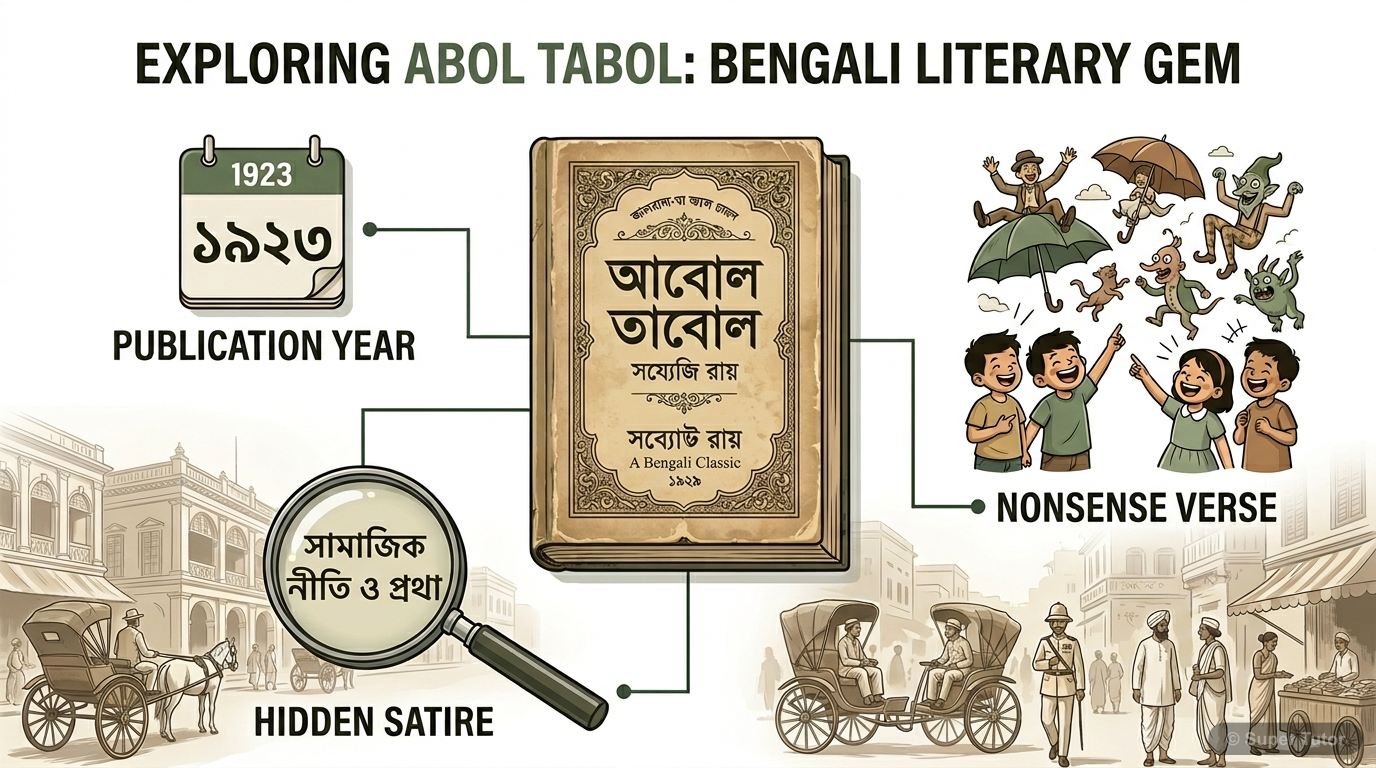
One of 4 illustrations for The Power of Music in Super Tutor — alongside flashcards, concept maps and practice questions.
See them allTopics in The Power of Music
Poet and Background
- Sukumar Ray lived from 1887 to 1923.
- The poem is a translation from Bengali. Its original title is Ganer Gunto.
- It is part of Abol Tabol, a collection of nonsense verse children's poems and rhymes published in 1923.
Central Character and Main Idea
- Bhisma Lochan Sharma is the protagonist of the poem.
- He sings every summer and his singing is heard from Delhi to Burma.
- His voice is described as tuneless and extremely disturbing.
Key Events in the Poem
- The poem begins with summer, when Bhisma Lochan's singing is heard everywhere.
- People become dazed, amazed, and panic-stricken.
- They plead with him to stop singing, but he continues.
Themes
- Humour and satire: the poem turns terrible singing into a comic scene.
- Persistence: Bhisma Lochan keeps singing without caring about the reaction around him.
- Exaggeration: the effects of the singing are made absurdly large.
Key Concepts
Central concept: Bhisma Lochan Sharma's tuneless singing creates comic chaos, shows exaggeration and irony, and ends with silence restored by a billy goat.
Work through every topic in The Power of Music with notes and quizzes
Start This ChapterFrequently Asked Questions
What are the important topics in The Power of Music for ICSE Class 10 English Literature-Treasure Chest ( Poems and Short Stories)?
How should I revise The Power of Music for the ICSE Class 10 board exam?
Sources & Official References
Content is aligned to the official syllabus. Refer to the board website for the latest curriculum.
More resources for The Power of Music
Practice Quiz
Test yourself with a quick quiz
Important Questions
Exam-style questions with answers
Revision Notes
Key points for last-minute revision
Chapter Summary
Understand the chapter at a glance
Concept Maps
See how topics connect
Study Plan
Step-by-step plan for this chapter
Flashcards
Quick-fire cards for active recall
For serious students
Get the full The Power of Music chapter — start free.
Quizzes, flashcards, an AI doubt solver and a study plan for ICSE Class 10 English Literature-Treasure Chest ( Poems and Short Stories). Free to start, no card needed.