The Power of Music
ICSE · Class 10 · English Literature-Treasure Chest ( Poems and Short Stories)
Summary of The Power of Music for ICSE Class 10 English Literature-Treasure Chest ( Poems and Short Stories). Key concepts, important points, and chapter overview.
Interactive on Super Tutor
Studying The Power of Music? Get the full interactive chapter.
Quizzes, flashcards, AI doubt-solver and a step-by-step study plan — built for chapter summary and more.
1,000+ Class 10 students started this chapter today
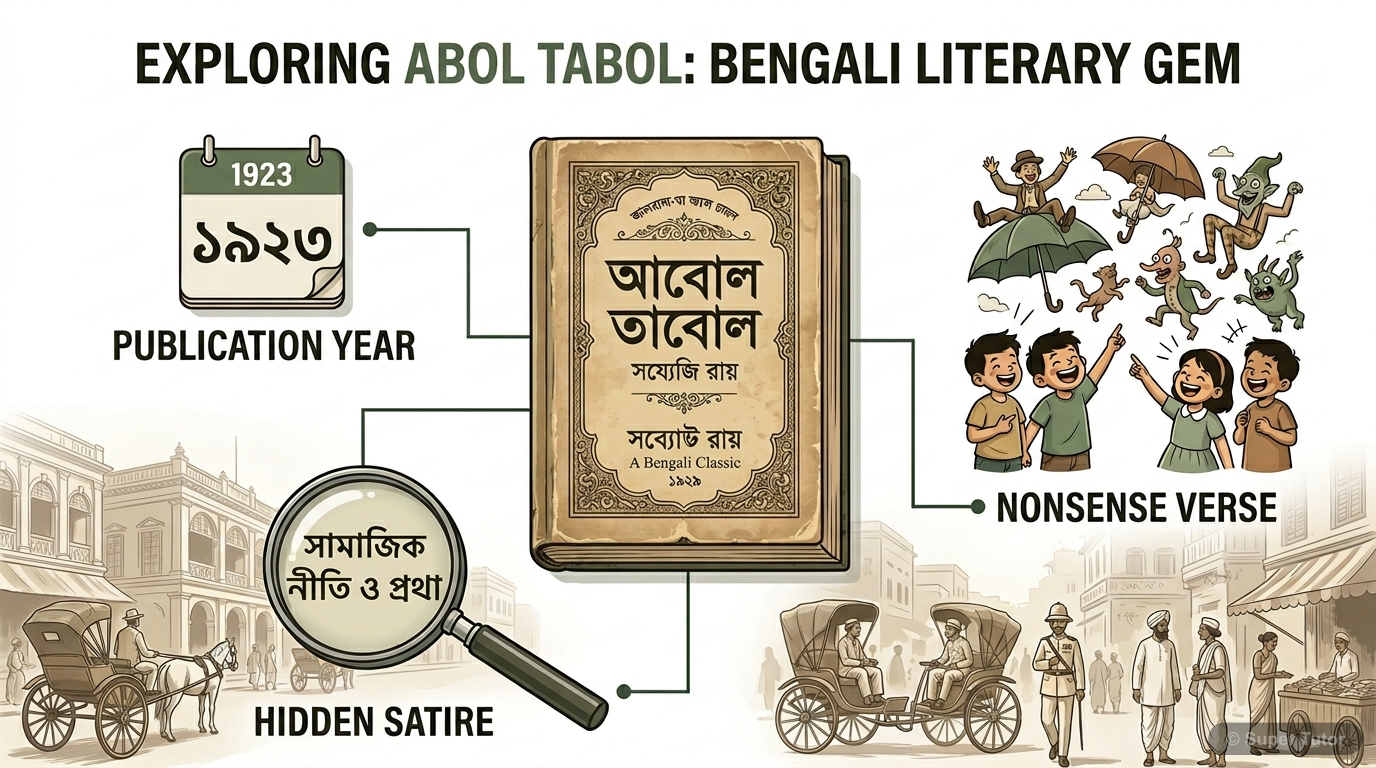
Super Tutor has 5+ illustrations like this for The Power of Music alone — flashcards, concept maps, and step-by-step visuals.
See them allOverview
The Power of Music is a humorous nonsense poem by Sukumar Ray from the Bengali collection Abol Tabol. The poem shows how the tuneless singing of Bhisma Lochan Sharma spreads disturbance everywhere he goes. Instead of creating harmony, his song causes panic among people, animals, birds, fish, trees,
Key Concepts
Bhisma Lochan Sharma is the central
Bhisma Lochan Sharma is the central character who sings tunelessly and persistently every summer. His singing travels from Delhi to Burma and affects
The poem belongs to nonsense verse
The poem belongs to nonsense verse, so it presents an absurd situation in a playful way. A terrible singer is shown as having an unreal and exaggerate
The poem uses deliberate exaggeration
The poem uses deliberate exaggeration. Fish dive for silence, trees collapse, birds turn turtle, and mansions tumble. These are impossible events used
The title suggests music should be
The title suggests music should be beautiful and pleasing, but the singing in the poem causes chaos and suffering. The contrast between expectation an
The people are dazed
The people are dazed, amazed, trampled in panic, and repeatedly plead with Bhisma Lochan to stop singing. He ignores them and continues.
Learning Objectives
- Understand the humorous and ironic tone of the poem
- Identify the main character, Bhisma Lochan Sharma, and his role in the poem
- Recognize the use of hyperbole to create comic effect
- Explain how the poem presents the reaction of people, animals, and nature to the singing
- Understand why the title is ironic
Frequently Asked Questions
What are the important topics in The Power of Music for ICSE Class 10 English Literature-Treasure Chest ( Poems and Short Stories)?
How to score full marks in The Power of Music — ICSE Class 10 English Literature-Treasure Chest ( Poems and Short Stories)?
Sources & Official References
Content is aligned to the official syllabus. Refer to the board website for the latest curriculum.
More resources for The Power of Music
Practice Quiz
Test yourself with a quick quiz
Important Questions
Practice with board exam-style questions
Revision Notes
Key points for last-minute revision
Formula Sheet
All formulas in one place
Concept Maps
See how topics connect visually
Study Plan
Step-by-step plan to ace this chapter
Flashcards
Quick-fire cards for active recall
Syllabus
What topics to cover
NCERT Solutions
Every textbook question solved step by step
For serious students
Get the full The Power of Music chapter — for free.
Quizzes, flashcards, AI doubt-solver and a step-by-step study plan for ICSE Class 10 English Literature-Treasure Chest ( Poems and Short Stories).