Administration, Society and Culture under the Delhi Sultanate — Chapter Summary
ICSE · Class 7 · History & Civics
Summary of Administration, Society and Culture under the Delhi Sultanate for ICSE Class 7 History & Civics. The Delhi Sultanate created major changes.
Interactive on Super Tutor
Studying Administration, Society and Culture under the Delhi Sultanate? Get the full interactive chapter.
Quizzes, flashcards, AI doubt-solver and a step-by-step study plan — built for chapter summary and more.
Free trial, no card needed.
Learn better with visuals Super Tutor pairs illustrations like this with notes and quizzes for Administration, Society and Culture under the Delhi Sultanate.
Overview
The Delhi Sultanate created major changes in northern India. Its rule shaped society, government, economy, and culture. A new composite Indo-Islamic culture developed through the meeting of Muslim and existing Indian traditions. The period also saw strong royal authority, new departments of administ
Key Concepts
Society was divided into four main
Society was divided into four main classes: aristocracy, Ulemas and Hindu priests, town dwellers, and peasantry. The aristocracy was rich and powerful
Women faced many restrictions
Women faced many restrictions. Child marriage and sati were common, and women were often denied education. Upper-class women also had to follow purdah
Barids were intelligence agents posted
Barids were intelligence agents posted in different parts of the empire to inform the ruler about events in the kingdom.
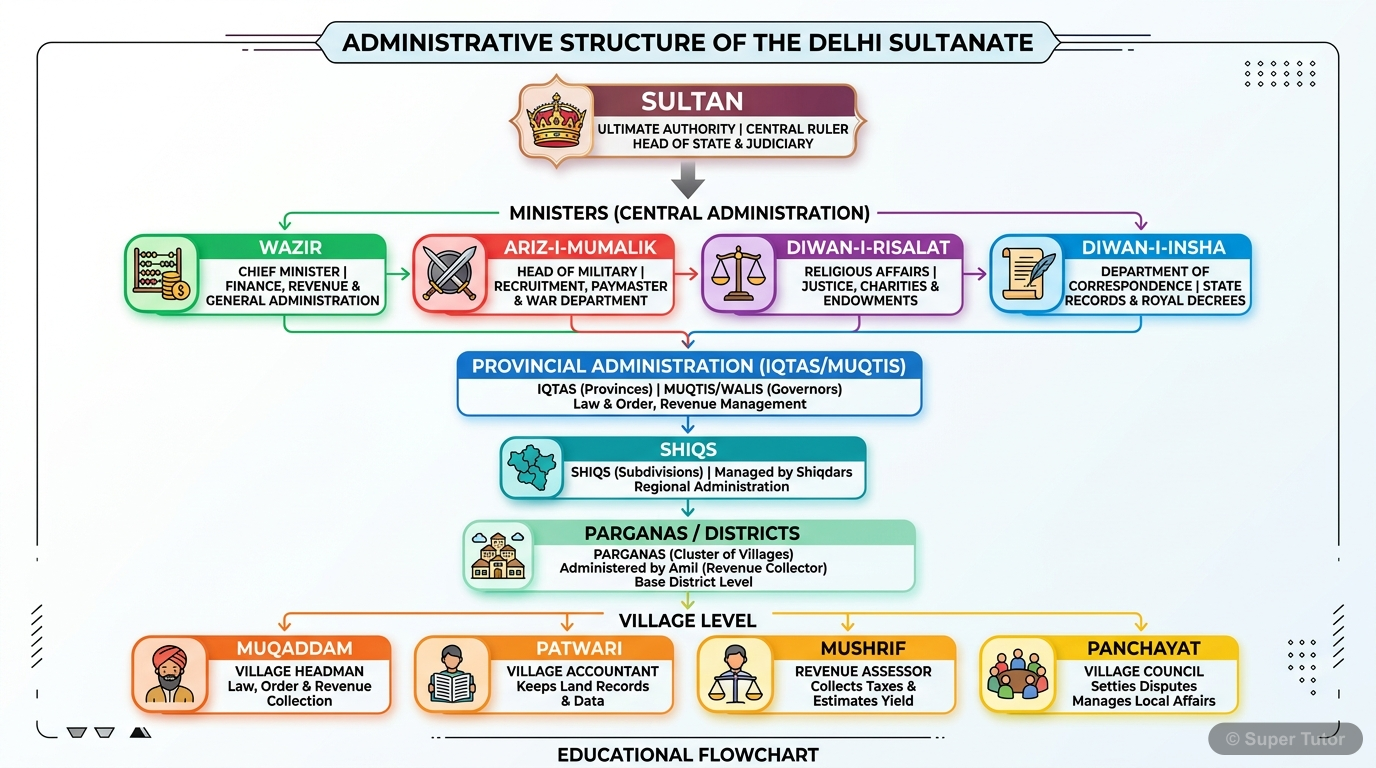
The Sultan held the highest political
The Sultan held the highest political, legal, and military authority. The state was militaristic and aristocratic, and the ruler depended on military
Diwan
Diwan-i-wazarat was the revenue department headed by the Wazir. Diwan-i-Arz was the military department headed by Ariz-i-Mamalik. Diwan-i-Risalat deal
Learning Objectives
- Understand the social division of Sultanate society
- Learn the main features of administration under the Delhi Sultans
- Identify important taxes and the iqta system
- Describe the economic life of the period
- Recognize the cultural changes in architecture, painting, music, language, and religion
Frequently Asked Questions
What are the important topics in Administration, Society and Culture under the Delhi Sultanate for ICSE Class 7 History & Civics?
How should I revise Administration, Society and Culture under the Delhi Sultanate for Class 7 exams?
Sources & Official References
Content is aligned to the official syllabus. Refer to the board website for the latest curriculum.
More resources for Administration, Society and Culture under the Delhi Sultanate
For serious students
Get the full Administration, Society and Culture under the Delhi Sultanate chapter — start free.
Quizzes, flashcards, an AI doubt solver and a study plan for ICSE Class 7 History & Civics. Free to start, no card needed.