Administration, Society and Culture under the Delhi Sultanate — Study Plan
ICSE · Class 7 · History & Civics
A step-by-step study plan for Administration, Society and Culture under the Delhi Sultanate, ICSE Class 7 History & Civics: what to learn first, what.
Interactive on Super Tutor
Studying Administration, Society and Culture under the Delhi Sultanate? Get the full interactive chapter.
Quizzes, flashcards, AI doubt-solver and a step-by-step study plan — built for study plan and more.
Free trial, no card needed.
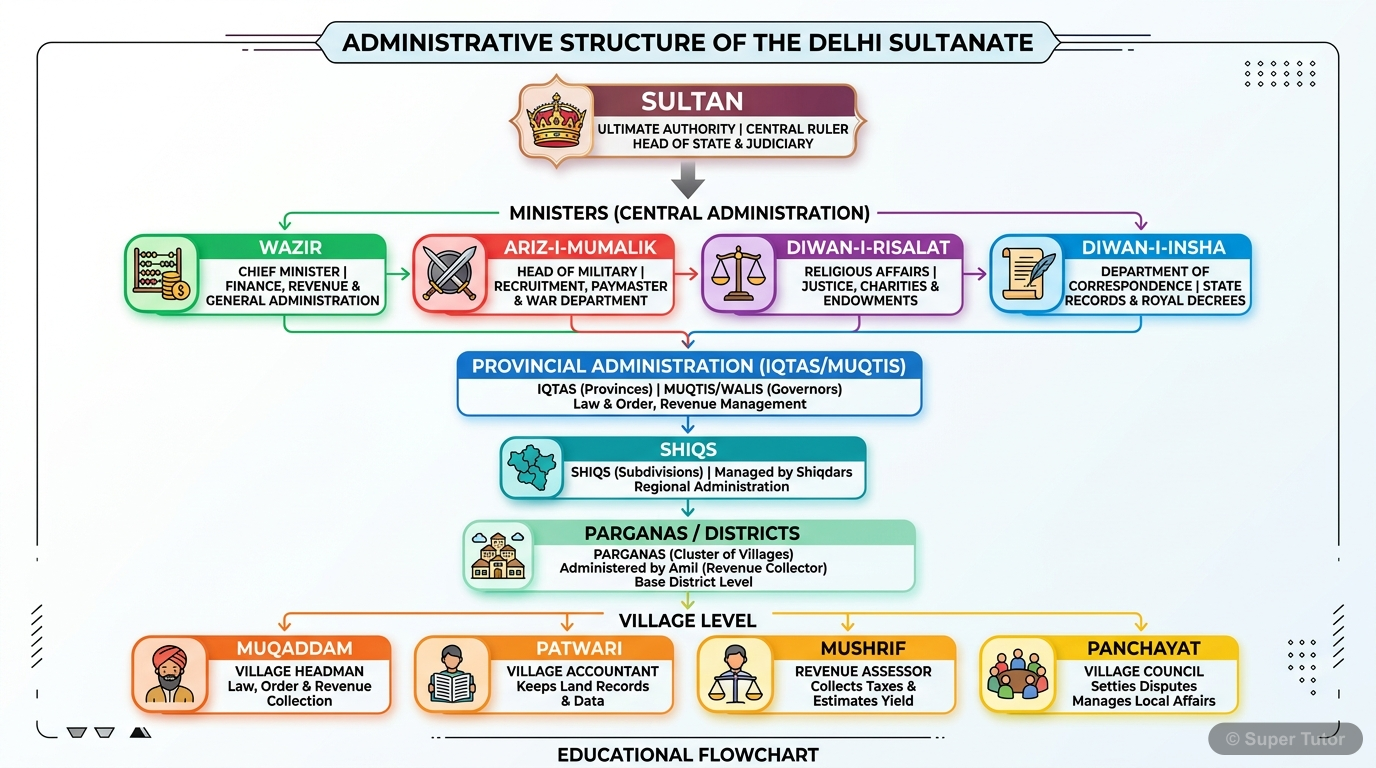
Learn better with visuals Super Tutor pairs illustrations like this with notes and quizzes for Administration, Society and Culture under the Delhi Sultanate.
Study Plan
Learn the Theory
Read the textbook chapter carefully. Note down definitions, formulas and key ideas. Focus on: Society and People, Administration, Economy.
Practise
Solve the textbook exercises and extra practice questions. There are 43 questions available for this chapter.
Revise & Test
Revise key points without looking at your notes. Take a practice quiz and mark weak areas for another pass.
Spaced Revision
Come back to Administration, Society and Culture under the Delhi Sultanate after a week. Use flashcards for quick recall and try past exam questions on this chapter.
What to Focus On
- Society had four main classes: aristocracy, Ulemas and Hindu priests, town dwellers, and peasantry.
- The aristocracy included nobles and high officials.
- Ulemas and Hindu priests advised the Sultan on religious and administrative matters.
- The Sultan had absolute authority over the state.
- The government was militaristic and feudal in nature.
- Wazir headed Diwan-i-wazarat, the revenue department.
- The Iqta system granted revenue from land or a village instead of a cash salary.
- The officer in charge was called an iqtadar.
- The iqtadar collected revenue, maintained soldiers, and kept accounts.
Common Mistakes to Avoid
Qutub-ud-din Aibak built the Qutub Minar completely by himself.
Tanka was started by Alauddin Khalji because his silver coins are shown near the topic of trade.
Wazir and Ariz-i-Mamalik are the same official because both work under the Sultan.
Memory Tips
Five important departments of administration
Diwan-i-wazarat, Diwan-i-Arz, Diwan-i-Risalat, Diwan-i-Insha
Taxes under the Sultanate
Four social classes of Sultanate society
Want a personalised study plan?
Super Tutor builds a day-by-day plan for ICSE Class 7 History & Civics that fits your exam date and pace.
Create My Study PlanFrequently Asked Questions
What are the important topics in Administration, Society and Culture under the Delhi Sultanate for ICSE Class 7 History & Civics?
How should I revise Administration, Society and Culture under the Delhi Sultanate for Class 7 exams?
Sources & Official References
Content is aligned to the official syllabus. Refer to the board website for the latest curriculum.
More resources for Administration, Society and Culture under the Delhi Sultanate
Practice Quiz
Test yourself with a quick quiz
Important Questions
Exam-style questions with answers
Revision Notes
Key points for last-minute revision
Chapter Summary
Understand the chapter at a glance
Concept Maps
See how topics connect
Flashcards
Quick-fire cards for active recall
Syllabus
What topics to cover
For serious students
Get the full Administration, Society and Culture under the Delhi Sultanate chapter — start free.
Quizzes, flashcards, an AI doubt solver and a study plan for ICSE Class 7 History & Civics. Free to start, no card needed.