Metals and Non-metals — Syllabus
Madhya Pradesh Board · Class 10 · Science
What Metals and Non-metals covers in Madhya Pradesh Board Class 10 Science: 4 topics, for the 2026-27 session.
Interactive on Super Tutor
Studying Metals and Non-metals? Get the full interactive chapter.
Quizzes, flashcards, AI doubt-solver and a step-by-step study plan — built for syllabus and more.
Free trial, no card needed.
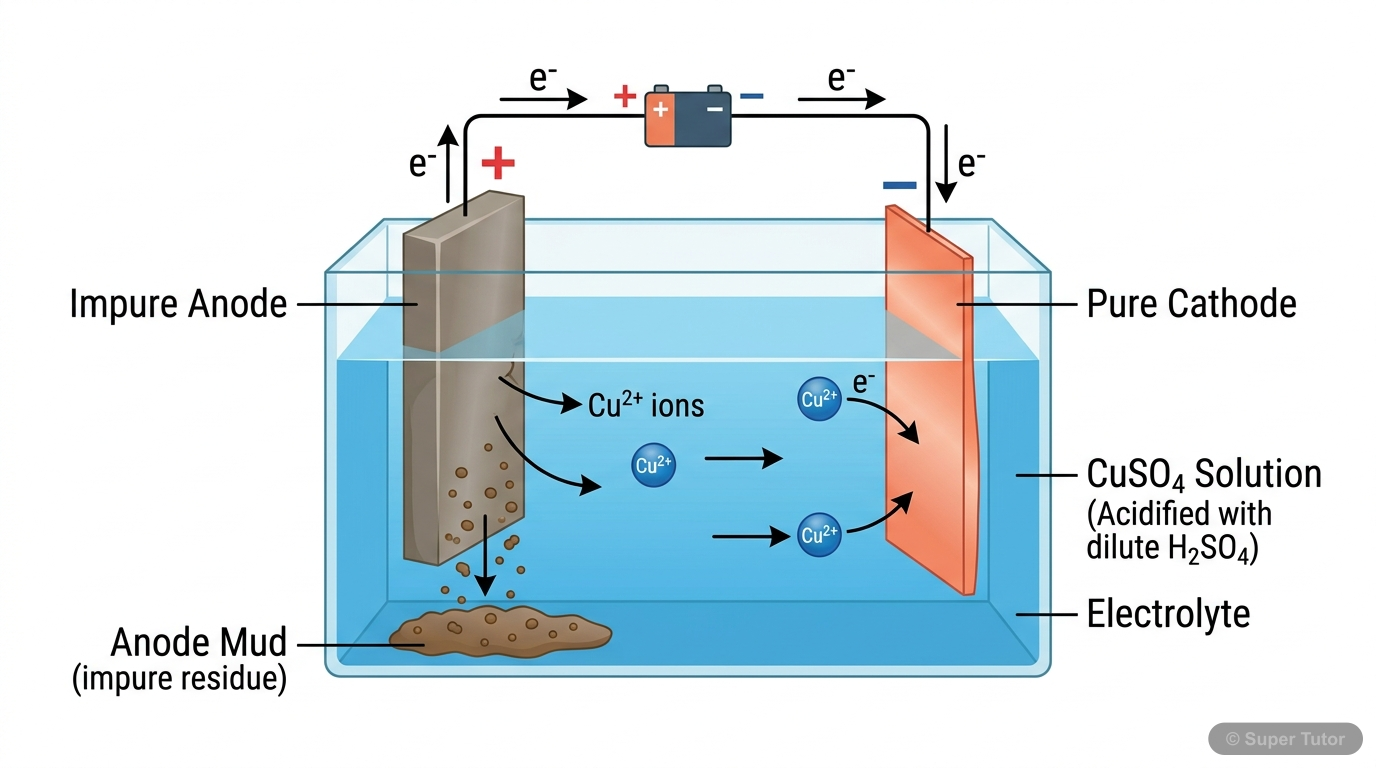
Learn better with visuals Super Tutor pairs illustrations like this with notes and quizzes for Metals and Non-metals.
Topics in Metals and Non-metals
1. Physical Properties of Metals and Non-metals
- Metals, in their pure state, have a shining surface. This property is called metallic lustre.
- Metals are generally hard, but hardness varies from metal to metal.
- Alkali metals such as sodium and potassium are so soft that they can be cut with a knife.
2. Chemical Properties of Metals
- Metals combine with oxygen to form metal oxides.
- General metal-oxygen reaction: Metal + Oxygen → Metal oxide.
- Most metal oxides are basic in nature.
3. Ionic Compounds and Their Properties
- When a metal transfers electrons to a non-metal, ionic compounds are formed.
- Sodium forms Na+ by losing one electron.
- Magnesium forms Mg2+ by losing two electrons.
4. Occurrence, Extraction, Refining, and Corrosion
- The earth's crust is the major source of metals.
- Elements or compounds occurring naturally in the earth's crust are called minerals.
- Minerals from which metal can be profitably extracted are called ores.
Key Concepts
Central concept: Metals and Non-metals
Work through every topic in Metals and Non-metals with notes and quizzes
Start This ChapterFrequently Asked Questions
What are the important topics in Metals and Non-metals for Madhya Pradesh Board Class 10 Science?
How should I revise Metals and Non-metals for the Madhya Pradesh Board Class 10 board exam?
Sources & Official References
Content is aligned to the official syllabus. Refer to the board website for the latest curriculum.
More resources for Metals and Non-metals
Practice Quiz
Test yourself with a quick quiz
Important Questions
Exam-style questions with answers
Revision Notes
Key points for last-minute revision
Formula Sheet
The chapter's formulas in one place
Chapter Summary
Understand the chapter at a glance
Concept Maps
See how topics connect
Study Plan
Step-by-step plan for this chapter
Flashcards
Quick-fire cards for active recall
NCERT Solutions
Every textbook question solved step by step
For serious students
Get the full Metals and Non-metals chapter — start free.
Quizzes, flashcards, an AI doubt solver and a study plan for Madhya Pradesh Board Class 10 Science. Free to start, no card needed.