Power-sharing — Concept Maps
Madhya Pradesh Board · Class 10 · Social Science
4 concept maps of Power-sharing for Madhya Pradesh Board Class 10 Social Science, each also written out as a text outline.
Interactive on Super Tutor
Studying Power-sharing? Get the full interactive chapter.
Quizzes, flashcards, AI doubt-solver and a step-by-step study plan — built for concept maps and more.
Free trial, no card needed.
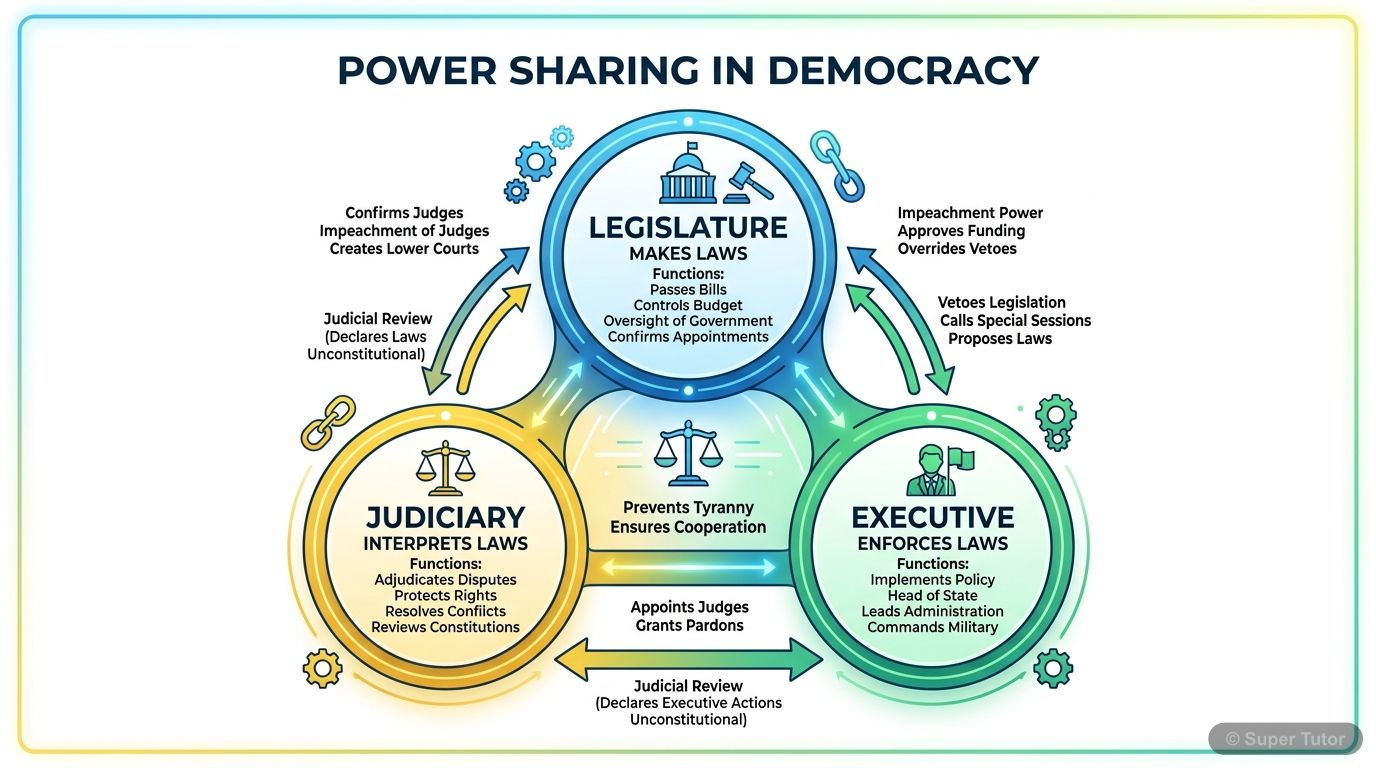
Learn better with visuals Super Tutor pairs illustrations like this with notes and quizzes for Power-sharing.
Correct vs Incorrect: Types of Power-Sharing
The map in words
- Types of Power-Sharing
- Horizontal
- Legislature vs Executive vs Judiciary
- Same Level - Checks and Balances
- Vertical
- Centre vs States vs Local Bodies
- Different Levels - Federal System
- Among Social Groups
- Community Govts - Belgium Example
- Reserved Constituencies
- Among Political Parties
- Coalition Governments
- Pressure Groups
- Horizontal
- Common Mistake
- Horizontal confused with Centre-State
- WRONG - Centre-State is VERTICAL
- Horizontal confused with Centre-State
Power Sharing — Chapter Overview
The map in words
- Power Sharing
- Why Power Sharing
- Prudential Reasons
- Reduces Conflict
- Ensures Stability
- Prevents Tyranny
- Moral Reasons
- Spirit of Democracy
- Right to be Consulted
- Legitimate Government
- Prudential Reasons
- Country Examples
- Belgium
- Complex Ethnic Composition
- Dutch French German
- Constitutional Amendments
- Community Government
- Successful Model
- Sri Lanka
- Sinhala Majority
- Majoritarian Policies
- Tamil Alienation
- Civil War
- Ended 2009
- Belgium
- Forms of Power Sharing
- Horizontal
- Legislature
- Executive
- Judiciary
- Checks and Balances
- Vertical
- Central Government
- State Governments
- Panchayats
- Among Social Groups
- Community Government
- Reserved Constituencies
- Political Parties
- Coalition Government
- Pressure Groups
- Interest Groups
- Horizontal
- Why Power Sharing
Power Sharing — Complete Chapter Overview
The map in words
- Power Sharing
- Belgium
- 59 percent Dutch Flemish
- 40 percent French Wallonia
- 1 percent German
- Brussels 80 percent French
- Accommodation Model
- CESC Features
- 4 Constitutional Amendments
- 1970 to 1993
- Sri Lanka
- 74 percent Sinhala
- 18 percent Tamil
- Majoritarian Policies
- 1956 Sinhala Only Act
- Preferential Policies
- Buddhism Protected
- Civil War
- Tamil Eelam Demand
- Ended 2009
- Why Power Sharing
- Prudential Reasons
- Reduces Conflict
- Ensures Stability
- Moral Reasons
- Spirit of Democracy
- Peoples Right
- Prudential Reasons
- Forms of Power Sharing
- Horizontal
- Legislature
- Executive
- Judiciary
- Vertical Federal
- Central Government
- State Government
- Local Government
- Social Groups
- Community Government
- Reserved Constituencies
- Political Parties
- Coalition Government
- Pressure Groups
- Horizontal
- Belgium
Power-sharing in democracy
The map in words
- Power-sharing in democracy
- Why power-sharing is needed
- Belgium case study
- Sri Lanka case study
- Forms of power-sharing
- Horizontal distribution of power
- Vertical division of power
- Power sharing among social groups
- Power sharing among political parties, pressure groups and movements
Explore these maps interactively
Explore DiagramsFrequently Asked Questions
What are the important topics in Power-sharing for Madhya Pradesh Board Class 10 Social Science?
What do the concept maps for Power-sharing show?
How should I revise Power-sharing for the Madhya Pradesh Board Class 10 board exam?
Sources & Official References
Content is aligned to the official syllabus. Refer to the board website for the latest curriculum.
More resources for Power-sharing
Practice Quiz
Test yourself with a quick quiz
Important Questions
Exam-style questions with answers
Revision Notes
Key points for last-minute revision
Chapter Summary
Understand the chapter at a glance
Study Plan
Step-by-step plan for this chapter
Flashcards
Quick-fire cards for active recall
Syllabus
What topics to cover
NCERT Solutions
Every textbook question solved step by step
For serious students
Get the full Power-sharing chapter — start free.
Quizzes, flashcards, an AI doubt solver and a study plan for Madhya Pradesh Board Class 10 Social Science. Free to start, no card needed.