New Good Things From Rubbish — Concept Maps
NIOS · Class 10 · English
4 concept maps of New Good Things From Rubbish for NIOS Class 10 English, each also written out as a text outline.
Interactive on Super Tutor
Studying New Good Things From Rubbish? Get the full interactive chapter.
Quizzes, flashcards, AI doubt-solver and a step-by-step study plan — built for concept maps and more.
Free trial, no card needed.
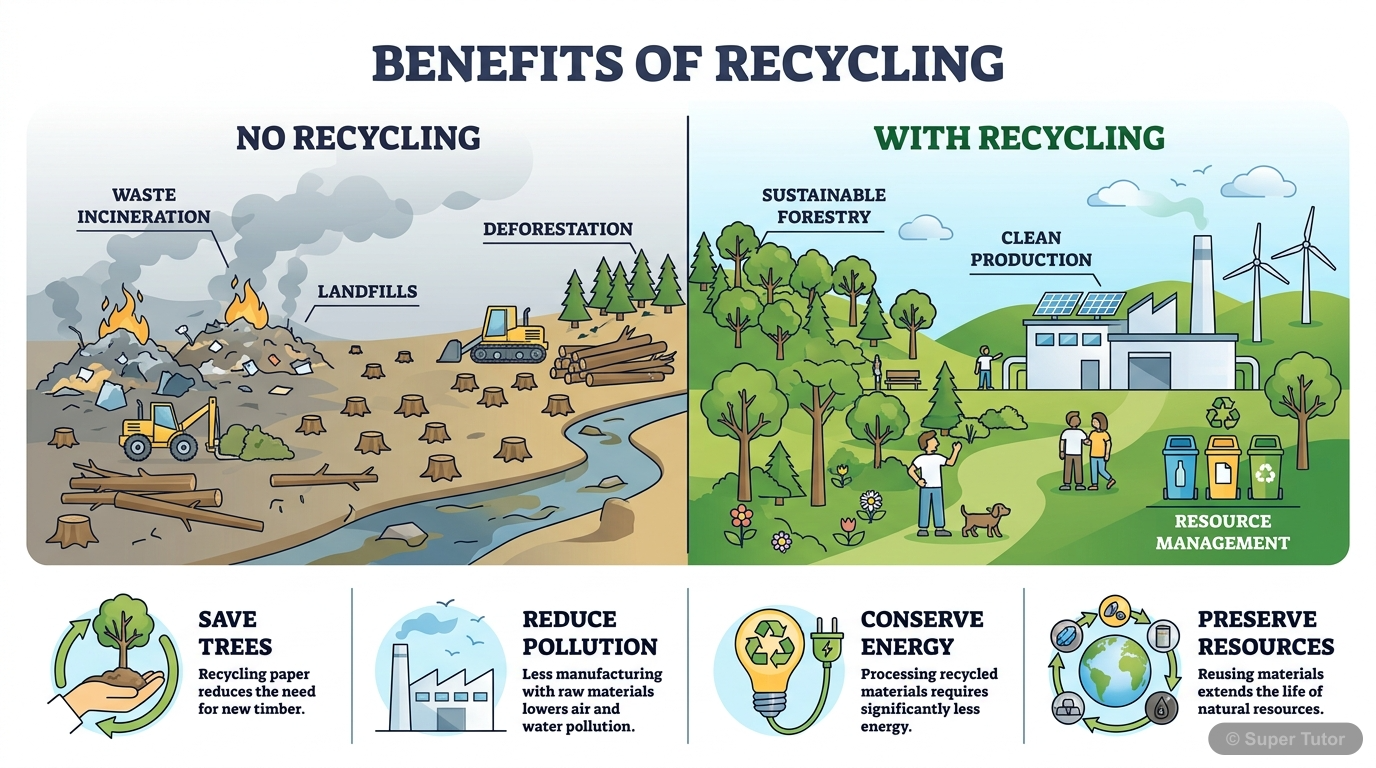
One of 3 illustrations for New Good Things From Rubbish in Super Tutor — alongside flashcards, concept maps and practice questions.
Recycling and Resource Conservation Overview
The map in words
- Recycling
- Benefits
- Saves Money
- Reduces Pollution
- Conserves Resources
- Saves Energy
- Materials
- Paper
- Newspapers
- Books
- Magazines
- Metals
- Aluminum
- Steel
- Valuable metals
- Glass
- Bottles
- Containers
- Color separation
- Plastic
- Most difficult
- Lower quality products
- Multiple varieties
- Paper
- Global Examples
- USA
- 75000 trees weekly
- New York Times
- Europe
- Swiss 50 percent
- Dutch 50 percent
- British 12 percent
- Japan
- Half paper recycled
- USA
- Indian Context
- Traditional reuse
- Western influence
- Need awareness
- Benefits
New Good Things From Rubbish - Chapter Overview
The map in words
- Recycling and Environment
- Environmental Benefits
- Reduces Pollution
- Saves Resources
- Conserves Energy
- Material Types
- Plastic
- Most Difficult
- Multiple Varieties
- Lower Quality Output
- Metal
- Most Efficient
- Cars Contain Old Parts
- Aluminum Saves 25% Energy
- Glass
- Reuse Best Method
- Color Separation Needed
- 30 Trips for Milk Bottles
- Paper
- Half of World Waste
- Pulping Process
- Japan 50% Recycled
- Plastic
- Cultural Context
- Western Habits
- Wasteful Consumption
- 75000 Trees Weekly
- Indian Practices
- Traditional Conservation
- Kabadiwala System
- Changing in 21st Century
- Western Habits
- Language Elements
- Conjunctions
- Coordinating
- Subordinating
- Passive Voice
- Process Description
- Vocabulary Building
- Conjunctions
- Environmental Benefits
Chapter Overview - New Good Things From Rubbish
The map in words
- New Good Things From Rubbish
- Main Theme
- Environmental Conservation
- Resource Management
- Sustainable Living
- Recycling Materials
- Paper
- Half of world waste
- Japan recycles 50%
- Pulping process
- Metal
- Easy to recycle
- Cars contain recycled parts
- Aluminum energy savings
- Glass
- Reuse bottles 30 times
- Cullet recycling
- Color separation needed
- Plastic
- Most difficult
- Multiple varieties
- Lower quality products
- Paper
- Cultural Analysis
- Western Habits
- Wasteful consumption
- 75000 trees weekly
- Disposable culture
- Indian Practices
- Traditional conservation
- Kabadiwala system
- Avoiding waste
- Western Habits
- Writing Techniques
- Statistics
- Comparisons
- Process descriptions
- Persuasive language
- Main Theme
Recycling and reuse of waste materials to save natural resources and reduce pollution
The map in words
- Recycling and reuse of waste materials to save natural resources and reduce pollution
- Recycling
- Reuse
- Pollution control
- Natural resource conservation
- Plastic recycling
- Metal recycling
- Glass recycling
- Paper recycling
Explore these maps interactively
Explore DiagramsFrequently Asked Questions
What are the important topics in New Good Things From Rubbish for NIOS Class 10 English?
What do the concept maps for New Good Things From Rubbish show?
How should I revise New Good Things From Rubbish for the NIOS Class 10 board exam?
Sources & Official References
Content is aligned to the official syllabus. Refer to the board website for the latest curriculum.
More resources for New Good Things From Rubbish
Practice Quiz
Test yourself with a quick quiz
Important Questions
Exam-style questions with answers
Revision Notes
Key points for last-minute revision
Chapter Summary
Understand the chapter at a glance
Study Plan
Step-by-step plan for this chapter
Flashcards
Quick-fire cards for active recall
Syllabus
What topics to cover
For serious students
Get the full New Good Things From Rubbish chapter — start free.
Quizzes, flashcards, an AI doubt solver and a study plan for NIOS Class 10 English. Free to start, no card needed.