New Good Things From Rubbish — Chapter Summary
NIOS · Class 10 · English
Summary of New Good Things From Rubbish for NIOS Class 10 English. Part of the NIOS Class 10 English syllabus.
Interactive on Super Tutor
Studying New Good Things From Rubbish? Get the full interactive chapter.
Quizzes, flashcards, AI doubt-solver and a step-by-step study plan — built for chapter summary and more.
Free trial, no card needed.
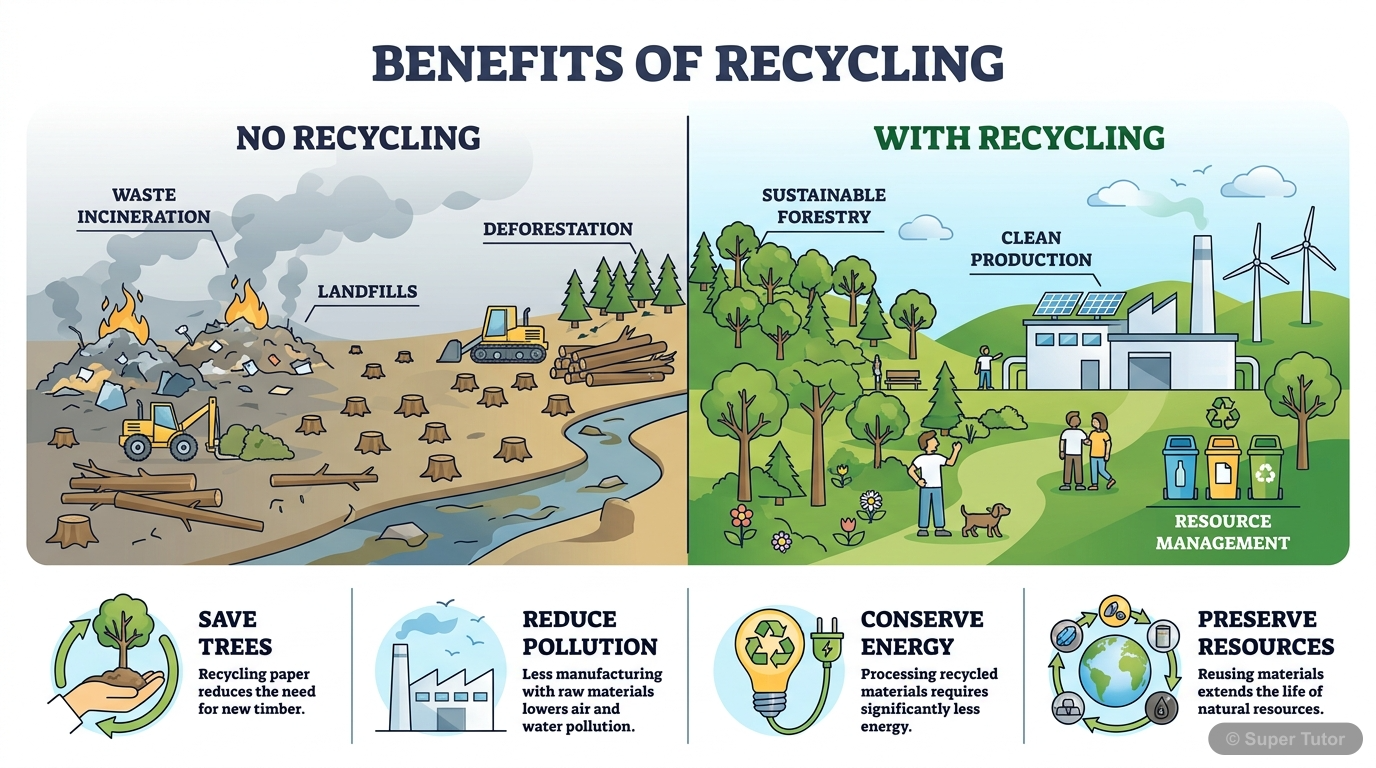
One of 3 illustrations for New Good Things From Rubbish in Super Tutor — alongside flashcards, concept maps and practice questions.
Overview
The chapter presents recycling and reuse as practical ways to save natural resources, reduce pollution, and manage waste responsibly. It explains how paper, plastic, metals, glass, and compostable waste can be handled in different ways, and it also highlights changes in everyday habits that help pro
Key Concepts
Recycling turns waste material into something
Recycling turns waste material into something useful again, while reuse means using the same object again without changing its form. Both help reduce
Making new materials every time increases
Making new materials every time increases the use of natural resources. Reusing old metal, paper, glass, and plastic reduces this pressure on the Eart
Plastic is the most difficult material
Plastic is the most difficult material to recycle because it comes in many varieties. Some plastic bottles have six layers of different plastics, and
Metals are easier to recycle
Metals are easier to recycle. Cars contain recycled metal parts, and recycling aluminium saves a large amount of energy because less electricity is ne
Glass is best reused many times
Glass is best reused many times. Milk bottles may travel repeatedly between the dairy and the user, and broken glass, called cullet, can be remelted a
Learning Objectives
- Understand the importance of conserving natural resources
- Recognise the difference between reuse and recycling
- Learn how different materials such as paper, plastic, metal, and glass are recycled or reused
- Develop awareness of wasteful habits and the need to reduce them
- Understand conjunctions used to join ideas in English
Frequently Asked Questions
What are the important topics in New Good Things From Rubbish for NIOS Class 10 English?
How should I revise New Good Things From Rubbish for the NIOS Class 10 board exam?
Sources & Official References
Content is aligned to the official syllabus. Refer to the board website for the latest curriculum.
More resources for New Good Things From Rubbish
For serious students
Get the full New Good Things From Rubbish chapter — start free.
Quizzes, flashcards, an AI doubt solver and a study plan for NIOS Class 10 English. Free to start, no card needed.