New Good Things From Rubbish — Important Questions
NIOS · Class 10 · English
44 important questions from New Good Things From Rubbish for NIOS Class 10 English, with answers. Written for the board exams 2027.
Interactive on Super Tutor
Studying New Good Things From Rubbish? Get the full interactive chapter.
Quizzes, flashcards, AI doubt-solver and a step-by-step study plan — built for important questions and more.
Free trial, no card needed.
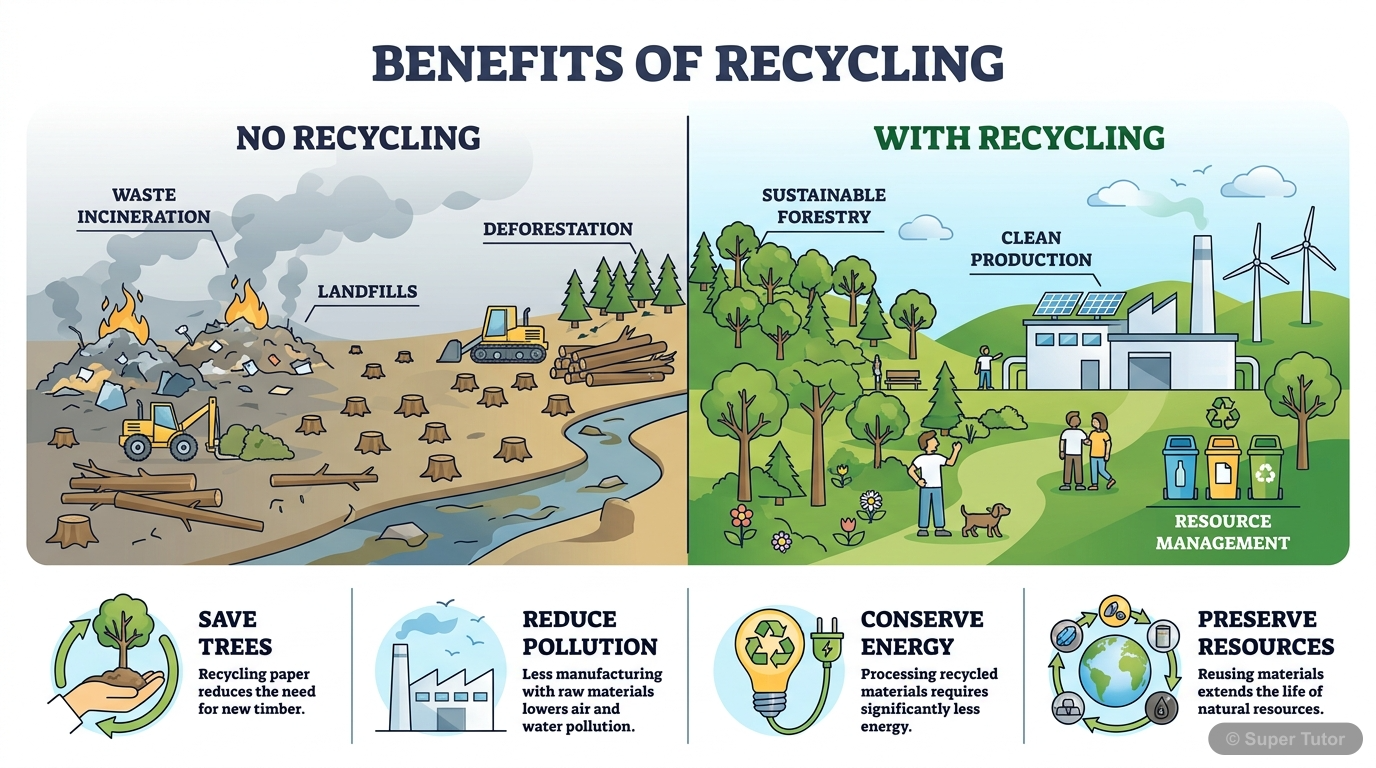
One of 3 illustrations for New Good Things From Rubbish in Super Tutor — alongside flashcards, concept maps and practice questions.
Important Questions from New Good Things From Rubbish
How many trips does the average milk bottle make according to the text?
Show answer
30 trips
The text mentions that 'In countries which still use milk bottles, the average bottle makes about 30 trips to and from the dairy.' This demonstrates the reuse value of glass bottles. Option A (20) is too low, option C (40) is higher than stated, and option D (50) is much higher than mentioned. The correct answer B shows how effectively glass bottles can be reused multiple times before recycling.
What fraction of the world's waste consists of paper?
Show answer
Half
The text clearly states that 'Half the world's waste consists of paper.' This statistic shows the significant proportion of paper waste globally. Option A (one-third) underestimates the amount. Option C (one-quarter) is too low. Option D (three-quarters) overestimates the proportion. The correct answer B demonstrates that paper waste forms a major portion of global waste, highlighting the importance of paper recycling.
According to the text, which country makes half its paper by recycling?
Show answer
Japan
The text mentions that 'Japan now makes half its paper by recycling.' This shows Japan's commitment to sustainable paper production. Option A (USA) is mentioned for tree felling, not paper recycling success. Option B (Britain) is mentioned for low glass recovery rates. Option D (India) is mentioned for generally avoiding waste but not specifically for paper recycling achievements. The correct answer C demonstrates Japan's leadership in paper recycling practices.
What type of glass can be made from cullet of mixed colors?
Show answer
Green glass
The text states that 'cullet of mixed colours can be used only to make green glass.' This is because mixing different colored glass creates a green tint. Option A (clear glass) cannot be made from mixed colors. Options B (blue) and D (red) are not mentioned as possible outcomes. The correct answer C explains why glass separation by color is important - mixed colors limit the recycling options to green glass only.
+40 more questions on New Good Things From Rubbish (NIOS Class 10 English)
Practise AllFrequently Asked Questions
What are the important topics in New Good Things From Rubbish for NIOS Class 10 English?
How many important questions are there in New Good Things From Rubbish?
Sources & Official References
Content is aligned to the official syllabus. Refer to the board website for the latest curriculum.
More resources for New Good Things From Rubbish
For serious students
Get the full New Good Things From Rubbish chapter — start free.
Quizzes, flashcards, an AI doubt solver and a study plan for NIOS Class 10 English. Free to start, no card needed.