New Good Things From Rubbish — Study Plan
NIOS · Class 10 · English
A step-by-step study plan for New Good Things From Rubbish, NIOS Class 10 English: what to learn first, what to practise and when to revise.
Interactive on Super Tutor
Studying New Good Things From Rubbish? Get the full interactive chapter.
Quizzes, flashcards, AI doubt-solver and a step-by-step study plan — built for study plan and more.
Free trial, no card needed.
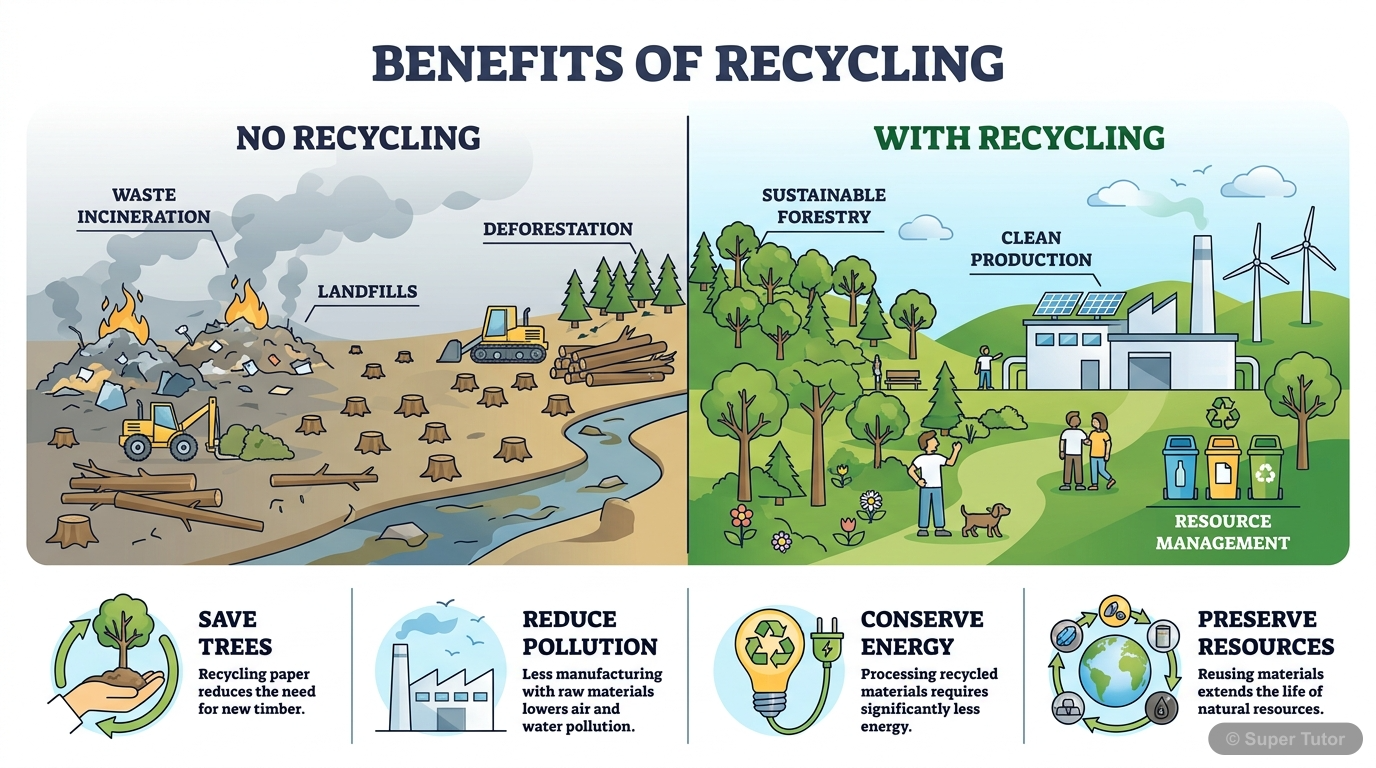
One of 3 illustrations for New Good Things From Rubbish in Super Tutor — alongside flashcards, concept maps and practice questions.
Study Plan
Learn the Theory
Read the textbook chapter carefully. Note down definitions, formulas and key ideas. Focus on: Main Idea and Message, Paper, Plastic, Metal, and Glass, Landfills, Composting, and Green Habits.
Practise
Solve the textbook exercises and extra practice questions. There are 44 questions available for this chapter.
Revise & Test
Revise key points without looking at your notes. Take a practice quiz and mark weak areas for another pass.
Spaced Revision
Come back to New Good Things From Rubbish after a week. Use flashcards for quick recall and try past exam questions on this chapter.
What to Focus On
- Reuse and recycling are important ways to save resources.
- Burning rubbish causes pollution.
- Not all waste is equally easy to recycle.
- Plastic is the most difficult substance to recycle.
- Different plastic types make recycling hard.
- Old plastic usually does not become a new bottle again.
- Metals can be recycled repeatedly.
- Old cars contain parts made from earlier scrapped cars.
- Valuable metals are especially worth recycling.
Common Mistakes to Avoid
Burning rubbish is a good way to get rid of waste.
Plastic can be recycled into the same kind of new bottle without any problem.
Glass should be broken and mixed together before recycling.
Memory Tips
Recycling saves money and environment
Plastic is hardest to recycle
Plastic bottles with six layers
Recycled plastic has lower quality uses
Want a personalised study plan?
Super Tutor builds a day-by-day plan for NIOS Class 10 English that fits your exam date and pace.
Create My Study PlanFrequently Asked Questions
What are the important topics in New Good Things From Rubbish for NIOS Class 10 English?
How should I revise New Good Things From Rubbish for the NIOS Class 10 board exam?
Sources & Official References
Content is aligned to the official syllabus. Refer to the board website for the latest curriculum.
More resources for New Good Things From Rubbish
Practice Quiz
Test yourself with a quick quiz
Important Questions
Exam-style questions with answers
Revision Notes
Key points for last-minute revision
Chapter Summary
Understand the chapter at a glance
Concept Maps
See how topics connect
Flashcards
Quick-fire cards for active recall
Syllabus
What topics to cover
For serious students
Get the full New Good Things From Rubbish chapter — start free.
Quizzes, flashcards, an AI doubt solver and a study plan for NIOS Class 10 English. Free to start, no card needed.