Chapter 4 of 10
Syllabus
Forms of Business Organisations — Syllabus
NIOS · Class 12 · Business Studies
What Forms of Business Organisations covers in NIOS Class 12 Business Studies: 4 topics, for the 2026-27 session.
45 questions26 flashcards5 concepts
Interactive on Super Tutor
Studying Forms of Business Organisations? Get the full interactive chapter.
Quizzes, flashcards, AI doubt-solver and a step-by-step study plan — built for syllabus and more.
Free trial, no card needed.
Super Tutor
Learn better with visuals Super Tutor pairs illustrations like this with notes and quizzes for Forms of Business Organisations.
4 Topics · NIOS Class 12 Business Studies · 2026-27
Topics in Forms of Business Organisations
1
1. Business Organisation - Meaning and Concept
- Business organisation is the systematic arrangement of resources (men, money, materials, machines, methods, technology) to carry out business activities
- It involves coordination and control of activities to achieve business objectives of earning profit
- Example: A rice mill requires land, building, machinery, labour, and raw materials organised systematically
2
2. Forms of Business Organisation - Overview
- Five main forms exist in India: Sole Proprietorship, Partnership, Joint Hindu Family, Cooperative Society, and Joint Stock Company
- Forms differ in: number of owners, formation process, capital sources, management structure, liability, continuity, and suitability
- Choice of form depends on: capital requirement, risk level, market size, nature of business, and managerial expertise needed
3
3. Sole Proprietorship
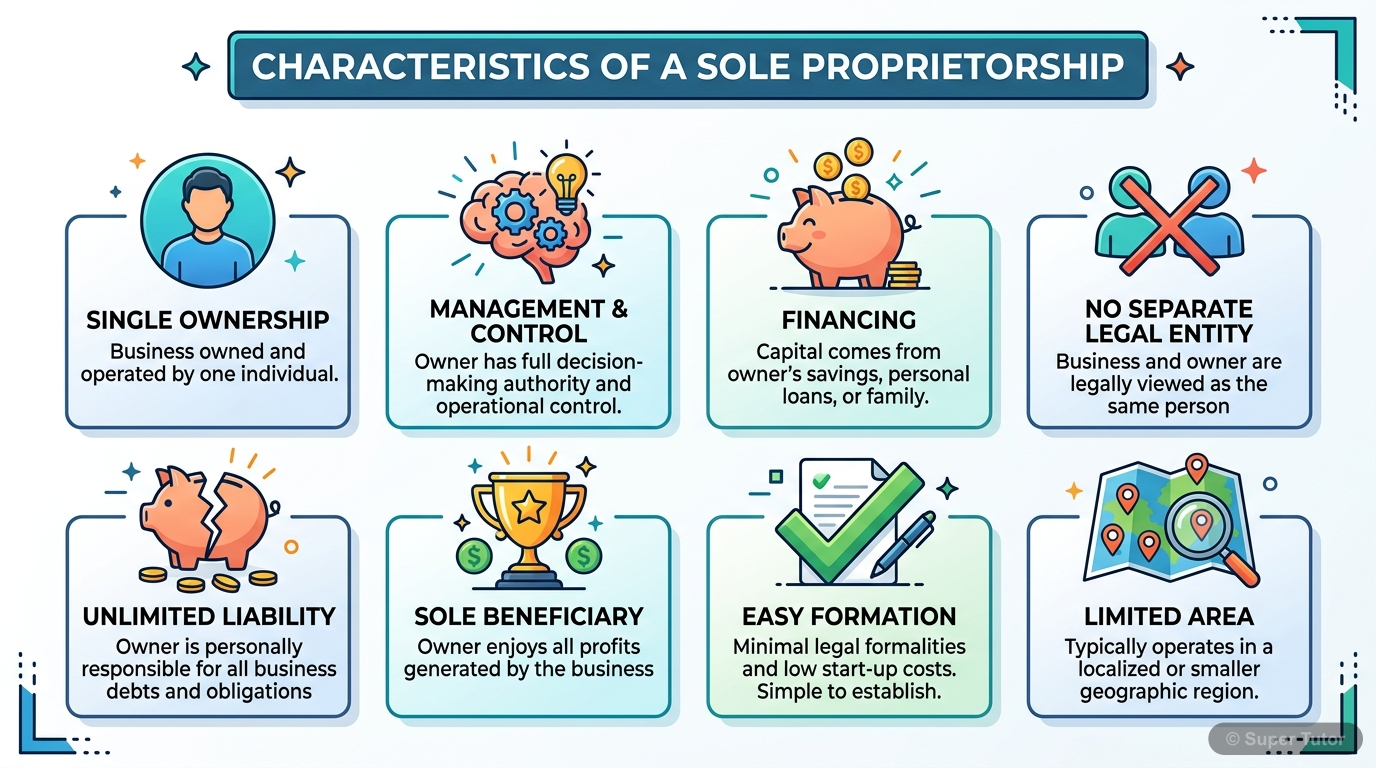
- Sole proprietorship means single ownership - one person owns, manages, and controls the entire business
- Definition: A business form where a single individual exclusively owns, manages, and controls the business with full authority, responsibility, and risk
- Proprietor takes all decisions, receives all profits, and bears all losses personally
4
3.1 Characteristics of Sole Proprietorship
- Single Ownership: One person owns and brings together all resources
- No Separation of Ownership and Management: Owner personally manages using their skill and intelligence
- Less Legal Formalities: Formation is easy and simple with no mandatory documentation
Key Concepts
A form of business organisation whereA contractual association of twoA unique form of ancestral businessA voluntary association of personsA legal obligation where the proprietor
Work through every topic in Forms of Business Organisations with notes and quizzes
Start This ChapterFrequently Asked Questions
What are the important topics in Forms of Business Organisations for NIOS Class 12 Business Studies?
Key topics in Forms of Business Organisations include Business Organisation - Meaning and Concept, Forms of Business Organisation - Overview, Sole Proprietorship, 1 Characteristics of Sole Proprietorship. Study these first, then practise questions on each for the NIOS Class 12 board exam.
How should I revise Forms of Business Organisations for the NIOS Class 12 board exam?
Learn the core ideas first, then work through the 45 practice questions on Forms of Business Organisations. Revise definitions regularly and use flashcards for quick recall before the exam.
Sources & Official References
Content is aligned to the official syllabus. Refer to the board website for the latest curriculum.
More resources for Forms of Business Organisations
For serious students
Get the full Forms of Business Organisations chapter — start free.
Quizzes, flashcards, an AI doubt solver and a study plan for NIOS Class 12 Business Studies. Free to start, no card needed.