Atoms, Molecules and Chemical Arithmetic — Practice Quiz
NIOS · Class 12 · Chemistry
Try a 4-question quiz on Atoms, Molecules and Chemical Arithmetic for NIOS Class 12 Chemistry: tap an answer to check it and see why.
Interactive on Super Tutor
Studying Atoms, Molecules and Chemical Arithmetic? Get the full interactive chapter.
Quizzes, flashcards, AI doubt-solver and a step-by-step study plan — built for practice quiz and more.
Free trial, no card needed.
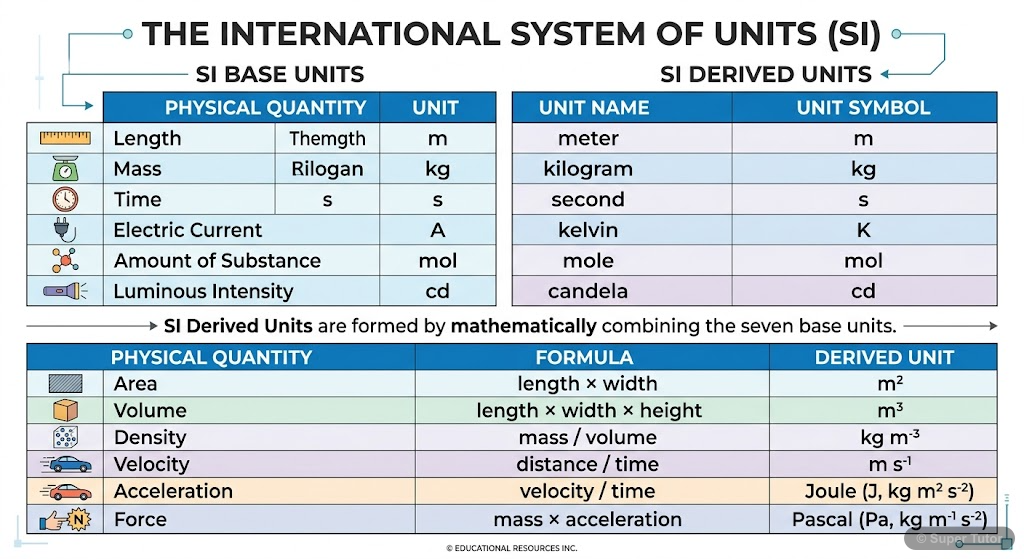
One of 21 illustrations for Atoms, Molecules and Chemical Arithmetic in Super Tutor — alongside flashcards, concept maps and practice questions.
See them allQuick Quiz: Atoms, Molecules and Chemical Arithmetic
0/4Tap an answer to check it instantly. No sign-up needed for these 4.
For 2.0 mol of ammonia formed in the Haber process, calculate the mass of hydrogen needed. Reaction: N2(g) + 3H2(g) -> 2NH3(g)
A reaction follows 2SO2(g) + O2(g) -> 2SO3(g). If 3.0 mol SO2 and 2.0 mol O2 are mixed, calculate the maximum amount of SO3 formed.
In the reaction 2Na(s) + Cl2(g) -> 2NaCl(s), 2.3 g sodium reacts with 2.0 L chlorine at STP. Calculate the mass of chlorine left unreacted. Take molar volume at STP as 22.7 L/mol.
A 14.0 g sample of PbO reacts according to PbS(s) + 2PbO(s) -> 3Pb(l) + SO2(g). Calculate the mass of lead formed.
Sample Questions
For the combustion reaction 2C4H10(g) + 13O2(g) -> 8CO2(g) + 10H2O(g), calculate the mass of oxygen needed for 1.0 kg of butane.
Show answer
3.59 kg
The equation shows 116 g butane need 416 g oxygen. For 1000 g butane, oxygen needed = 416 × 1000 / 116 = 3586 g = 3.59 kg.
A compound contains 58.8% carbon, 8.28% nitrogen, 6.56% hydrogen and the rest oxygen. Calculate the percentage of oxygen.
Show answer
26.36%
Percentage of oxygen = 100 - (58.8 + 8.28 + 6.56) = 100 - 73.64 = 26.36%.
A 100.0 g sample of water contains 11.11 g hydrogen and 88.89 g oxygen. Calculate the mole ratio H:O.
Show answer
2:1
Moles of H = 11.11/1.0 = 11.11 mol. Moles of O = 88.89/16.0 = 5.55 mol. Dividing both by 5.55 gives 2:1.
A sample contains 8.46 x 10^24 atoms of magnesium. Calculate the amount of magnesium in moles using Avogadro's constant 6.022 x 10^23 mol^-1.
Show answer
14.0 mol
Number of moles = number of entities / Avogadro's constant = 8.46 x 10^24 / 6.022 x 10^23 = 14.0 mol.
+58 more questions on Atoms, Molecules and Chemical Arithmetic (NIOS Class 12 Chemistry)
Practise AllFrequently Asked Questions
What are the important topics in Atoms, Molecules and Chemical Arithmetic for NIOS Class 12 Chemistry?
How many practice questions are there for Atoms, Molecules and Chemical Arithmetic?
Sources & Official References
Content is aligned to the official syllabus. Refer to the board website for the latest curriculum.
More resources for Atoms, Molecules and Chemical Arithmetic
Important Questions
Exam-style questions with answers
Revision Notes
Key points for last-minute revision
Chapter Summary
Understand the chapter at a glance
Concept Maps
See how topics connect
Study Plan
Step-by-step plan for this chapter
Flashcards
Quick-fire cards for active recall
Syllabus
What topics to cover
For serious students
Get the full Atoms, Molecules and Chemical Arithmetic chapter — start free.
Quizzes, flashcards, an AI doubt solver and a study plan for NIOS Class 12 Chemistry. Free to start, no card needed.