Atoms, Molecules and Chemical Arithmetic — Flashcards
NIOS · Class 12 · Chemistry
40 flashcards for Atoms, Molecules and Chemical Arithmetic (NIOS Class 12 Chemistry) to test yourself on key terms and facts.
Interactive on Super Tutor
Studying Atoms, Molecules and Chemical Arithmetic? Get the full interactive chapter.
Quizzes, flashcards, AI doubt-solver and a step-by-step study plan — built for flashcards and more.
Free trial, no card needed.
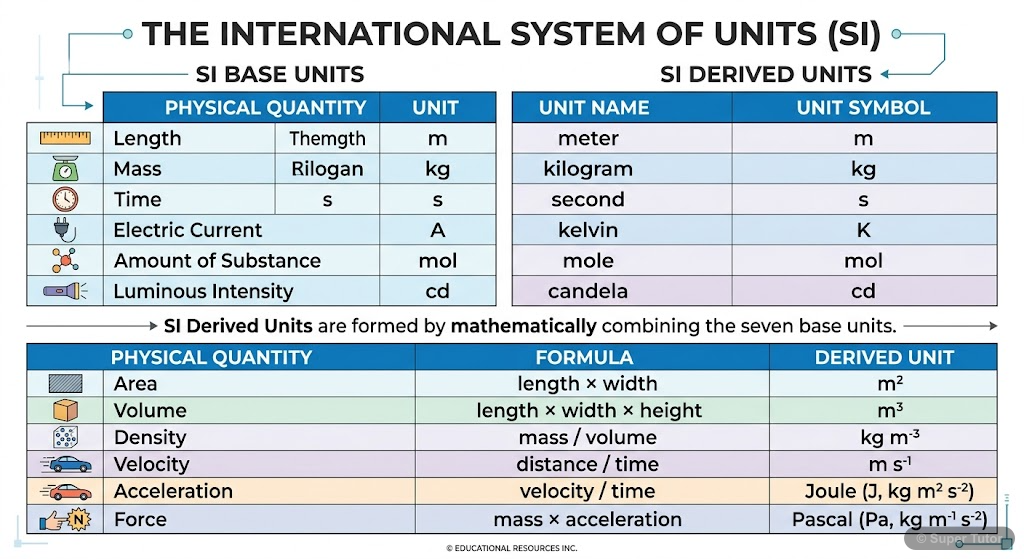
One of 21 illustrations for Atoms, Molecules and Chemical Arithmetic in Super Tutor — alongside flashcards, concept maps and practice questions.
See them allWhat is chemistry and why is it called the central science?
Answer
Chemistry is the study of matter and the changes it undergoes. It is called the central science because knowledge of chemistry is essential for biology, physics, geology, ecology, and many other subje…
Why is matter considered particulate in nature?
Answer
Matter is made up of extremely tiny particles called atoms or molecules. A piece of matter can be broken into smaller and smaller particles until these tiny units are reached, which explains the parti…
Who first proposed the atomic idea about 440 B.C., and who earlier propounded the atomic concept in India?
Answer
Leucippus and Democritus first proposed the atomic idea about 440 B.C. Maharshi Kanad propounded the atomic concept earlier, around 500 BC, and named the smallest particle of matter Parmanu.
What is the law of conservation of mass?
Answer
In every chemical reaction, the total mass of all the reactants is equal to the total mass of all the products. Mass is neither created nor destroyed in a chemical reaction.
State the law of definite or constant proportions.
Answer
"In a given chemical compound, the proportions by mass of the elements that compose it are fixed, independent of the origin of the compound or its mode of preparation."…
What is the law of multiple proportions?
Answer
"The law states that when two elements form more than one compound, the masses of one element in these compound for a fixed mass of the other element are in the ratio of small whole numbers." Example:…
Write the balanced equation for the formation of iron oxide from iron and oxygen.
Answer
4Fe(s) + 3O2(g) → 2Fe2O3(s) Microscopic meaning: 4 atoms of Fe react with 3 molecules of O2 to form 2 formula units of Fe2O3.
How does Dalton's atomic theory explain chemical combination?
Answer
Dalton's atomic theory says that matter consists of indivisible atoms, atoms of the same element are identical, different elements have different atoms, atoms are indestructible in chemical reactions,…
+32 more flashcards
Practise AllFrequently Asked Questions
What are the important topics in Atoms, Molecules and Chemical Arithmetic for NIOS Class 12 Chemistry?
How many flashcards are available for Atoms, Molecules and Chemical Arithmetic?
How should I revise Atoms, Molecules and Chemical Arithmetic for the NIOS Class 12 board exam?
Sources & Official References
Content is aligned to the official syllabus. Refer to the board website for the latest curriculum.
More resources for Atoms, Molecules and Chemical Arithmetic
Practice Quiz
Test yourself with a quick quiz
Important Questions
Exam-style questions with answers
Revision Notes
Key points for last-minute revision
Chapter Summary
Understand the chapter at a glance
Concept Maps
See how topics connect
Study Plan
Step-by-step plan for this chapter
Syllabus
What topics to cover
For serious students
Get the full Atoms, Molecules and Chemical Arithmetic chapter — start free.
Quizzes, flashcards, an AI doubt solver and a study plan for NIOS Class 12 Chemistry. Free to start, no card needed.