Atoms, Molecules and Chemical Arithmetic — Chapter Summary
NIOS · Class 12 · Chemistry
Summary of Atoms, Molecules and Chemical Arithmetic for NIOS Class 12 Chemistry. Part of the NIOS Class 12 Chemistry syllabus.
Interactive on Super Tutor
Studying Atoms, Molecules and Chemical Arithmetic? Get the full interactive chapter.
Quizzes, flashcards, AI doubt-solver and a step-by-step study plan — built for chapter summary and more.
Free trial, no card needed.
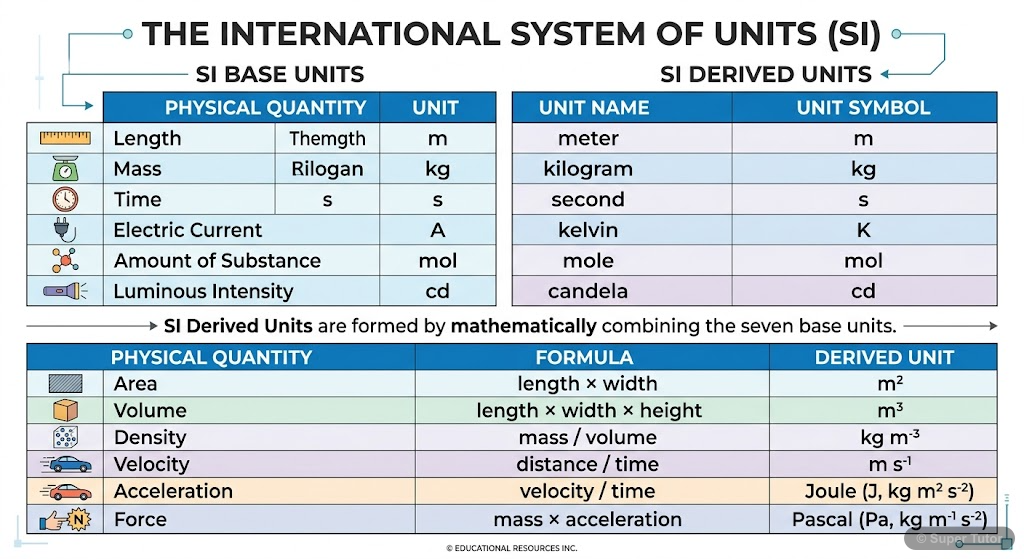
One of 21 illustrations for Atoms, Molecules and Chemical Arithmetic in Super Tutor — alongside flashcards, concept maps and practice questions.
See them allOverview
Notice how chemistry connects tiny particles with measurable quantities: atoms, molecules, moles, masses, and gas volumes all fit together through fixed laws and simple ratios. This chapter builds the bridge from the particulate nature of matter to chemical calculations, so a formula, a balanced equ
Key Concepts
Chemistry studies matter and its changes
Chemistry studies matter and its changes. It is called the central science because knowledge of it is essential for biology, physics, geology, ecology
Matter is made of very tiny
Matter is made of very tiny particles. Plato and Aristotle believed matter is continuous, but Leucippus and Democritus proposed the atomic idea about
The law of conservation of mass
The law of conservation of mass states that total mass of reactants equals total mass of products in a chemical reaction. The law of definite or const
John Dalton gave the basic atomic
John Dalton gave the basic atomic theory in 1803 and published A New System of Chemical Philosophy with five postulates: matter consists of indivisibl
An atom is the smallest particle
An atom is the smallest particle of an element that retains its chemical properties. A molecule is an aggregate of at least two atoms in a definite ar
Learning Objectives
- Explain the scope of chemistry and why it is called the central science
- Describe the particulate nature of matter and the early atomic idea
- State the laws of conservation of mass, definite proportions, and multiple proportions
- Explain Dalton's atomic theory and its five postulates
- Differentiate between atoms, molecules, elements, compounds, and ions
Frequently Asked Questions
What are the important topics in Atoms, Molecules and Chemical Arithmetic for NIOS Class 12 Chemistry?
How should I revise Atoms, Molecules and Chemical Arithmetic for the NIOS Class 12 board exam?
Sources & Official References
Content is aligned to the official syllabus. Refer to the board website for the latest curriculum.
More resources for Atoms, Molecules and Chemical Arithmetic
For serious students
Get the full Atoms, Molecules and Chemical Arithmetic chapter — start free.
Quizzes, flashcards, an AI doubt solver and a study plan for NIOS Class 12 Chemistry. Free to start, no card needed.