Sexual Reproduction in Flowering Plants — Syllabus
Punjab Board · Class 12 · Biology
What Sexual Reproduction in Flowering Plants covers in Punjab Board Class 12 Biology: 4 topics, for the 2026-27 session.
Interactive on Super Tutor
Studying Sexual Reproduction in Flowering Plants? Get the full interactive chapter.
Quizzes, flashcards, AI doubt-solver and a step-by-step study plan — built for syllabus and more.
Free trial, no card needed.
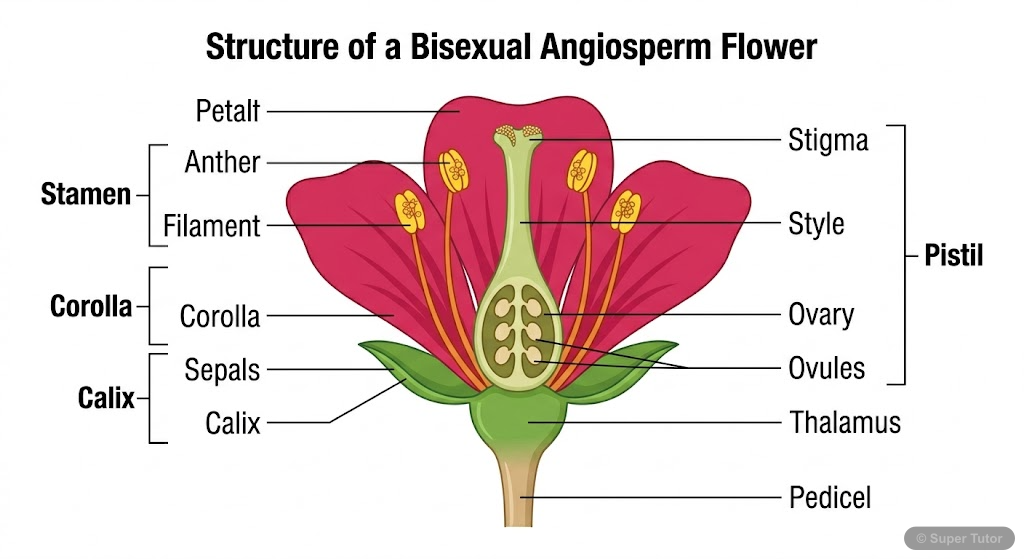
Learn better with visuals Super Tutor pairs illustrations like this with notes and quizzes for Sexual Reproduction in Flowering Plants.
Topics in Sexual Reproduction in Flowering Plants
The Flower – Site of Sexual Reproduction
- The flower is the reproductive organ of angiosperms (flowering plants).
- The two most important reproductive units develop in the anther (male) and the pistil (female).
- Androecium (whorl of stamens) = male reproductive organ.
Stamen, Microsporangium and Pollen Grain
- A typical stamen has two parts: a long, slender filament and a terminal bilobed anther.
- A typical angiosperm anther is bilobed, with each lobe having two theca – so it is dithecous.
- Each anther is tetragonal (4-sided) with four microsporangia, two in each lobe.
Pistil, Megasporangium (Ovule) and Embryo Sac
- Gynoecium may be monocarpellary (single pistil) or multicarpellary (more than one pistil).
- Multicarpellary pistils may be syncarpous (fused) – e.g., Papaver, or apocarpous (free) – e.g., Michelia.
- Each pistil has three parts: Stigma (landing platform for pollen), Style (elongated slender part), Ovary (basal bulged part).
Pollination – Types and Agents
- Pollination: Transfer of pollen grains from anther to the stigma of a pistil.
- Both male and female gametes in flowering plants are non-motile; hence they need external agents for transfer.
- Three types of pollination based on pollen source:
Key Concepts
Work through every topic in Sexual Reproduction in Flowering Plants with notes and quizzes
Start This ChapterFrequently Asked Questions
What are the important topics in Sexual Reproduction in Flowering Plants for Punjab Board Class 12 Biology?
How should I revise Sexual Reproduction in Flowering Plants for the Punjab Board Class 12 board exam?
Sources & Official References
Content is aligned to the official syllabus. Refer to the board website for the latest curriculum.
More resources for Sexual Reproduction in Flowering Plants
For serious students
Get the full Sexual Reproduction in Flowering Plants chapter — start free.
Quizzes, flashcards, an AI doubt solver and a study plan for Punjab Board Class 12 Biology. Free to start, no card needed.