International Law — Chapter Summary
CBSE · Class 12 · Legal Studies
Summary of International Law for CBSE Class 12 Legal Studies. Key concepts: A framework of rules, Public International Law and Primary sources.
Interactive on Super Tutor
Studying International Law? Get the full interactive chapter.
Quizzes, flashcards, AI doubt-solver and a step-by-step study plan — built for chapter summary and more.
Free trial, no card needed.
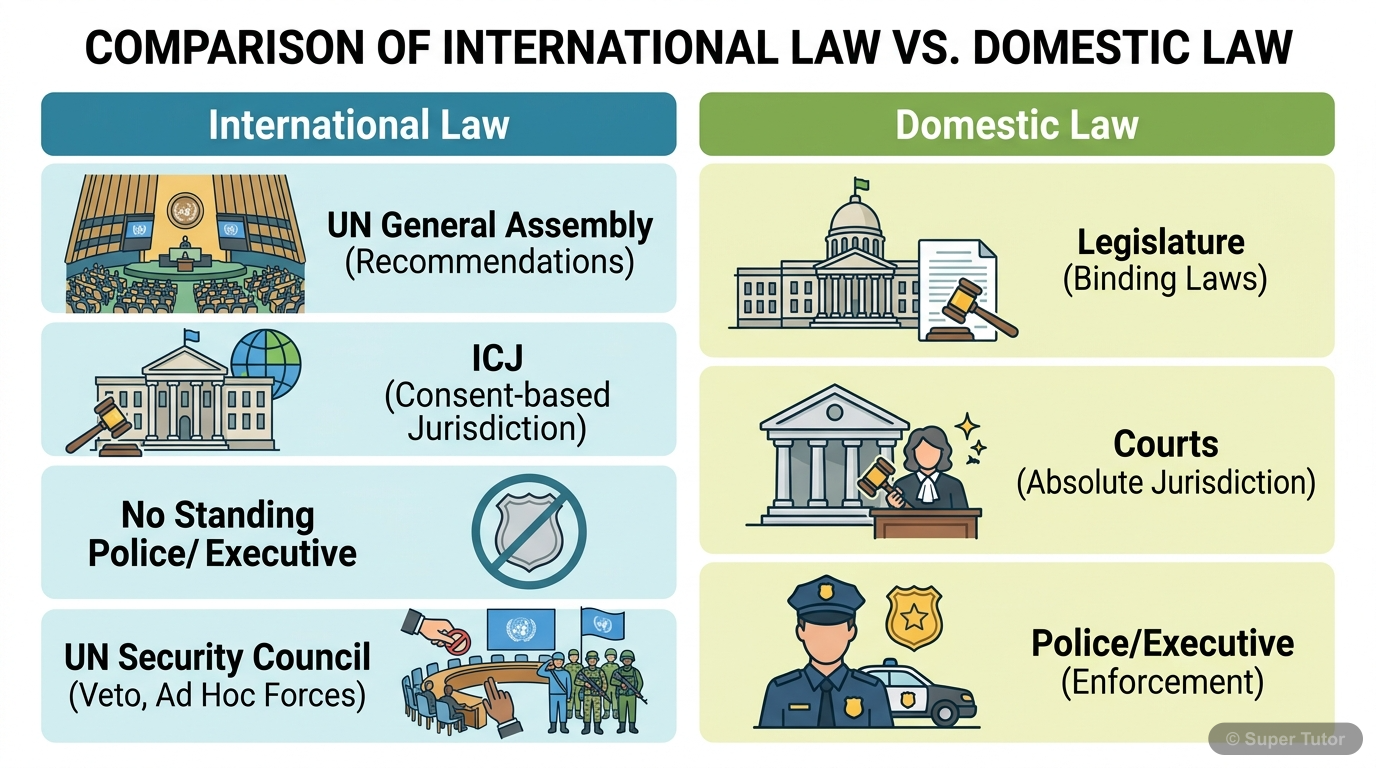
One of 11 illustrations for International Law in Super Tutor — alongside flashcards, concept maps and practice questions.
Overview
International Law is a system of rules and principles that governs relations between states and other international entities. Unlike domestic laws that regulate citizens within a country, international law provides a framework for interstate relations, dispute resolution, and global cooperation. Thi
Key Concepts
A framework of rules and principles
A framework of rules and principles binding relations between states, governing their conduct amongst themselves and other international entities. It
Public International Law regulates relations between
Public International Law regulates relations between states and international organizations, covering areas like peace, security, trade, and human rig
Primary sources
Primary sources: (1) Treaties/Conventions - written agreements between states, (2) Customary International Law - general practice accepted as law with
Rules that develop through consistent state
Rules that develop through consistent state practice (objective element) combined with opinio juris - the belief that such practice is legally require
A body of international law focused
A body of international law focused on protecting fundamental human rights globally. Key instruments include the Universal Declaration of Human Rights
Learning Objectives
- Trace the historical evolution of international law from ancient cooperative agreements to modern frameworks
- Differentiate between Public International Law (governing state relations) and Private International Law (conflict of laws)
- Identify and explain the primary sources of international law: Treaties, Customs, and ICJ decisions
- Understand the role of international human rights conventions and treaties in protecting fundamental rights
- Analyze the interplay between international law and Indian municipal law through constitutional provisions
Frequently Asked Questions
What are the important topics in International Law for CBSE Class 12 Legal Studies?
Sources & Official References
- NCERT Official — ncert.nic.in
- CBSE Academic — cbseacademic.nic.in
- CBSE Official — cbse.gov.in
- National Education Policy 2020 — education.gov.in
Content is aligned to the official syllabus. Refer to the board website for the latest curriculum.
More resources for International Law
For serious students
Get the full International Law chapter — start free.
Quizzes, flashcards, an AI doubt solver and a study plan for CBSE Class 12 Legal Studies. Free to start, no card needed.