Judiciary — Chapter Summary
CBSE · Class 12 · Legal Studies
Summary of Judiciary for CBSE Class 12 Legal Studies. Key concepts: The Indian judicial system, Constitutional safeguards and Power of courts to examine.
Interactive on Super Tutor
Studying Judiciary? Get the full interactive chapter.
Quizzes, flashcards, AI doubt-solver and a step-by-step study plan — built for chapter summary and more.
Free trial, no card needed.
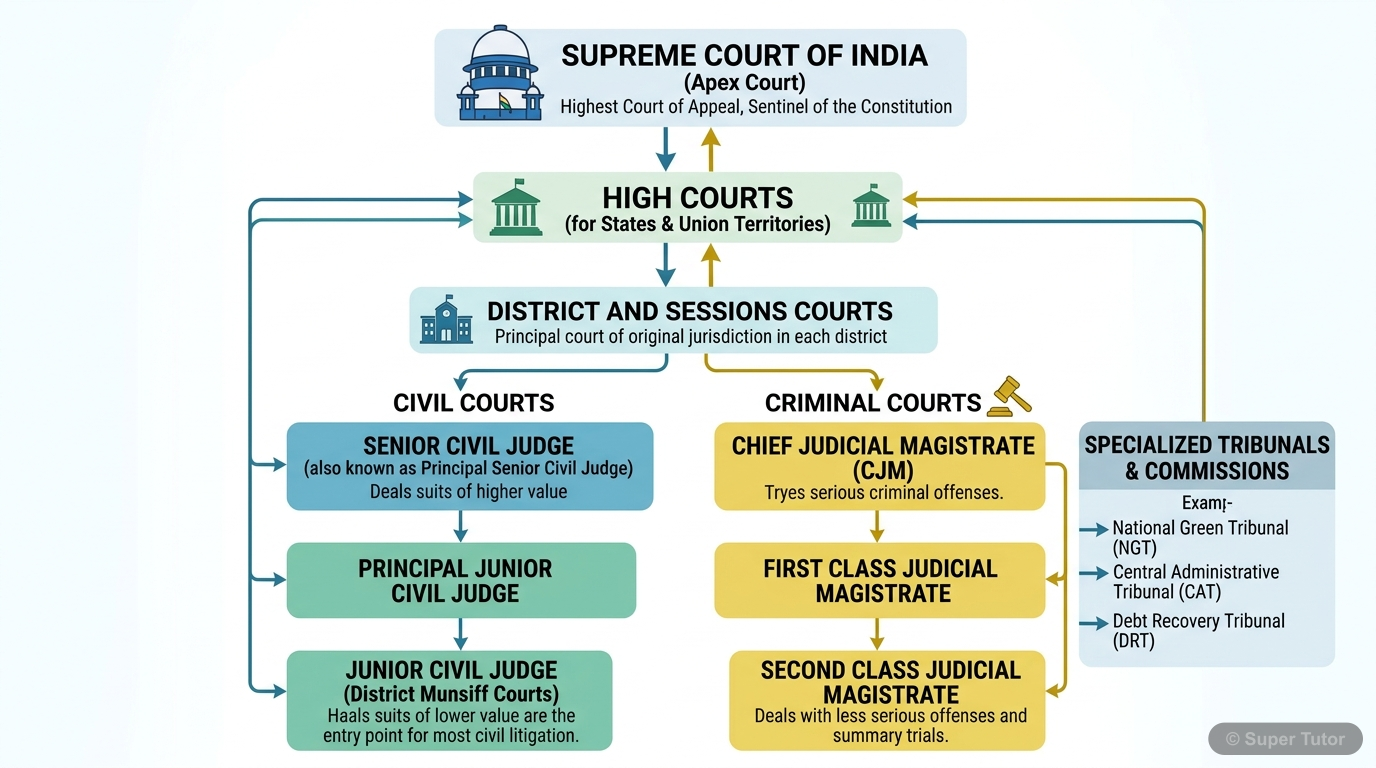
Learn better with visuals Super Tutor pairs illustrations like this with notes and quizzes for Judiciary.
Overview
The Indian Judiciary stands as one of the three pillars of democracy alongside the executive and legislature. Established under the Constitution of India, it operates as a single integrated system that administers both Central and State laws. The judiciary serves as the guardian of the Constitution,
Key Concepts
The Indian judicial system follows
The Indian judicial system follows a three-tier structure: Supreme Court at the apex (34 judges including CJI), 25 High Courts at state level, and sub
Constitutional safeguards ensure judiciary's autonomy from
Constitutional safeguards ensure judiciary's autonomy from executive and legislative interference. These include security of tenure (until retirement
Power of courts to examine
Power of courts to examine and declare legislative or executive actions unconstitutional if they violate the Constitution. Courts can issue writs (hab
Judicial principle established in Kesavananda Bharati
Judicial principle established in Kesavananda Bharati case (1973) that certain fundamental features of the Constitution cannot be amended even through
Relaxed procedure allowing any public
Relaxed procedure allowing any public-spirited citizen to approach courts on behalf of those who cannot access justice due to poverty or social disabi
Learning Objectives
- Understand the hierarchical structure of Indian courts from Supreme Court to subordinate courts
- Analyze the jurisdiction and powers of the Supreme Court, High Courts, and lower courts
- Examine the appointment, retirement, and removal procedures for judges
- Explore the concept of judicial review and the basic structure doctrine
- Evaluate the role of tribunals in the judicial system
Frequently Asked Questions
What are the important topics in Judiciary for CBSE Class 12 Legal Studies?
Sources & Official References
- NCERT Official — ncert.nic.in
- CBSE Academic — cbseacademic.nic.in
- CBSE Official — cbse.gov.in
- National Education Policy 2020 — education.gov.in
Content is aligned to the official syllabus. Refer to the board website for the latest curriculum.
More resources for Judiciary
For serious students
Get the full Judiciary chapter — start free.
Quizzes, flashcards, an AI doubt solver and a study plan for CBSE Class 12 Legal Studies. Free to start, no card needed.