Alternative Dispute Resolution in India (ADR) — Chapter Summary
CBSE · Class 12 · Legal Studies
Summary of Alternative Dispute Resolution in India (ADR) for CBSE Class 12 Legal Studies. Part of the CBSE Class 12 Legal Studies syllabus.
Interactive on Super Tutor
Studying Alternative Dispute Resolution in India (ADR)? Get the full interactive chapter.
Quizzes, flashcards, AI doubt-solver and a step-by-step study plan — built for chapter summary and more.
Free trial, no card needed.
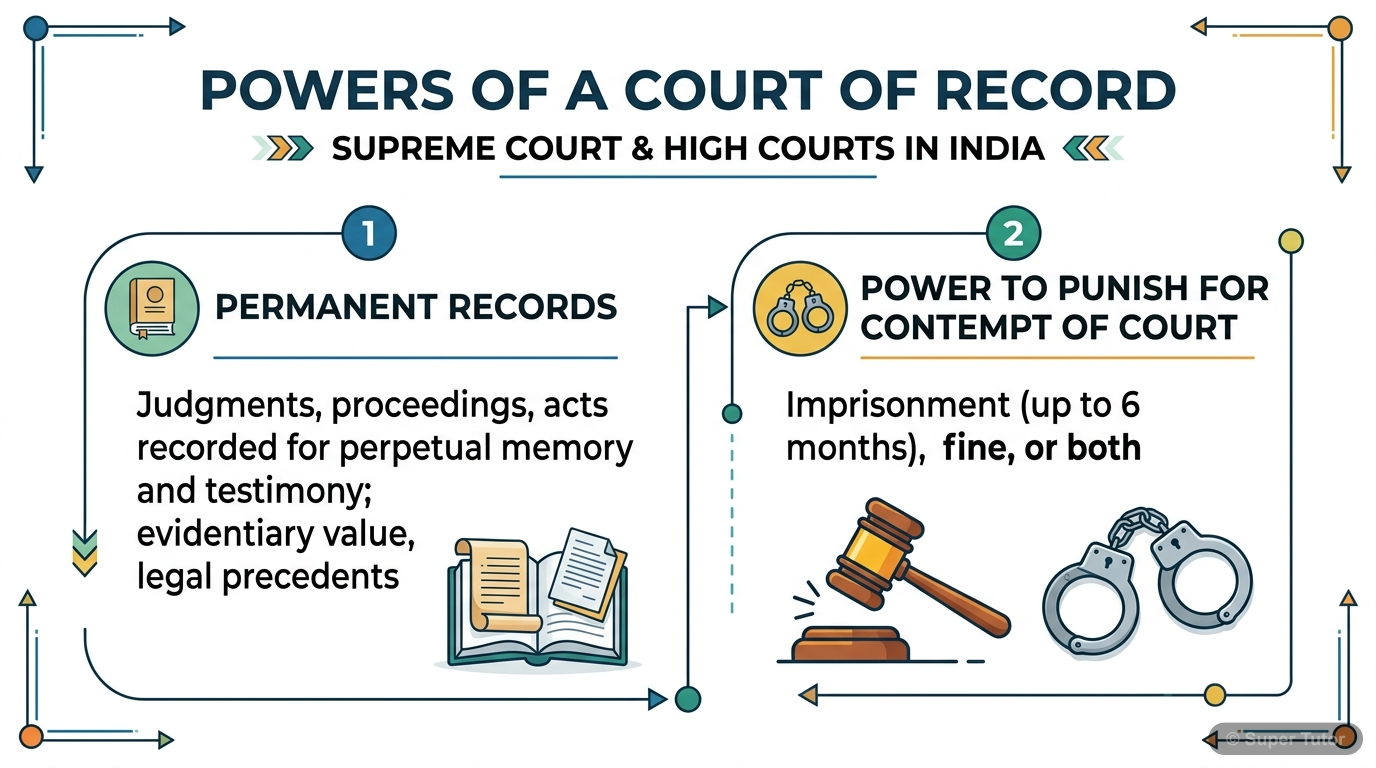
Learn better with visuals Super Tutor pairs illustrations like this with notes and quizzes for Alternative Dispute Resolution in India (ADR).
Overview
Alternative Dispute Resolution (ADR) represents a paradigm shift from traditional adversarial court proceedings to more collaborative, efficient, and cost-effective methods of resolving disputes. In India, ADR has evolved from ancient practices like Panchayati Raj systems to modern statutory framewo
Key Concepts
Adversarial systems rely on parties
Adversarial systems rely on parties and their lawyers to present evidence and arguments while judges remain passive decision-makers (followed in commo
ADR encompasses non
ADR encompasses non-adversarial techniques for resolving disputes outside traditional court systems. It includes arbitration, mediation, conciliation,
A private dispute resolution process where
A private dispute resolution process where parties agree to submit their disputes to neutral arbitrators who render binding awards. Governed by the Ar
A facilitative process where a neutral
A facilitative process where a neutral mediator helps parties reach voluntary agreements without imposing decisions. Types include evaluative (mediato
Similar to mediation but with
Similar to mediation but with a more interventionist conciliator who can suggest solutions. Governed by Part III of the Arbitration and Conciliation A
Learning Objectives
- Distinguish between adversarial and inquisitorial systems of justice and analyze their advantages and disadvantages
- Define Alternative Dispute Resolution (ADR) and evaluate its scope, benefits, and significance in the Indian context
- Comprehensively examine various ADR mechanisms including arbitration, mediation, conciliation, Lok Adalats, and tribunals
- Analyze the legal framework governing ADR in India, particularly the Arbitration and Conciliation Act, 1996 and Section 89 of CPC
- Evaluate the role and functioning of ombudsman institutions including CVC, Lokpal, Lokayukta, Banking Ombudsman, and Insurance Ombudsman
Frequently Asked Questions
What are the important topics in Alternative Dispute Resolution in India (ADR) for CBSE Class 12 Legal Studies?
Sources & Official References
- NCERT Official — ncert.nic.in
- CBSE Academic — cbseacademic.nic.in
- CBSE Official — cbse.gov.in
- National Education Policy 2020 — education.gov.in
Content is aligned to the official syllabus. Refer to the board website for the latest curriculum.
More resources for Alternative Dispute Resolution in India (ADR)
For serious students
Get the full Alternative Dispute Resolution in India (ADR) chapter — start free.
Quizzes, flashcards, an AI doubt solver and a study plan for CBSE Class 12 Legal Studies. Free to start, no card needed.