Transpiration — Concept Maps
ICSE · Class 10 · Biology
4 concept maps of Transpiration for ICSE Class 10 Biology, each also written out as a text outline. Part of the ICSE Class 10 Biology syllabus.
Interactive on Super Tutor
Studying Transpiration? Get the full interactive chapter.
Quizzes, flashcards, AI doubt-solver and a step-by-step study plan — built for concept maps and more.
Free trial, no card needed.
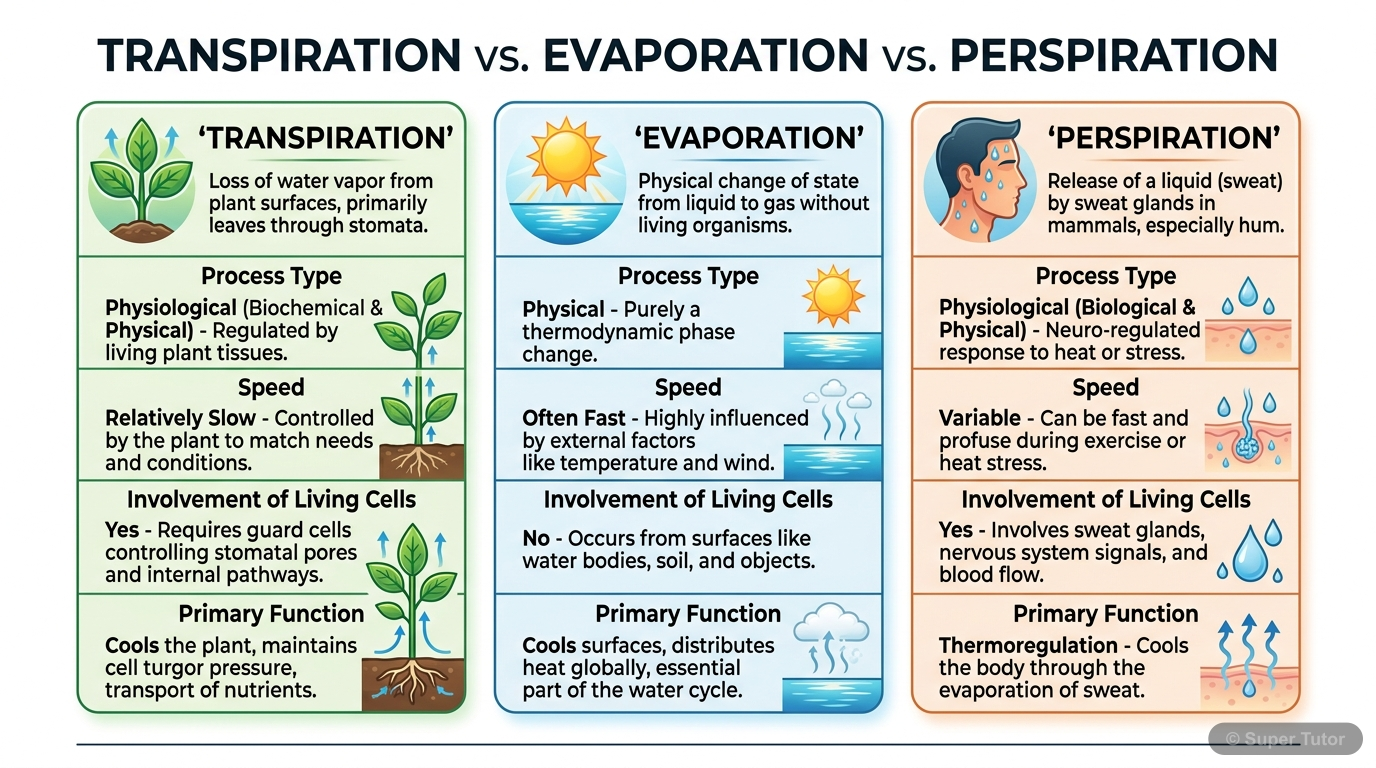
Learn better with visuals Super Tutor pairs illustrations like this with notes and quizzes for Transpiration.
Get startedStomatal Opening vs Closing — The Correct Mechanism
The map in words
- Daytime - Light Available
- Photosynthesis in Guard Cells
- Glucose Produced - Osmotic Pressure Rises
- Guard Cells Absorb Water by Endosmosis
- Guard Cells Become TURGID
- Thin Outer Wall Bulges Outward
- Thick Inner Wall Pulled Apart
- STOMA OPENS - Transpiration Occurs
- Thick Inner Wall Pulled Apart
- Thin Outer Wall Bulges Outward
- Guard Cells Become TURGID
- Guard Cells Absorb Water by Endosmosis
- Glucose Produced - Osmotic Pressure Rises
- Photosynthesis in Guard Cells
- Nighttime - No Light
- No Photosynthesis in Guard Cells
- No Glucose - Osmotic Pressure Falls
- Guard Cells Lose Water
- Guard Cells Become FLACCID
- Outer Wall Returns to Original Position
- Inner Walls Move Together
- STOMA CLOSES - Transpiration Stops
- Inner Walls Move Together
- Outer Wall Returns to Original Position
- Guard Cells Become FLACCID
- Guard Cells Lose Water
- No Glucose - Osmotic Pressure Falls
- No Photosynthesis in Guard Cells
Transpiration - Complete Chapter Concept Map
The map in words
- Transpiration
- Definition
- Loss of Water Vapour
- From Aerial Plant Parts
- Physiological Process
- Types
- Stomatal
- Through Stomata
- 80 to 90 percent
- Cuticular
- Through Cuticle
- 3 to 9 percent
- Lenticular
- Through Lenticels
- 0.1 to 0.3 percent
- Stomatal
- Demonstration
- Bell Jar Method
- Polythene Bag Method
- Cobalt Chloride Method
- Measurement
- Weighing Method
- Loss in Weight
- Potometer Method
- Ganong Potometer
- Air Bubble Movement
- Weighing Method
- Stomatal Mechanism
- Guard Cells
- Kidney Shaped
- Contain Chloroplasts
- Thick Inner Wall
- Thin Outer Wall
- Opening
- Photosynthesis
- Sugar Formation
- Increased Osmotic Pressure
- Endosmosis
- Turgor Increases
- Closing
- Loss of Turgidity
- Flaccid State
- Stoma Closes
- Guard Cells
- Factors Affecting
- External Factors
- Light
- Temperature
- Wind
- Humidity
- Soil Water
- CO2 Concentration
- Atmospheric Pressure
- Internal Factors
- Leaf Arrangement
- Cuticle Thickness
- Number of Stomata
- Anatomical Features
- Root Shoot Ratio
- External Factors
- Necessary Evil
- Necessary
- Reduces Leaf Temperature
- Creates Transpiration Pull
- Distributes Water and Minerals
- Role in Water Cycle
- Evil
- Causes Wilting
- Wastage of Energy
- Necessary
- Ascent of Sap
- Path Through Xylem
- Cohesive Force
- Adhesive Force
- Transpiration Pull
- Direct Water Loss
- Guttation
- Through Hydathodes
- Root Pressure
- Water Droplets
- Bleeding
- Through Injuries
- Root Pressure
- Guttation
- Reducing Transpiration
- Sunken Stomata
- Thick Cuticle
- Modified Leaves to Spines
- Rolled Leaves
- Anti-transpirants
- Definition
Overview of Transpiration — All Key Concepts
The map in words
- Transpiration
- Definition
- Loss of water vapour
- From aerial parts
- Types
- Stomatal
- 80 to 90 percent
- Through stomata
- Cuticular
- 3 to 9 percent
- Through cuticle
- Lenticular
- 0.1 to 0.3 percent
- Through lenticels
- Stomatal
- Mechanism
- Guard cells
- Osmotic pressure
- Turgid opens stoma
- Flaccid closes stoma
- Factors
- External
- Light
- Temperature
- Humidity
- Wind
- Internal
- Cuticle thickness
- Number of stomata
- External
- Importance
- Transpiration pull
- Cooling effect
- Mineral distribution
- Disadvantages
- Wilting
- Energy wastage
- Related Processes
- Ascent of sap
- Guttation
- Bleeding
- Definition
Transpiration
The map in words
- Transpiration
- Definition of transpiration
- Nature of transpiration
- Demonstration of transpiration
- Measurement of transpiration
- Types of transpiration
- Stomatal transpiration
- Cuticular transpiration
- Lenticular transpiration
Explore these maps interactively
Explore DiagramsFrequently Asked Questions
What are the important topics in Transpiration for ICSE Class 10 Biology?
What do the concept maps for Transpiration show?
How should I revise Transpiration for the ICSE Class 10 board exam?
Sources & Official References
Content is aligned to the official syllabus. Refer to the board website for the latest curriculum.
More resources for Transpiration
Practice Quiz
Test yourself with a quick quiz
Important Questions
Exam-style questions with answers
Revision Notes
Key points for last-minute revision
Chapter Summary
Understand the chapter at a glance
Study Plan
Step-by-step plan for this chapter
Flashcards
Quick-fire cards for active recall
Syllabus
What topics to cover
For serious students
Get the full Transpiration chapter — start free.
Quizzes, flashcards, an AI doubt solver and a study plan for ICSE Class 10 Biology. Free to start, no card needed.