Chapter 12 of 14
Revision Notes
Public Debt — Revision Notes
ICSE · Class 10 · Economics
Public Debt revision notes for ICSE Class 10 Economics: 4 topics in quick points. Part of the ICSE Class 10 Economics syllabus.
43 questions32 flashcards5 concepts
Interactive on Super Tutor
Studying Public Debt? Get the full interactive chapter.
Quizzes, flashcards, AI doubt-solver and a step-by-step study plan — built for revision notes and more.
Free trial, no card needed.
Super Tutor
Learn better with visuals Super Tutor pairs illustrations like this with notes and quizzes for Public Debt.
Get startedKey Topics to Revise
1
Meaning of Public Debt
- Public debt refers to loans raised by a government within or outside the country.
- Government borrows when its expenditure exceeds its revenue.
- Public debt is used for budget deficits, infrastructure, wars, nuclear programs, welfare schemes, or public corporations.
2
Difference Between Public and Private Debts
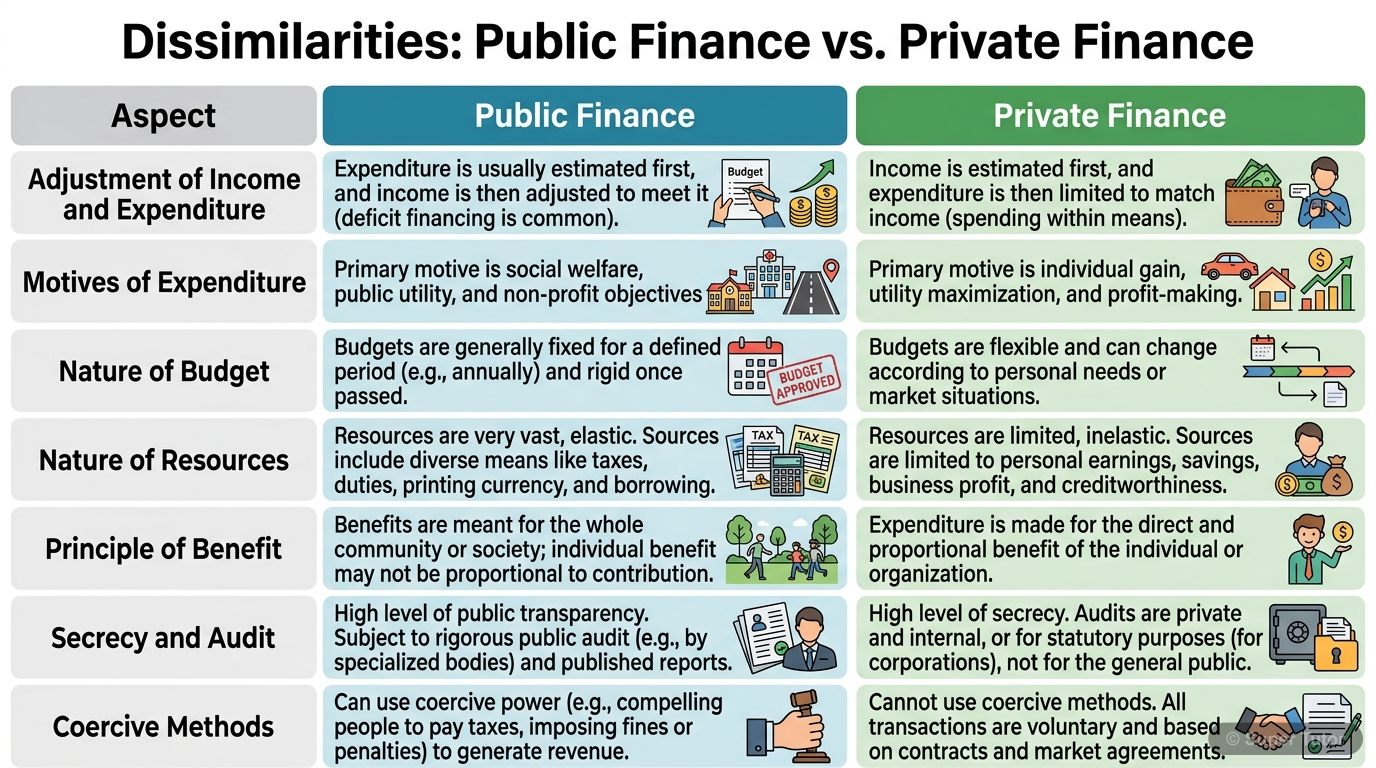
- The government can force people or institutions to lend funds, but private individuals cannot compel others to lend money.
- Under abnormal circumstances, the government can repudiate loan repayment, but a private borrower cannot refuse repayment without legal action.
- Government usually borrows for long periods because people have faith in it; private debt is usually short-term.
3
Classification of Public Debt
- Public debt can be classified into internal and external debts, productive and unproductive debts, redeemable and irredeemable debts, funded and unfunded debts, voluntary and compulsory debts, and sho
- Gross debt and net debt are also important forms of classification.
- Each type has a different purpose, time period, and burden on the government.
4
Internal and External Debts
- Internal debt is raised by the government from individuals and institutions within the country.
- External debt is raised from foreign persons, international institutions like IMF and World Bank, foreign commercial banks, and foreign governments.
- Internal debt mainly finances development expenditure within the country.
Get complete notes with diagrams and examples
Full NotesKey Concepts
Public debt refers to loans raisedThe government can compel peopleInternal debt is borrowed from peopleExternal debt is borrowed from foreignProductive debt is used for projects
Frequently Asked Questions
What are the important topics in Public Debt for ICSE Class 10 Economics?
Key topics in Public Debt include Meaning of Public Debt, Difference Between Public and Private Debts, Classification of Public Debt, Internal and External Debts. Study these first, then practise questions on each for the ICSE Class 10 board exam.
How should I revise Public Debt for the ICSE Class 10 board exam?
Learn the core ideas first, then work through the 43 practice questions on Public Debt. Revise definitions regularly and use flashcards for quick recall before the exam.
Sources & Official References
Content is aligned to the official syllabus. Refer to the board website for the latest curriculum.
More resources for Public Debt
For serious students
Get the full Public Debt chapter — start free.
Quizzes, flashcards, an AI doubt solver and a study plan for ICSE Class 10 Economics. Free to start, no card needed.