Chapter 7 of 14
Revision Notes
Commercial Banks — Revision Notes
ICSE · Class 10 · Economics
Commercial Banks revision notes for ICSE Class 10 Economics: 4 topics in quick points. Part of the ICSE Class 10 Economics syllabus.
42 questions38 flashcards5 concepts
Interactive on Super Tutor
Studying Commercial Banks? Get the full interactive chapter.
Quizzes, flashcards, AI doubt-solver and a step-by-step study plan — built for revision notes and more.
Free trial, no card needed.
Super Tutor
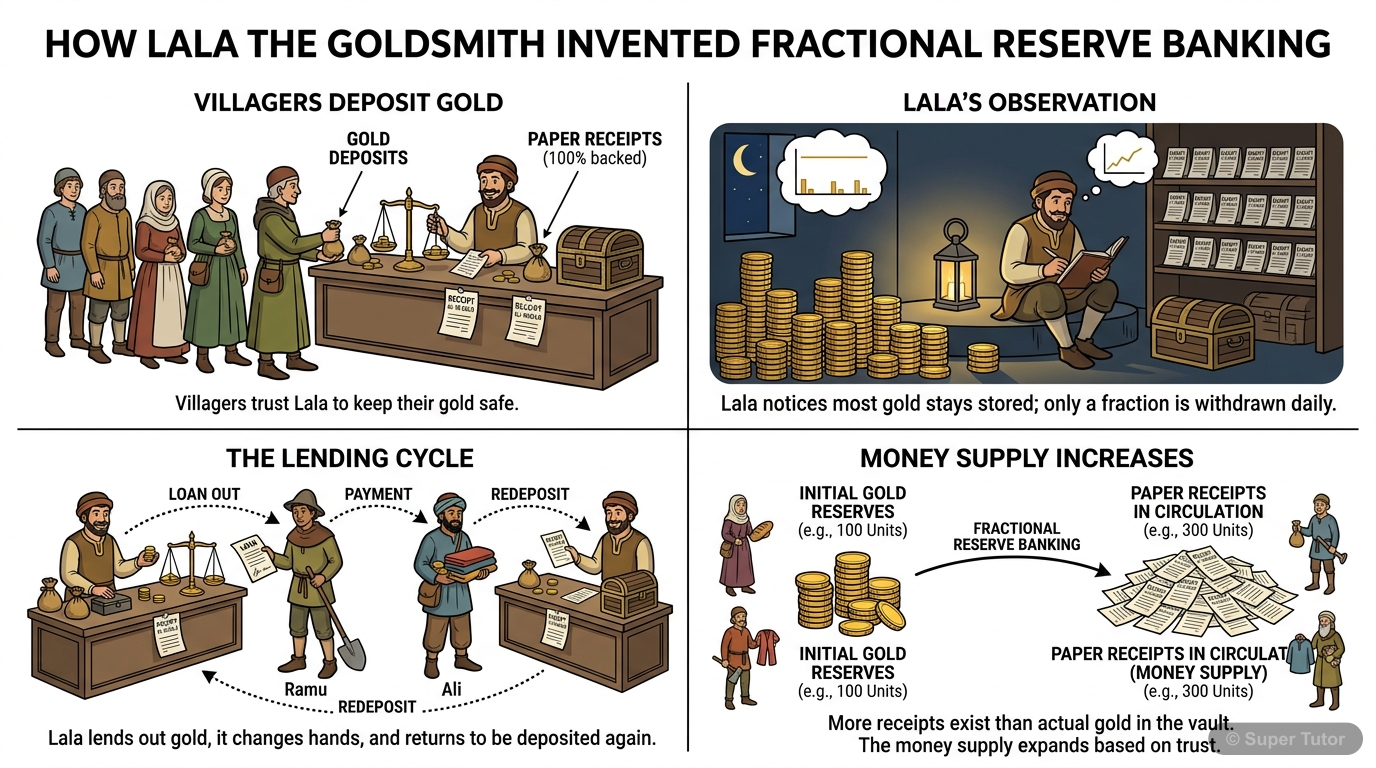
Learn better with visuals Super Tutor pairs illustrations like this with notes and quizzes for Commercial Banks.
Get startedKey Topics to Revise
1
Meaning and Importance of Commercial Banks
- A commercial bank accepts deposits from the public and gives loans for consumption and investment to earn profit.
- Banks earn profit from the difference between the interest paid to depositors and the interest charged from borrowers.
- Commercial banks help in mobilising savings by collecting surplus money from people and keeping it safe.
2
Primary Functions: Accepting Deposits
- The primary functions of commercial banks are accepting deposits and advancing loans.
- Banks accept mainly three types of deposits: current deposits, savings deposits, and fixed deposits.
- Current deposits are non-interest bearing accounts used by businessmen for daily transactions.
3
Primary Functions: Advancing of Loans
- Banks give loans and advances to businessmen, farmers, consumers, and employers against approved securities.
- Approved securities include gold, silver, bullion, government securities, and marketable goods or stocks.
- Cash credit allows the borrower to withdraw up to a certain limit against current assets.
4
General Utility and Agency Functions
- Commercial banks perform three main groups of functions: primary functions, agency functions, and general utility functions.
- Agency functions include collection and making payments for credit instruments, purchase and sale of securities, trustee and executor services, and transfer of funds.
- General utility functions include locker facility, cheque system, letter of credit, transportation of goods, underwriting of securities, collection of statistics, and foreign exchange business.
Get complete notes with diagrams and examples
Full NotesKey Concepts
A commercial bank is a financialThe two primary functions are acceptingCurrent deposits are nonCommercial banks give cash creditBanks act on behalf of customers
Frequently Asked Questions
What are the important topics in Commercial Banks for ICSE Class 10 Economics?
Key topics in Commercial Banks include Meaning and Importance of Commercial Banks, Primary Functions: Accepting Deposits, Primary Functions: Advancing of Loans, General Utility and Agency Functions. Study these first, then practise questions on each for the ICSE Class 10 board exam.
How should I revise Commercial Banks for the ICSE Class 10 board exam?
Learn the core ideas first, then work through the 42 practice questions on Commercial Banks. Revise definitions regularly and use flashcards for quick recall before the exam.
Sources & Official References
Content is aligned to the official syllabus. Refer to the board website for the latest curriculum.
More resources for Commercial Banks
For serious students
Get the full Commercial Banks chapter — start free.
Quizzes, flashcards, an AI doubt solver and a study plan for ICSE Class 10 Economics. Free to start, no card needed.