Descriptive Composition
ICSE · Class 10 · English Language - Archer
Summary of Descriptive Composition for ICSE Class 10 English Language - Archer. Key concepts, important points, and chapter overview.
Interactive on Super Tutor
Studying Descriptive Composition? Get the full interactive chapter.
Quizzes, flashcards, AI doubt-solver and a step-by-step study plan — built for chapter summary and more.
1,000+ Class 10 students started this chapter today
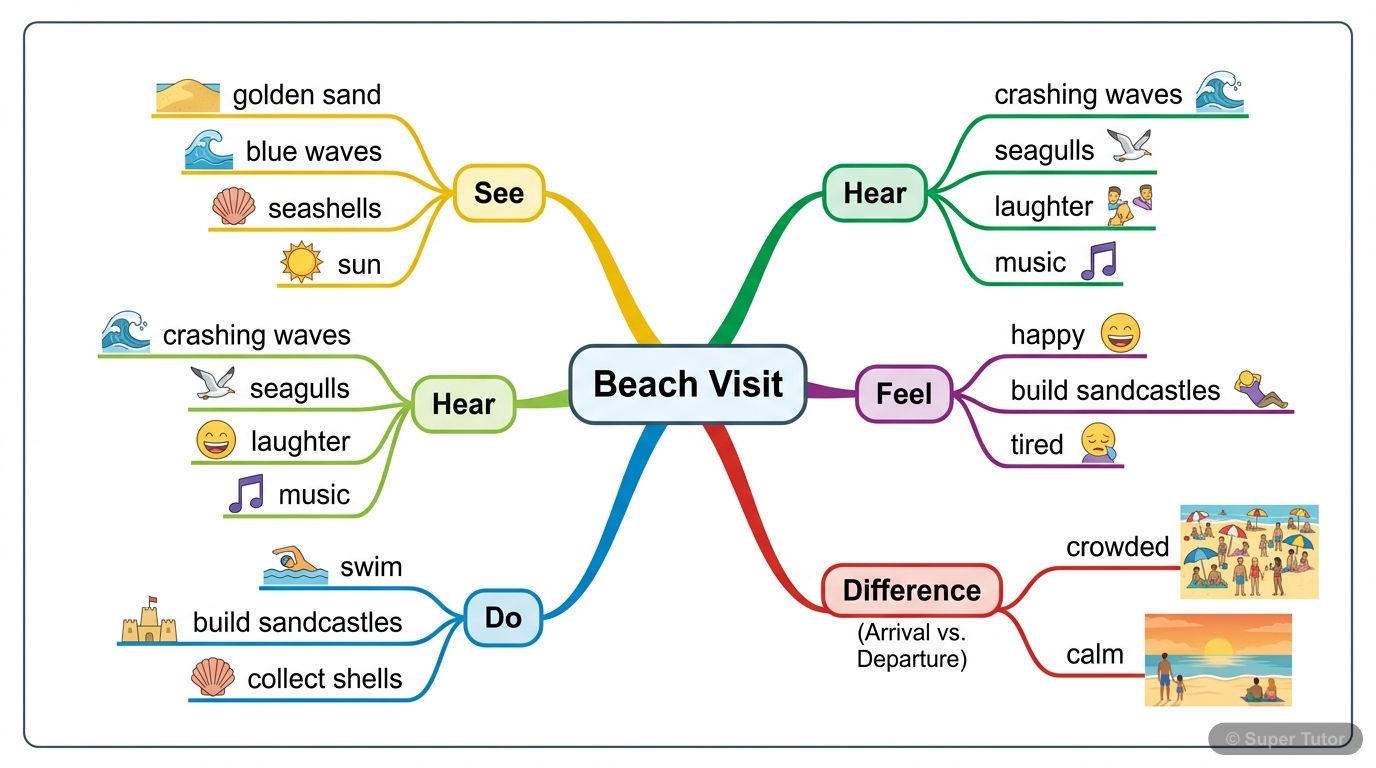
This is just one of 6+ visuals inside Super Tutor's Descriptive Composition chapter
Explore the full setOverview
Descriptive composition depends on clear observation, vivid language, and rich detail. Strong writing turns a simple telling sentence into a scene that can be seen, heard, felt, smelled, or even tasted. Good description also uses exact word choice, including more powerful synonyms, sensory words, si
Key Concepts
Before writing
Before writing, thoughts should be organised and ideas should be jotted down. A mind map is a useful way to arrange these ideas quickly and clearly.
Sensory words are words connected
Sensory words are words connected to smell, touch, sight, taste, and sound. They make description more alive because they help the reader experience t
Ordinary words can be replaced
Ordinary words can be replaced with more expressive words. For example, cold can become icy, happy can become ecstatic, and tired can become weary.
Similes and metaphors are useful
Similes and metaphors are useful for describing scenery, feelings, or sense. They compare one thing with another in a meaningful way.
A person can be described through
A person can be described through appearance, background, emotions, personality, and other details such as likes, fears, and aspirations.
Learning Objectives
- To understand how descriptive composition differs from plain telling
- To learn how to organise ideas before writing
- To use sensory words for smell, touch, sight, taste, and sound
- To replace ordinary words with more vivid alternatives
- To use similes and metaphors meaningfully in description
Frequently Asked Questions
What are the important topics in Descriptive Composition for ICSE Class 10 English Language - Archer?
How to score full marks in Descriptive Composition — ICSE Class 10 English Language - Archer?
Sources & Official References
Content is aligned to the official syllabus. Refer to the board website for the latest curriculum.
More resources for Descriptive Composition
Practice Quiz
Test yourself with a quick quiz
Important Questions
Practice with board exam-style questions
Revision Notes
Key points for last-minute revision
Formula Sheet
All formulas in one place
Concept Maps
See how topics connect visually
Study Plan
Step-by-step plan to ace this chapter
Flashcards
Quick-fire cards for active recall
Syllabus
What topics to cover
NCERT Solutions
Every textbook question solved step by step
For serious students
Get the full Descriptive Composition chapter — for free.
Quizzes, flashcards, AI doubt-solver and a step-by-step study plan for ICSE Class 10 English Language - Archer.