Descriptive Composition — Important Questions
ICSE · Class 10 · English Language - Archer
45 important questions from Descriptive Composition for ICSE Class 10 English Language - Archer, with answers. Written for the board exams 2027.
Interactive on Super Tutor
Studying Descriptive Composition? Get the full interactive chapter.
Quizzes, flashcards, AI doubt-solver and a step-by-step study plan — built for important questions and more.
Free trial, no card needed.
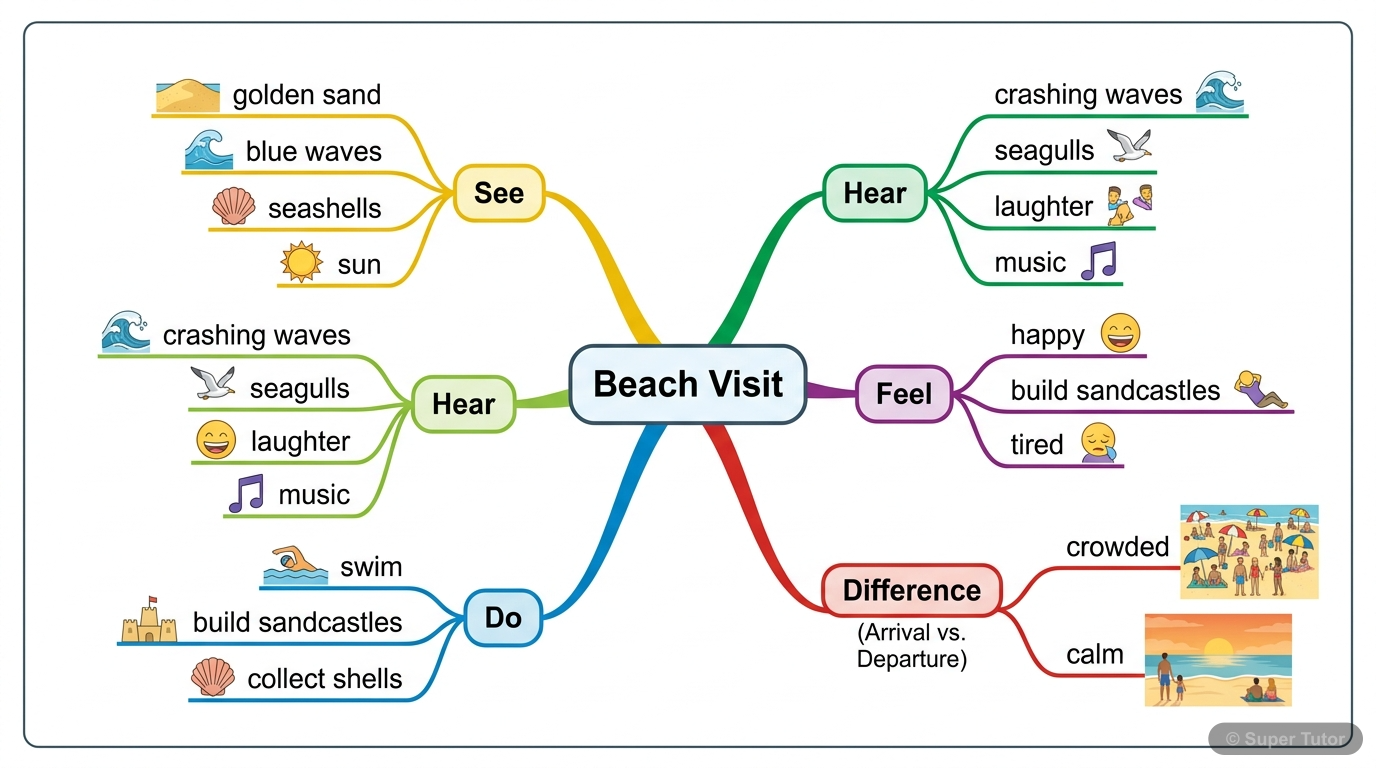
One of 6 illustrations for Descriptive Composition in Super Tutor — alongside flashcards, concept maps and practice questions.
See them allImportant Questions from Descriptive Composition
What is the difference between 'showing' and 'telling' in descriptive writing?
Show answer
Showing creates vivid scenes, telling states facts simply
In descriptive writing, 'showing' means creating vivid scenes with sensory details, actions, and descriptions that let readers experience the scene themselves. For example: 'The house was eerie' (telling) vs 'Shadows danced across the creaking floorboards while wind howled through broken shutters' (showing). Showing engages the reader's senses and imagination, while telling simply states information. The difference isn't about dialogue/narration, length, or verb tenses, but about creating engaging experiences versus stating plain facts.
Which of these is a metaphor?
Show answer
Her voice was music to my ears
A metaphor makes a direct comparison without using 'like' or 'as'. 'Her voice was music to my ears' directly states that her voice IS music, creating a metaphor. The first option uses 'like', making it a simile. The third and fourth options are examples of personification, where non-human things (wind, sun) are given human qualities (whispering, smiling). Understanding these literary devices helps create more engaging descriptive writing.
When organizing ideas for descriptive writing, what tool can help structure your thoughts?
Show answer
A mind map
A mind map is an excellent tool for organizing ideas in descriptive writing. It helps you visually connect related ideas, sensory details, and descriptive elements around a central topic. For example, when describing 'A Day at the Fair', you could create branches for sights, sounds, smells, feelings, and activities. This visual organization helps ensure comprehensive coverage of all aspects. While a dictionary helps with vocabulary, and calculators and rulers are useful for other subjects, mind maps specifically aid in organizing creative and descriptive writing ideas.
What should you include when describing a person in descriptive writing?
Show answer
Appearance, personality, background, and emotions
When describing a person in descriptive writing, you should create a well-rounded portrait that includes multiple aspects: physical appearance (height, hair color, clothing style), personality traits (generous, curious, disciplined), background information (family history, significant life events), and emotional characteristics (how they feel and behave). This comprehensive approach creates a vivid, three-dimensional character that readers can visualize and understand. Focusing on only one aspect would create a flat, incomplete description.
+41 more questions on Descriptive Composition (ICSE Class 10 English Language - Archer)
Practise AllFrequently Asked Questions
What are the important topics in Descriptive Composition for ICSE Class 10 English Language - Archer?
How many important questions are there in Descriptive Composition?
Sources & Official References
Content is aligned to the official syllabus. Refer to the board website for the latest curriculum.
More resources for Descriptive Composition
For serious students
Get the full Descriptive Composition chapter — start free.
Quizzes, flashcards, an AI doubt solver and a study plan for ICSE Class 10 English Language - Archer. Free to start, no card needed.