Methods of Psychology — Practice Quiz
ICSE · Class 11 · Psychology
Try a 4-question quiz on Methods of Psychology for ICSE Class 11 Psychology: tap an answer to check it and see why. 45 questions in the full chapter test.
Interactive on Super Tutor
Studying Methods of Psychology? Get the full interactive chapter.
Quizzes, flashcards, AI doubt-solver and a step-by-step study plan — built for practice quiz and more.
Free trial, no card needed.
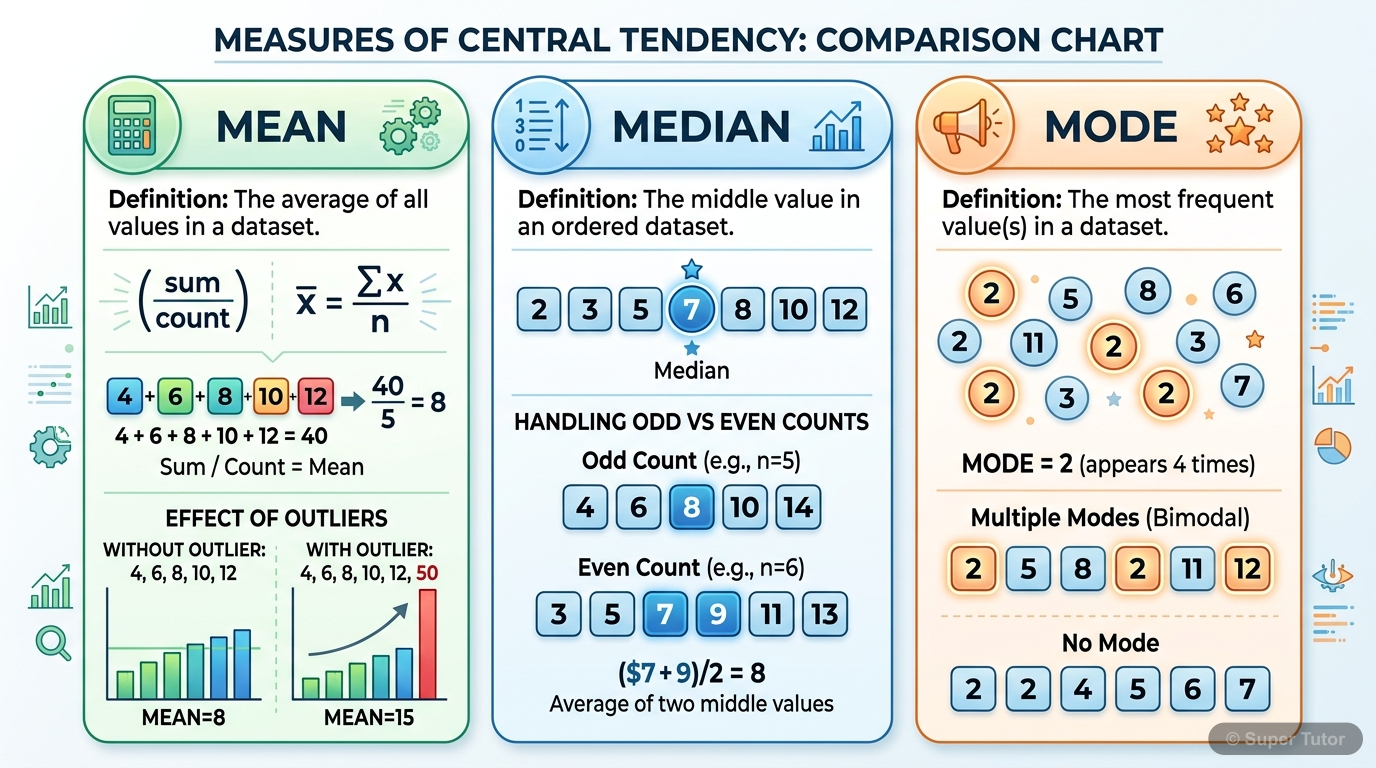
Learn better with visuals Super Tutor pairs illustrations like this with notes and quizzes for Methods of Psychology.
Quick Quiz: Methods of Psychology
0/4Tap an answer to check it instantly. No sign-up needed for these 4.
Who is credited with initiating the first systematic method of inquiry (introspection) to study behaviour in Psychology?
In the Observational Method, studying behaviour in a real-life, natural setting without any manipulation is called:
Which of the following is a key advantage of the Naturalistic Observation method?
In the Longitudinal Method, which of the following best describes how data is collected?
Sample Questions
The Case Study Method was extensively used by Sigmund Freud. Which famous case study helped him theorise the stages of psychosexual development?
Show answer
Case of Little Hans
Step 1: Sigmund Freud used the case study method extensively for his theoretical work. Step 2: Little Hans was a 5-year-old boy with a phobia of horses whose case Freud studied in detail. Step 3: This case study facilitated Freud in theorising the stages of psychosexual development. Step 4: Anna O is associated with the development of the talking cure (catharsis) by Josef Breuer. Step 5: Phineas Gage and Genie are famous cases in neuroscience and language development respectively, not related to Freud's psychosexual theory.
In an experiment, the variable that is manipulated by the experimenter to find its effect on another variable is called the:
Show answer
Independent Variable
Step 1: In an experiment, there are three types of variables: Independent, Dependent, and Extraneous. Step 2: The Independent Variable (IV) is the one that the experimenter deliberately changes or manipulates. Step 3: The Dependent Variable (DV) is the one whose change is measured as a result of the IV's manipulation — it 'depends' on the IV. Step 4: Extraneous variables are all other factors that could potentially interfere with the experiment. Step 5: Therefore, the variable manipulated by the experimenter is the Independent Variable.
A self-report inventory like the MMPI (Minnesota Multiphasic Personality Inventory) is primarily used to assess:
Show answer
Personality traits and psychopathological symptoms
Step 1: A self-report inventory consists of structured statements or questions with response choices. Step 2: The respondent selects an option that best reflects their feelings, opinions or traits. Step 3: Self-report inventories like MMPI are designed to measure personal interests, values, psychopathological symptoms, and personality traits. Step 4: IQ is measured by intelligence tests such as Stanford-Binet or Wechsler scales. Step 5: Academic aptitude tests measure potential in specific academic areas. Therefore, personality traits and psychopathological symptoms is the correct answer for M
In sampling, a method in which every individual in the target population has an equal chance of being selected is called:
Show answer
Random Sample
Step 1: Sampling is the process of selecting a group from the population for study. Step 2: Random Sampling means every individual in the target population has an equal and independent chance of being chosen. Step 3: A Representative Sample reflects all the characteristics of the population but not everyone has an equal chance of being selected. Step 4: Biased or Purposive Sample means the experimenter deliberately chooses participants based on convenience or to prove a point. Step 5: Equal chance for all members = Random Sample — this is the defining feature of random sampling.
+41 more questions on Methods of Psychology (ICSE Class 11 Psychology)
Practise AllFrequently Asked Questions
What are the important topics in Methods of Psychology for ICSE Class 11 Psychology?
How many practice questions are there for Methods of Psychology?
Sources & Official References
Content is aligned to the official syllabus. Refer to the board website for the latest curriculum.
More resources for Methods of Psychology
Important Questions
Exam-style questions with answers
Revision Notes
Key points for last-minute revision
Chapter Summary
Understand the chapter at a glance
Concept Maps
See how topics connect
Study Plan
Step-by-step plan for this chapter
Flashcards
Quick-fire cards for active recall
Syllabus
What topics to cover
For serious students
Get the full Methods of Psychology chapter — start free.
Quizzes, flashcards, an AI doubt solver and a study plan for ICSE Class 11 Psychology. Free to start, no card needed.