Microbes in Human Welfare — Study Plan
ICSE · Class 12 · Biology
A step-by-step study plan for Microbes in Human Welfare, ICSE Class 12 Biology: what to learn first, what to practise and when to revise.
Interactive on Super Tutor
Studying Microbes in Human Welfare? Get the full interactive chapter.
Quizzes, flashcards, AI doubt-solver and a step-by-step study plan — built for study plan and more.
Free trial, no card needed.
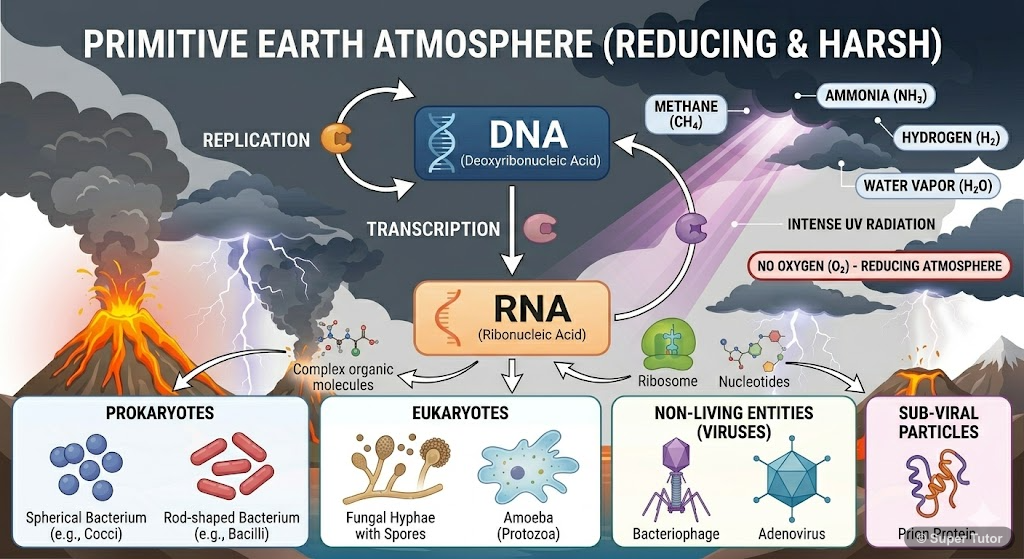
One of 14 illustrations for Microbes in Human Welfare in Super Tutor — alongside flashcards, concept maps and practice questions.
Study Plan
Learn the Theory
Read the textbook chapter carefully. Note down definitions, formulas and key ideas. Focus on: 1. Microbes in Household Products, 2. Microbes in Industries, 3. Microbes in Sewage Treatment.
Practise
Solve the textbook exercises and extra practice questions. There are 60 questions available for this chapter.
Revise & Test
Revise key points without looking at your notes. Take a practice quiz and mark weak areas for another pass.
Spaced Revision
Come back to Microbes in Human Welfare after a week. Use flashcards for quick recall and try past exam questions on this chapter.
What to Focus On
- Lactobacillus helps in curd formation and improves vitamin B12 content.
- Yogurt is made using Lactobacillus bulgaricus and Streptococcus thermophilus at 40°C.
- Saccharomyces cerevisiae is the bread-making yeast.
- Antibiotics are microbial products that stop the growth of other microbes.
- Penicillin was the first antibiotic and was discovered by chance.
- Cyclosporin-A is an immunosuppressant from Trichoderma polysporum.
- Primary treatment removes solid particles by filtration and sedimentation.
- Secondary treatment uses aeration tanks and aerobic microbes.
- Activated sludge is the settled microbial mass after secondary treatment.
Common Mistakes to Avoid
Penicillin was produced by Alexander Fleming himself and its full importance was known immediately.
All antibiotics kill only bacteria and all antibiotics are the same type of medicine.
Curd, yogurt, butter, cheese, and bread all use the same microbe.
Memory Tips
Lactobacillus in curd formation and vitamin B12 improvement
Saccharomyces cerevisiae in bread-making
Propionibacterium shermanii in Swiss cheese holes
Yogurt preparation
Want a personalised study plan?
Super Tutor builds a day-by-day plan for ICSE Class 12 Biology that fits your exam date and pace.
Create My Study PlanFrequently Asked Questions
What are the important topics in Microbes in Human Welfare for ICSE Class 12 Biology?
How should I revise Microbes in Human Welfare for the ICSE Class 12 board exam?
Sources & Official References
Content is aligned to the official syllabus. Refer to the board website for the latest curriculum.
More resources for Microbes in Human Welfare
Practice Quiz
Test yourself with a quick quiz
Important Questions
Exam-style questions with answers
Revision Notes
Key points for last-minute revision
Chapter Summary
Understand the chapter at a glance
Concept Maps
See how topics connect
Flashcards
Quick-fire cards for active recall
Syllabus
What topics to cover
For serious students
Get the full Microbes in Human Welfare chapter — start free.
Quizzes, flashcards, an AI doubt solver and a study plan for ICSE Class 12 Biology. Free to start, no card needed.