Microbes in Human Welfare — Chapter Summary
ICSE · Class 12 · Biology
Summary of Microbes in Human Welfare for ICSE Class 12 Biology. Part of the ICSE Class 12 Biology syllabus. Microbes are used in food making, medicine.
Interactive on Super Tutor
Studying Microbes in Human Welfare? Get the full interactive chapter.
Quizzes, flashcards, AI doubt-solver and a step-by-step study plan — built for chapter summary and more.
Free trial, no card needed.
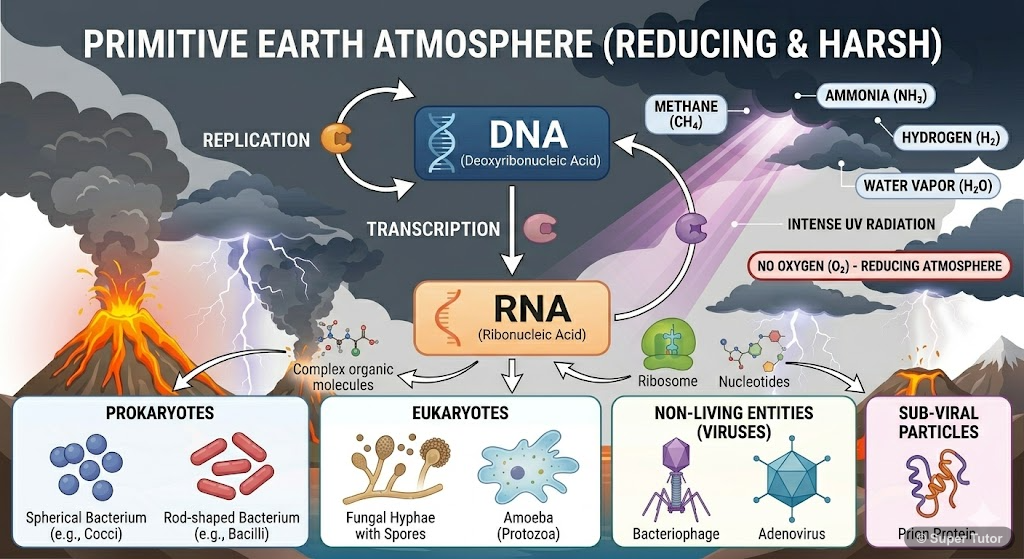
One of 14 illustrations for Microbes in Human Welfare in Super Tutor — alongside flashcards, concept maps and practice questions.
Overview
Microbes are used in food making, medicine, sewage treatment, energy production, pest control, and soil enrichment. Their activities support daily life in many useful ways. Some microbes ferment milk into curd, help make bread and cheese, produce antibiotics and enzymes, clean wastewater, generate b
Key Concepts
Lactobacillus converts milk into curd
Lactobacillus converts milk into curd and improves its nutritional quality by increasing vitamin B12. Saccharomyces cerevisiae is the main baker’s yea
Some microbes are used directly as
Some microbes are used directly as food or food supplements. Chlorella and Spirulina are protein-rich algae. Single cell protein is microbial biomass
Microbes produce industrial products such as
Microbes produce industrial products such as antibiotics, organic acids, amino acids, enzymes, alcohol, vitamins, and human proteins. Penicillin was t
Antibiotics are chemical substances produced by
Antibiotics are chemical substances produced by some microbes that kill or retard the growth of other microbes. Penicillin comes from Penicillium nota
Primary treatment removes floating debris
Primary treatment removes floating debris, grit, and suspended solids by filtration and sedimentation. Secondary treatment uses aeration tanks where a
Learning Objectives
- Understand the useful roles of microbes in household products and food processing
- Identify important microbes used in industries and medicine
- Explain the steps of sewage treatment and the role of microbes in it
- Describe biogas production and the microbes involved
- Recognize microbes used as biocontrol agents against pests and diseases
Frequently Asked Questions
What are the important topics in Microbes in Human Welfare for ICSE Class 12 Biology?
How should I revise Microbes in Human Welfare for the ICSE Class 12 board exam?
Sources & Official References
Content is aligned to the official syllabus. Refer to the board website for the latest curriculum.
More resources for Microbes in Human Welfare
For serious students
Get the full Microbes in Human Welfare chapter — start free.
Quizzes, flashcards, an AI doubt solver and a study plan for ICSE Class 12 Biology. Free to start, no card needed.