Social thought and Social Behaviour — Syllabus
ICSE · Class 12 · Psychology
What Social thought and Social Behaviour covers in ICSE Class 12 Psychology: 4 topics, for the 2026-27 session.
Interactive on Super Tutor
Studying Social thought and Social Behaviour? Get the full interactive chapter.
Quizzes, flashcards, AI doubt-solver and a step-by-step study plan — built for syllabus and more.
Free trial, no card needed.
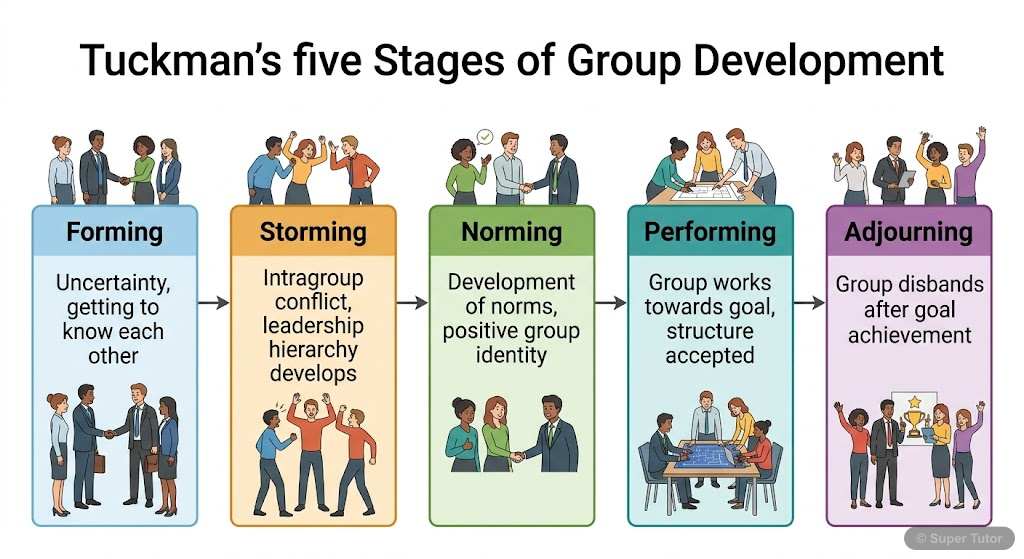
An illustration from Super Tutor's Social thought and Social Behaviour chapter — alongside flashcards, concept maps and practice questions.
Topics in Social thought and Social Behaviour
Social Perception
- Social perception is a process by which individuals seek to know and understand other persons.
- People form impressions from the first meeting itself and try to explain why others behave in a certain way.
- Social perception varies depending on the behaviour and reactions of the person being perceived.
Attribution and Kelley's Theory
- Attribution is the process of finding the causes behind others' behaviour and one's own behaviour.
- Causes can be internal or external.
- Internal causes refer to personality traits, motives, emotions, intentions, and other personal qualities.
Biases in Attribution and Social Cognition
- Biases in attribution are errors made while explaining reasons for behaviour.
- Person positivity bias means evaluating an individual more positively than the group to which the person belongs.
- False consensus bias means overestimating how much others agree with one's opinions, beliefs, or behaviour.
Group: Meaning, Types, Formation, and Stages
- A group is two or more individuals interacting with one another, having certain expectations from and accepting obligations from each other, and giving them a common identity.
- A group is different from a crowd because a crowd is a number of people present at a place at a given time entirely by chance.
- A group is distinguished from a crowd by shared identity, common goals, interdependence, common needs, and norms and roles.
Key Concepts
Central concept: Social thought and social behaviour in psychology
Work through every topic in Social thought and Social Behaviour with notes and quizzes
Start This ChapterFrequently Asked Questions
What are the important topics in Social thought and Social Behaviour for ICSE Class 12 Psychology?
How should I revise Social thought and Social Behaviour for the ICSE Class 12 board exam?
Sources & Official References
Content is aligned to the official syllabus. Refer to the board website for the latest curriculum.
More resources for Social thought and Social Behaviour
Practice Quiz
Test yourself with a quick quiz
Important Questions
Exam-style questions with answers
Revision Notes
Key points for last-minute revision
Chapter Summary
Understand the chapter at a glance
Concept Maps
See how topics connect
Study Plan
Step-by-step plan for this chapter
Flashcards
Quick-fire cards for active recall
For serious students
Get the full Social thought and Social Behaviour chapter — start free.
Quizzes, flashcards, an AI doubt solver and a study plan for ICSE Class 12 Psychology. Free to start, no card needed.