Social thought and Social Behaviour — Chapter Summary
ICSE · Class 12 · Psychology
Summary of Social thought and Social Behaviour for ICSE Class 12 Psychology. Part of the ICSE Class 12 Psychology syllabus.
Interactive on Super Tutor
Studying Social thought and Social Behaviour? Get the full interactive chapter.
Quizzes, flashcards, AI doubt-solver and a step-by-step study plan — built for chapter summary and more.
Free trial, no card needed.
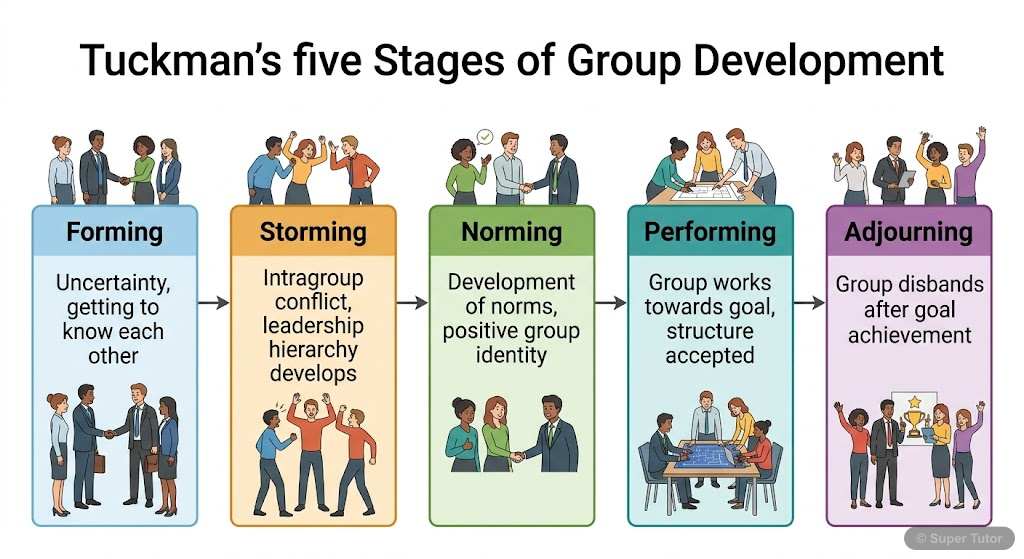
An illustration from Super Tutor's Social thought and Social Behaviour chapter — alongside flashcards, concept maps and practice questions.
Overview
Social thought and social behaviour are central to social psychology because human behaviour is strongly shaped by the actual, imagined, or implied presence of others. Social perception explains how people try to understand other persons, attribution explains how causes of behaviour are judged, soci
Key Concepts
Social perception is a process by
Social perception is a process by which individuals seek to know and understand other persons. It depends on the behaviour and reactions of the person
Non
Non-verbal communication includes facial expression, eye contact, voice, gestures, body contact, posture, and appearance. It gives important clues abo
Attribution is the process of identifying
Attribution is the process of identifying and understanding the causal factors of others' behaviour and one's own behaviour. Causes are usually judged
Harold Kelley identified three types
Harold Kelley identified three types of information used to judge behaviour: consistency, consensus, and distinctiveness. High consistency with low co
Biases in attribution are errors made
Biases in attribution are errors made while judging the causes of behaviour. Important biases include person positivity bias, false consensus bias, se
Learning Objectives
- Understand the meaning of social perception and its basic components.
- Explain attribution and Kelley's theory using consistency, consensus, and distinctiveness.
- Identify common biases and errors in social cognition.
- Describe the meaning, types, formation, and stages of group formation.
- Explain how groups influence individual behaviour through social facilitation, social loafing, and group polarisation.
Frequently Asked Questions
What are the important topics in Social thought and Social Behaviour for ICSE Class 12 Psychology?
How should I revise Social thought and Social Behaviour for the ICSE Class 12 board exam?
Sources & Official References
Content is aligned to the official syllabus. Refer to the board website for the latest curriculum.
More resources for Social thought and Social Behaviour
For serious students
Get the full Social thought and Social Behaviour chapter — start free.
Quizzes, flashcards, an AI doubt solver and a study plan for ICSE Class 12 Psychology. Free to start, no card needed.