Chapter 1 of 20
Revision Notes
The Story of Human Evolution — Revision Notes
ICSE · Class 5 · Social Studies
The Story of Human Evolution revision notes for ICSE Class 5 Social Studies: 4 topics in quick points. Part of the ICSE Class 5 Social Studies syllabus.
41 questions25 flashcards4 concepts
Interactive on Super Tutor
Studying The Story of Human Evolution? Get the full interactive chapter.
Quizzes, flashcards, AI doubt-solver and a step-by-step study plan — built for revision notes and more.
Free trial, no card needed.
Super Tutor
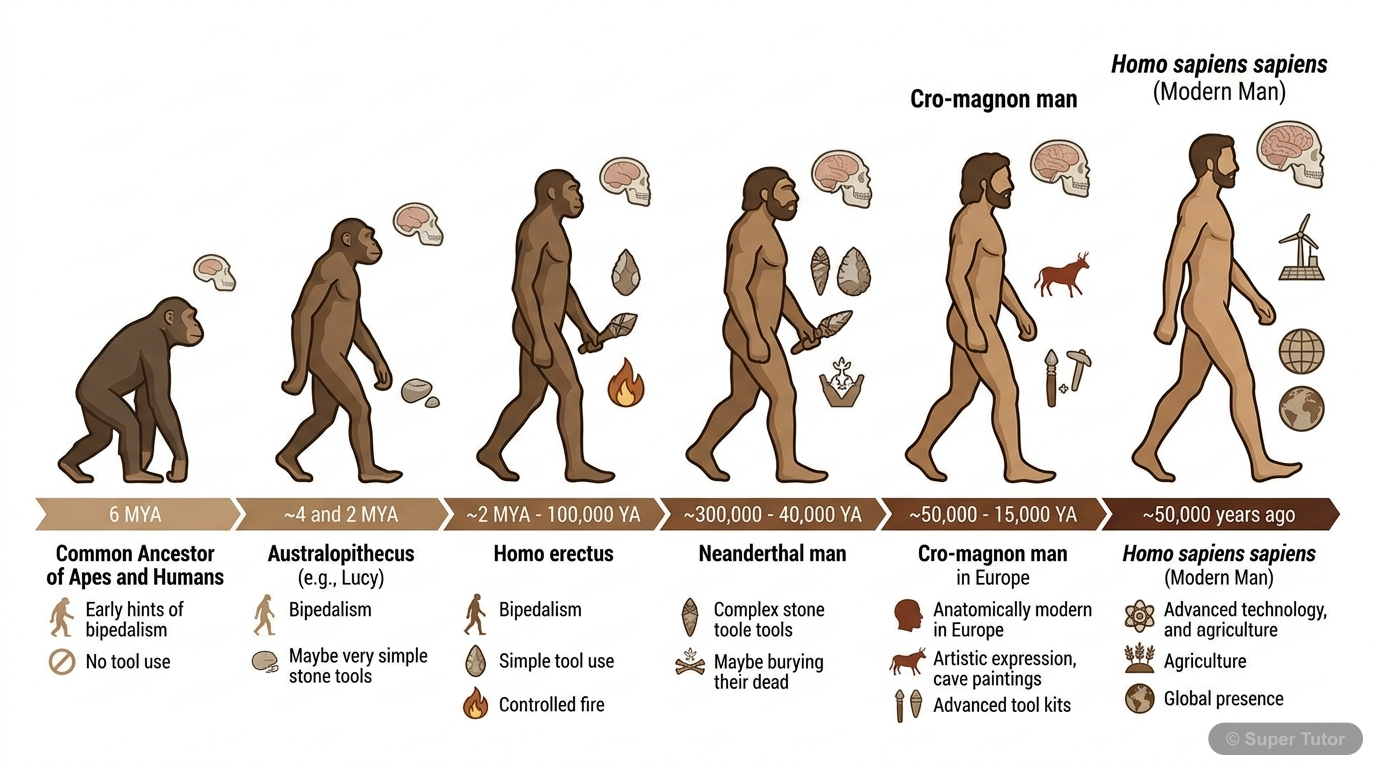
Learn better with visuals Super Tutor pairs illustrations like this with notes and quizzes for The Story of Human Evolution.
Key Topics to Revise
1
What is Human Evolution?
- Human evolution is the gradual development of modern humans from ancient ancestors.
- Humans did not evolve from apes, but both share a common ancestor that lived about 6 million years ago.
- This ancestor lived in Africa and slowly evolved into different human-like species over time.
2
Stages of Human Evolution
- There were several stages in human evolution: Australopithecus, Homo erectus, Neanderthals, and Homo sapiens.
- Australopithecus walked on two legs but had ape-like arms and small brains.
- Homo erectus could stand straight and walk long distances; had a larger brain.
3
Sources of Evidence for Human Evolution
- Scientists use fossils, bones, cave paintings, tools, and utensils to study human evolution.
- Fossils are the preserved remains of ancient plants and animals found in rocks.
- The study of fossils is called palaeontology; scientists who study them are palaeontologists.
4
Life of Early Humans
- Early humans were nomads — they moved from place to place for food and shelter.
- They were hunters and gatherers — hunted animals and collected fruits, roots, and nuts.
- They used sharpened stones as tools for hunting and digging.
Get complete notes with diagrams and examples
Full NotesKey Concepts
Human evolution is the slow processThere were several stages in humanScientists use fossilsEarly humans were nomads who moved
Frequently Asked Questions
What are the important topics in The Story of Human Evolution for ICSE Class 5 Social Studies?
Key topics in The Story of Human Evolution include What is Human Evolution?, Stages of Human Evolution, Sources of Evidence for Human Evolution, Life of Early Humans. Study these first, then practise questions on each for Class 5 exams.
How should I revise The Story of Human Evolution for Class 5 exams?
Learn the core ideas first, then work through the 41 practice questions on The Story of Human Evolution. Revise definitions regularly and use flashcards for quick recall before the exam.
Sources & Official References
Content is aligned to the official syllabus. Refer to the board website for the latest curriculum.
More resources for The Story of Human Evolution
For serious students
Get the full The Story of Human Evolution chapter — start free.
Quizzes, flashcards, an AI doubt solver and a study plan for ICSE Class 5 Social Studies. Free to start, no card needed.