Plant Life : The Flower — Study Plan
ICSE · Class 6 · Biology
A step-by-step study plan for Plant Life : The Flower, ICSE Class 6 Biology: what to learn first, what to practise and when to revise.
Interactive on Super Tutor
Studying Plant Life : The Flower? Get the full interactive chapter.
Quizzes, flashcards, AI doubt-solver and a step-by-step study plan — built for study plan and more.
Free trial, no card needed.
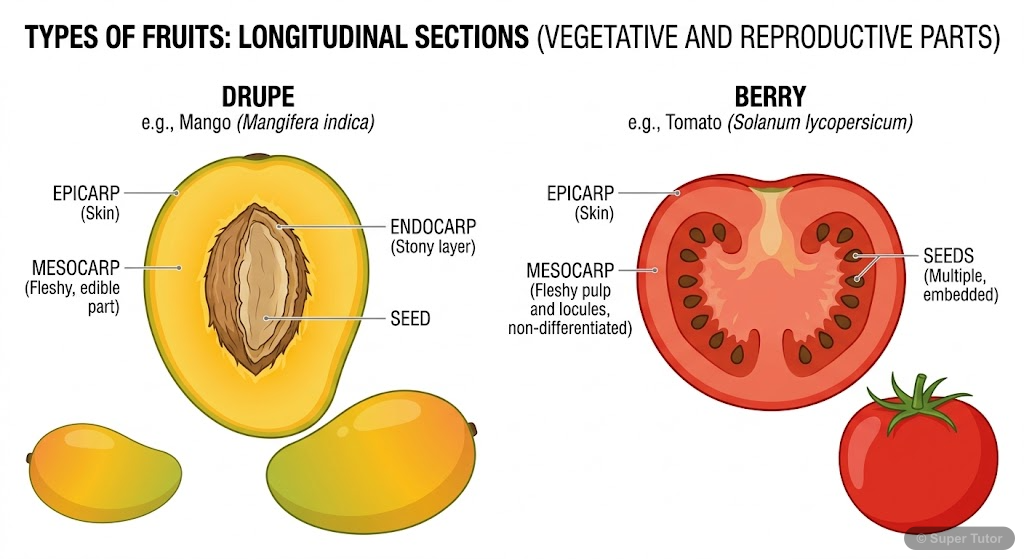
Learn better with visuals Super Tutor pairs illustrations like this with notes and quizzes for Plant Life : The Flower.
Study Plan
Learn the Theory
Read the textbook chapter carefully. Note down definitions, formulas and key ideas. Focus on: Parts of a Flower, Pollination and Fertilization, Fruit and Seed Formation.
Practise
Solve the textbook exercises and extra practice questions. There are 92 questions available for this chapter.
Revise & Test
Revise key points without looking at your notes. Take a practice quiz and mark weak areas for another pass.
Spaced Revision
Come back to Plant Life : The Flower after a week. Use flashcards for quick recall and try past exam questions on this chapter.
What to Focus On
- A flower has four whorls: calyx, corolla, androecium, and gynoecium.
- Sepals protect the bud; petals attract pollinators.
- Stamen is the male part; pistil is the female part.
- Pollination is the transfer of pollen from anther to stigma.
- Self-pollination occurs within the same plant; cross-pollination between different plants.
- Agents of cross-pollination: insects, wind, water, animals.
- Fertilization is the fusion of male and female gametes to form a zygote.
- After fertilization, the ovule becomes the seed and the ovary becomes the fruit.
- Sepals, petals, and stamens fall off after fertilization.
Common Mistakes to Avoid
All flowers have both male and female parts.
Fruits are just sweet edible parts; vegetables are not fruits.
Pollen grains fertilize the egg directly in the ovary.
Memory Tips
The four whorls of a flower: Calyx, Corolla, Androecium, Gynoecium
Calyx is made of sepals; protects the bud
Corolla attracts pollinators with color and scent
Androecium = male part (stamen: filament + anther)
Want a personalised study plan?
Super Tutor builds a day-by-day plan for ICSE Class 6 Biology that fits your exam date and pace.
Create My Study PlanFrequently Asked Questions
What are the important topics in Plant Life : The Flower for ICSE Class 6 Biology?
How should I revise Plant Life : The Flower for Class 6 exams?
Sources & Official References
Content is aligned to the official syllabus. Refer to the board website for the latest curriculum.
More resources for Plant Life : The Flower
Practice Quiz
Test yourself with a quick quiz
Important Questions
Exam-style questions with answers
Revision Notes
Key points for last-minute revision
Chapter Summary
Understand the chapter at a glance
Concept Maps
See how topics connect
Flashcards
Quick-fire cards for active recall
Syllabus
What topics to cover
For serious students
Get the full Plant Life : The Flower chapter — start free.
Quizzes, flashcards, an AI doubt solver and a study plan for ICSE Class 6 Biology. Free to start, no card needed.