Plant Life : The Flower — Flashcards
ICSE · Class 6 · Biology
30 flashcards for Plant Life : The Flower (ICSE Class 6 Biology) to test yourself on key terms and facts. Sample: "What is a flower?"
Interactive on Super Tutor
Studying Plant Life : The Flower? Get the full interactive chapter.
Quizzes, flashcards, AI doubt-solver and a step-by-step study plan — built for flashcards and more.
Free trial, no card needed.
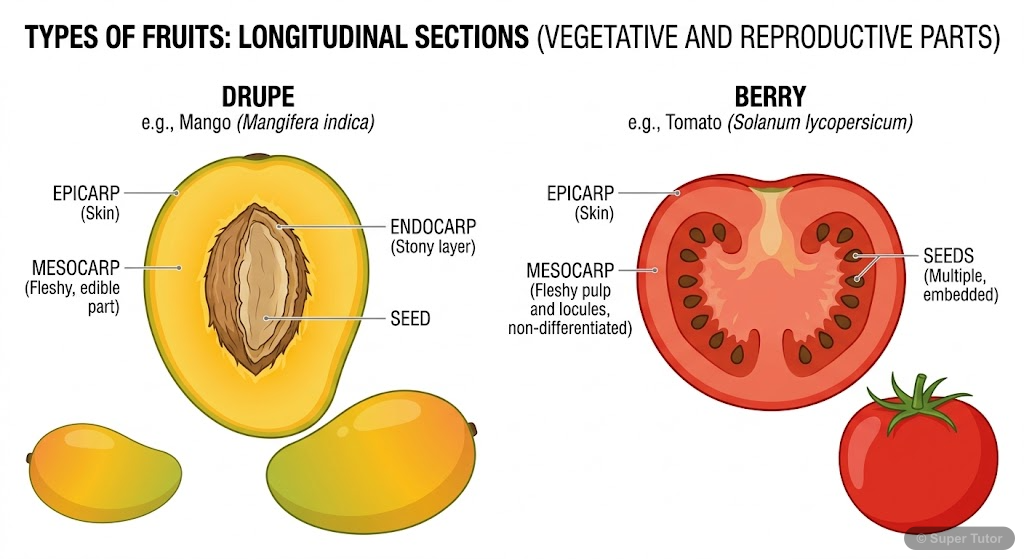
Learn better with visuals Super Tutor pairs illustrations like this with notes and quizzes for Plant Life : The Flower.
What is a flower?
Answer
A flower is the reproductive part of a plant. It helps the plant produce seeds and fruits. Flowers come in different shapes, sizes, and colors, and they contain both male and female parts needed for r…
Name the four whorls of a flower.
Answer
The four whorls of a flower are: Calyx (sepals), Corolla (petals), Androecium (stamens), and Gynoecium (carpel or pistil).
What is the function of the calyx?
Answer
The calyx is the outermost whorl made of sepals. It protects the flower in the bud stage. Sepals are usually green and leaf-like.
Why are petals colorful and fragrant?
Answer
Petals are colorful and fragrant to attract insects like bees and butterflies for pollination. This helps in the transfer of pollen from one flower to another.
What is the androecium? Name its parts.
Answer
The androecium is the male reproductive part of the flower. It consists of stamens, each made of a filament and an anther. The anther produces pollen grains which contain male gametes.
What is the gynoecium? Name its parts.
Answer
The gynoecium is the female reproductive part of the flower. It consists of the pistil, which has three parts: ovary (contains ovules), style (tube-like structure), and stigma (sticky top that receive…
What is a complete flower?
Answer
A complete flower has all four whorls — calyx, corolla, androecium, and gynoecium. Example: Hibiscus (Shoe flower).
What is a bisexual flower?
Answer
A bisexual flower has both male (androecium) and female (gynoecium) reproductive parts. Example: Hibiscus, Mustard.
+22 more flashcards
Practise AllFrequently Asked Questions
What are the important topics in Plant Life : The Flower for ICSE Class 6 Biology?
How many flashcards are available for Plant Life : The Flower?
How should I revise Plant Life : The Flower for Class 6 exams?
Sources & Official References
Content is aligned to the official syllabus. Refer to the board website for the latest curriculum.
More resources for Plant Life : The Flower
Practice Quiz
Test yourself with a quick quiz
Important Questions
Exam-style questions with answers
Revision Notes
Key points for last-minute revision
Chapter Summary
Understand the chapter at a glance
Concept Maps
See how topics connect
Study Plan
Step-by-step plan for this chapter
Syllabus
What topics to cover
For serious students
Get the full Plant Life : The Flower chapter — start free.
Quizzes, flashcards, an AI doubt solver and a study plan for ICSE Class 6 Biology. Free to start, no card needed.