Plant Life : The Flower — Important Questions
ICSE · Class 6 · Biology
92 important questions from Plant Life : The Flower for ICSE Class 6 Biology, with answers. Part of the ICSE Class 6 Biology syllabus.
Interactive on Super Tutor
Studying Plant Life : The Flower? Get the full interactive chapter.
Quizzes, flashcards, AI doubt-solver and a step-by-step study plan — built for important questions and more.
Free trial, no card needed.
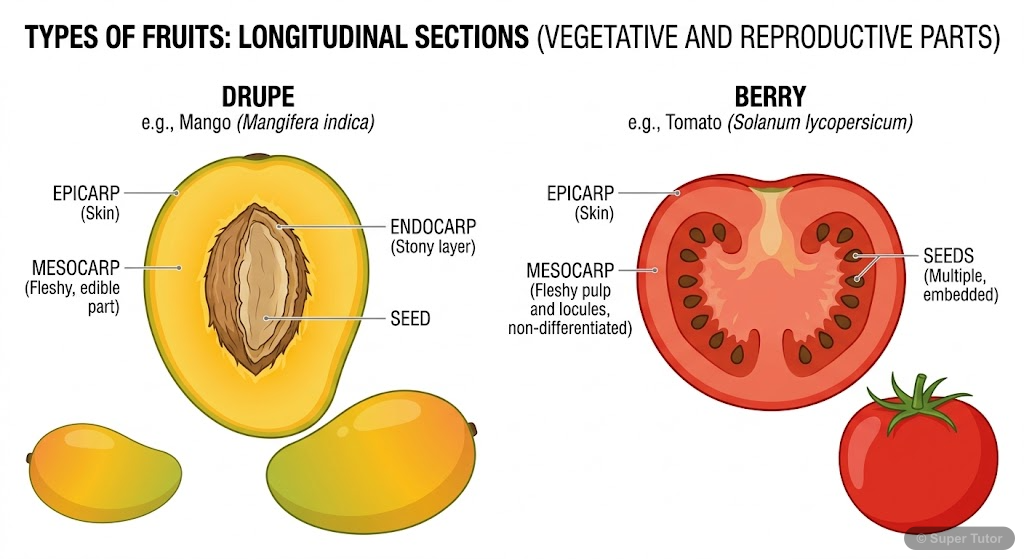
Learn better with visuals Super Tutor pairs illustrations like this with notes and quizzes for Plant Life : The Flower.
Important Questions from Plant Life : The Flower
What is pollination?
Show answer
Transfer of pollen grains from anther to stigma
Step 1: Pollination and fertilization are two different processes — a common source of confusion. Step 2: Pollination is specifically the transfer of pollen grains from the anthers (male part) to the stigma (female part) of a flower. Step 3: Fusion of gametes is called Fertilization, not pollination. Step 4: Growth of seed into plant is Germination. Step 5: Formation of fruit happens after fertilization. So pollination is only the transfer of pollen — the correct answer is option B.
When pollen grains from a flower fall on the stigma of the same flower, it is called:
Show answer
Self pollination
Step 1: There are two main types of pollination — self pollination and cross pollination. Step 2: Self pollination occurs when pollen from the anther falls on the stigma of the same flower or another flower on the same plant. Step 3: Cross pollination occurs between flowers of two different plants of the same kind. Step 4: Wind and water pollination are agents of cross pollination, not separate types. Step 5: Since the question says 'same flower', the answer is Self pollination.
Which of the following is an example of an insect-pollinated flower?
Show answer
Marigold
Step 1: Insects are attracted to flowers that are brightly coloured, fragrant, and produce nectar. Step 2: Marigold is a brightly coloured, fragrant flower that produces nectar — it is a classic example of insect-pollinated flowers. Step 3: Maize and Pine produce dry, light pollen in large quantities — they are wind-pollinated. Step 4: Vallisneria is an aquatic plant pollinated by water. Step 5: Therefore, Marigold is the correct answer for insect pollination.
The fusion of male and female gametes is called:
Show answer
Fertilization
Step 1: After pollination, pollen grains land on the stigma and germinate to form pollen tubes. Step 2: The pollen tube grows down through the style and reaches the ovary. Step 3: Inside the ovary, the male gamete from the pollen tube fuses with the female gamete (egg cell) inside the ovule. Step 4: This fusion of male and female sex cells (gametes) is called Fertilization. Step 5: Pollination is only the transfer of pollen; fertilization is the actual union of gametes — so Fertilization is the correct answer.
+88 more questions on Plant Life : The Flower (ICSE Class 6 Biology)
Practise AllFrequently Asked Questions
What are the important topics in Plant Life : The Flower for ICSE Class 6 Biology?
How many important questions are there in Plant Life : The Flower?
Sources & Official References
Content is aligned to the official syllabus. Refer to the board website for the latest curriculum.
More resources for Plant Life : The Flower
For serious students
Get the full Plant Life : The Flower chapter — start free.
Quizzes, flashcards, an AI doubt solver and a study plan for ICSE Class 6 Biology. Free to start, no card needed.