The River Valley Civilisation: Indus Valley Civilisation — Chapter Summary
ICSE · Class 6 · History & Civics
Summary of The River Valley Civilisation: Indus Valley Civilisation for ICSE Class 6 History & Civics. Part of the ICSE Class 6 History & Civics syllabus.
Interactive on Super Tutor
Studying The River Valley Civilisation: Indus Valley Civilisation? Get the full interactive chapter.
Quizzes, flashcards, AI doubt-solver and a step-by-step study plan — built for chapter summary and more.
Free trial, no card needed.
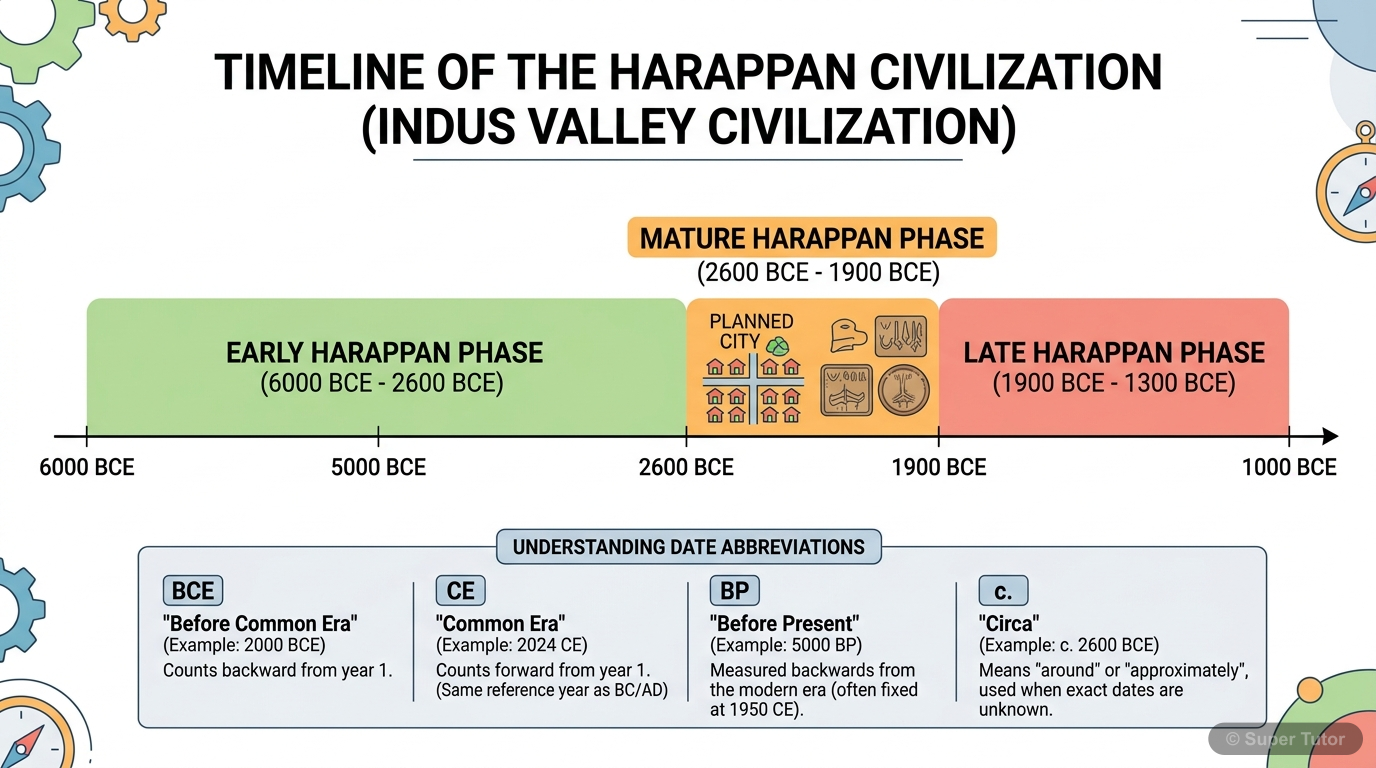
Learn better with visuals Super Tutor pairs illustrations like this with notes and quizzes for The River Valley Civilisation: Indus Valley Civilisation.
Overview
The Indus Valley Civilisation was one of the oldest and most advanced urban civilisations in the world. It flourished around 4500 years ago along the banks of the Indus River and its tributaries. This civilisation is also known as the Harappan Civilisation because Harappa was the first city discover
Key Concepts
In 1921
In 1921, Indian archaeologist Daya Ram Sahni discovered Harappa, and in 1922, Rakhal Das Banerji found Mohenjodaro. These discoveries proved that a hi
The cities were divided into
The cities were divided into the Citadel (upper town) and the Lower Town. Streets were laid in a grid pattern, and every house had a bathroom and toil
The Great Bath at Mohenjodaro
The Great Bath at Mohenjodaro was a large, water-tight structure possibly used for religious rituals. Granaries were large buildings used to store gra
The Harappans traded with Mesopotamia
The Harappans traded with Mesopotamia, Afghanistan, and Egypt using a barter system. They used weights and measures and had a dockyard at Lothal for s
The Harappans worshipped the Mother Goddess
The Harappans worshipped the Mother Goddess, Pashupati (an early form of Lord Shiva), and sacred animals like the humped bull. They had a pictographic
Learning Objectives
- To understand the discovery and extent of the Indus Valley Civilisation
- To learn about the main sites and sources of information
- To explore the town planning, architecture, and engineering skills
- To study the social structure, occupations, and trade practices
- To examine the art, religion, and script of the Harappans
Frequently Asked Questions
What are the important topics in The River Valley Civilisation: Indus Valley Civilisation for ICSE Class 6 History & Civics?
How should I revise The River Valley Civilisation: Indus Valley Civilisation for Class 6 exams?
Sources & Official References
Content is aligned to the official syllabus. Refer to the board website for the latest curriculum.
More resources for The River Valley Civilisation: Indus Valley Civilisation
For serious students
Get the full The River Valley Civilisation: Indus Valley Civilisation chapter — start free.
Quizzes, flashcards, an AI doubt solver and a study plan for ICSE Class 6 History & Civics. Free to start, no card needed.