The River Valley Civilisation: Indus Valley Civilisation — Study Plan
ICSE · Class 6 · History & Civics
A step-by-step study plan for The River Valley Civilisation: Indus Valley Civilisation, ICSE Class 6 History & Civics: what to learn first, what.
Interactive on Super Tutor
Studying The River Valley Civilisation: Indus Valley Civilisation? Get the full interactive chapter.
Quizzes, flashcards, AI doubt-solver and a step-by-step study plan — built for study plan and more.
Free trial, no card needed.
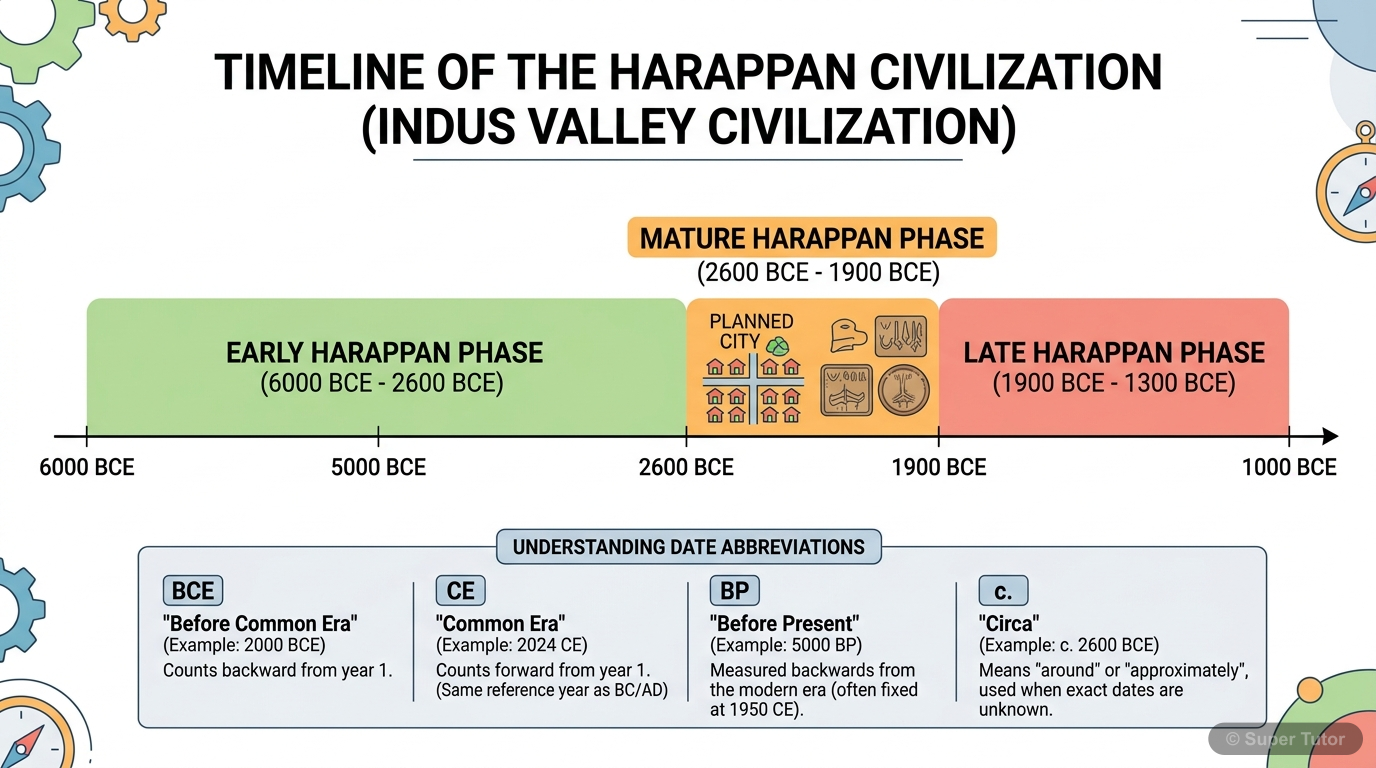
Learn better with visuals Super Tutor pairs illustrations like this with notes and quizzes for The River Valley Civilisation: Indus Valley Civilisation.
Study Plan
Learn the Theory
Read the textbook chapter carefully. Note down definitions, formulas and key ideas. Focus on: Discovery and Extent, Town Planning and Architecture, Key Structures.
Practise
Solve the textbook exercises and extra practice questions. There are 96 questions available for this chapter.
Revise & Test
Revise key points without looking at your notes. Take a practice quiz and mark weak areas for another pass.
Spaced Revision
Come back to The River Valley Civilisation: Indus Valley Civilisation after a week. Use flashcards for quick recall and try past exam questions on this chapter.
What to Focus On
- Discovered in 1921 (Harappa) and 1922 (Mohenjodaro).
- Proved that Indian history began earlier than the Aryan period.
- More than 1300 sites found across India and Pakistan.
- Harappa and Mohenjodaro are the most famous sites.
- Lothal had a dockyard for ships.
- Dholavira had water reservoirs for storing water.
- Cities divided into Citadel and Lower Town.
- Streets followed a grid pattern.
- Houses had courtyards, wells, and toilets.
Common Mistakes to Avoid
The Indus Valley Civilisation was ruled by kings, just like later Indian kingdoms.
The Great Bath was just a swimming pool for recreation.
The Indus people wrote in Sanskrit and their script is similar to Devanagari.
Memory Tips
Discovery of Harappa and Mohenjodaro in 1921 and 1922
Indus Valley Civilisation timeline: 2600 BCE to 1900 BCE
Main sites: Harappa, Mohenjodaro, Lothal, Kalibangan, Banawali, Dholavira
The Great Bath was used for religious bathing
Want a personalised study plan?
Super Tutor builds a day-by-day plan for ICSE Class 6 History & Civics that fits your exam date and pace.
Create My Study PlanFrequently Asked Questions
What are the important topics in The River Valley Civilisation: Indus Valley Civilisation for ICSE Class 6 History & Civics?
How should I revise The River Valley Civilisation: Indus Valley Civilisation for Class 6 exams?
Sources & Official References
Content is aligned to the official syllabus. Refer to the board website for the latest curriculum.
More resources for The River Valley Civilisation: Indus Valley Civilisation
Practice Quiz
Test yourself with a quick quiz
Important Questions
Exam-style questions with answers
Revision Notes
Key points for last-minute revision
Chapter Summary
Understand the chapter at a glance
Concept Maps
See how topics connect
Flashcards
Quick-fire cards for active recall
Syllabus
What topics to cover
For serious students
Get the full The River Valley Civilisation: Indus Valley Civilisation chapter — start free.
Quizzes, flashcards, an AI doubt solver and a study plan for ICSE Class 6 History & Civics. Free to start, no card needed.