The River Valley Civilisation: Indus Valley Civilisation — Flashcards
ICSE · Class 6 · History & Civics
30 flashcards for The River Valley Civilisation: Indus Valley Civilisation (ICSE Class 6 History & Civics) to test yourself on key terms and facts.
Interactive on Super Tutor
Studying The River Valley Civilisation: Indus Valley Civilisation? Get the full interactive chapter.
Quizzes, flashcards, AI doubt-solver and a step-by-step study plan — built for flashcards and more.
Free trial, no card needed.
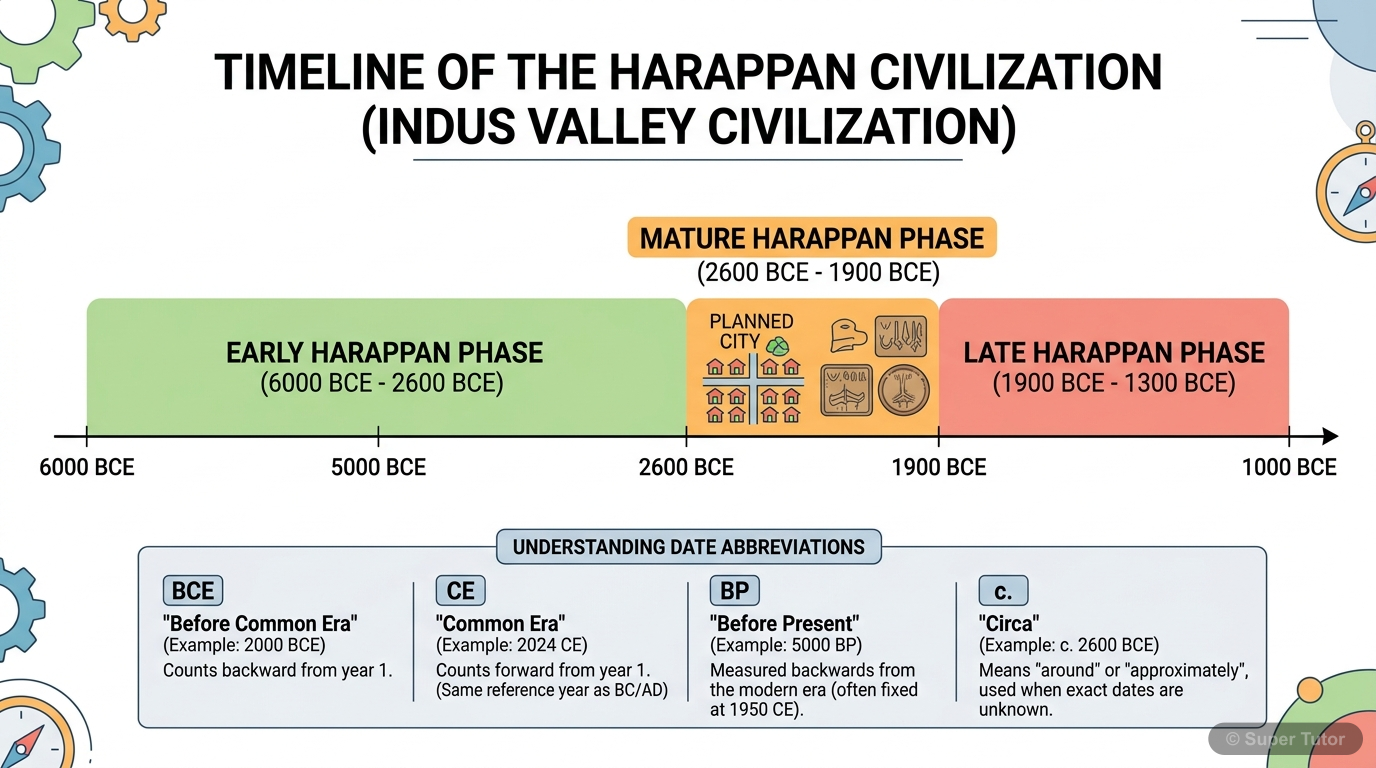
Learn better with visuals Super Tutor pairs illustrations like this with notes and quizzes for The River Valley Civilisation: Indus Valley Civilisation.
When was the Indus Valley Civilisation discovered?
Answer
The Indus Valley Civilisation was discovered in 1921 when Indian archaeologist Daya Ram Sahni found the ruins of Harappa. In 1922, Rakhal Das Banerji discovered Mohenjodaro. These findings revealed a …
What is the time period of the Indus Valley Civilisation?
Answer
The Indus Valley Civilisation flourished between 2600 BCE and 1900 BCE. It was one of the earliest urban civilisations in the world.
Why is it also called the Harappan Civilisation?
Answer
It is called the Harappan Civilisation because Harappa was the first city to be discovered in 1921. Since then, many similar sites have been found, all showing the same culture and urban planning.
Name two major cities of the Indus Valley Civilisation.
Answer
The two major cities were Harappa and Mohenjodaro. Harappa was located on the banks of the river Ravi, and Mohenjodaro was on the banks of the river Indus in present-day Pakistan.
What does 'Mohenjodaro' mean?
Answer
Mohenjodaro means 'Mound of the Dead'. It was named so because the site looked like a large mound of earth with ancient ruins buried underneath.
What is a citadel in Harappan cities?
Answer
A citadel is a raised, fortified part of the city built on high ground. It housed important public buildings like granaries, the Great Bath, and possibly the homes of rulers and priests.
Describe the town planning of Harappan cities.
Answer
Harappan cities were highly planned with a grid system of streets that intersected at right angles. Houses were built along wide roads, and there was an excellent drainage system. The cities were divi…
What was the Great Bath used for?
Answer
The Great Bath in Mohenjodaro was a large, rectangular tank made of burnt bricks and waterproofed with bitumen. It was likely used for religious or ritual bathing, showing the importance of cleanlines…
+22 more flashcards
Practise AllFrequently Asked Questions
What are the important topics in The River Valley Civilisation: Indus Valley Civilisation for ICSE Class 6 History & Civics?
How many flashcards are available for The River Valley Civilisation: Indus Valley Civilisation?
How should I revise The River Valley Civilisation: Indus Valley Civilisation for Class 6 exams?
Sources & Official References
Content is aligned to the official syllabus. Refer to the board website for the latest curriculum.
More resources for The River Valley Civilisation: Indus Valley Civilisation
Practice Quiz
Test yourself with a quick quiz
Important Questions
Exam-style questions with answers
Revision Notes
Key points for last-minute revision
Chapter Summary
Understand the chapter at a glance
Concept Maps
See how topics connect
Study Plan
Step-by-step plan for this chapter
Syllabus
What topics to cover
For serious students
Get the full The River Valley Civilisation: Indus Valley Civilisation chapter — start free.
Quizzes, flashcards, an AI doubt solver and a study plan for ICSE Class 6 History & Civics. Free to start, no card needed.