The River Valley Civilisation: Indus Valley Civilisation
ICSE · Class 6 · History & Civics
Most important questions from The River Valley Civilisation: Indus Valley Civilisation for ICSE Class 6 History & Civics board exam 2026. MCQs, short answer, and long answer questions with marks.
Interactive on Super Tutor
Studying The River Valley Civilisation: Indus Valley Civilisation? Get the full interactive chapter.
Quizzes, flashcards, AI doubt-solver and a step-by-step study plan — built for important questions and more.
1,000+ Class 6 students started this chapter today
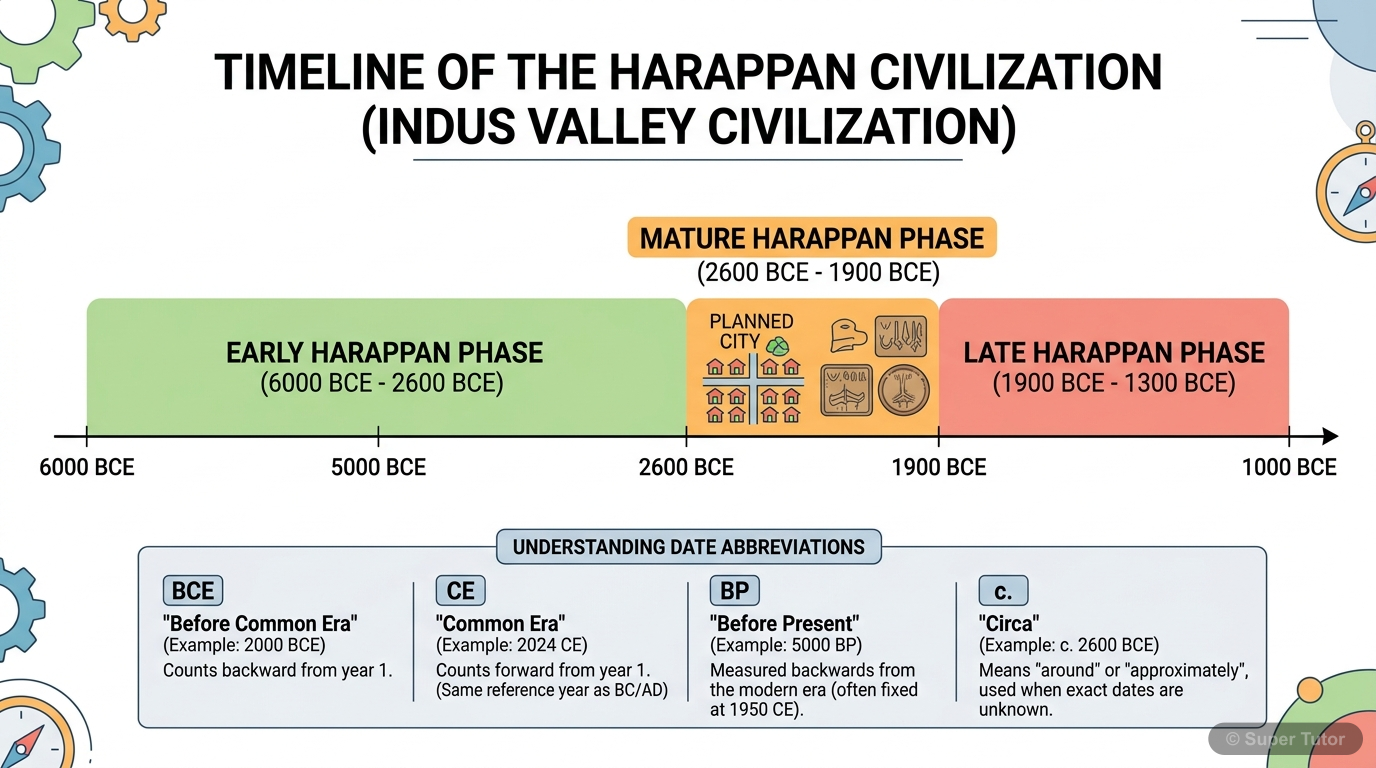
This is just one of 7+ visuals inside Super Tutor's The River Valley Civilisation: Indus Valley Civilisation chapter
Explore the full setSample Questions
The upper part of Harappan cities, built on raised ground, is called the:
Show answer
Citadel
Step 1: Harappan cities were divided into two parts. Step 2: The upper part, built on a raised platform, was called the 'Citadel' or 'Acropolis'. Step 3: The Citadel had high walls to protect against floods and housed public buildings like granaries. Step 4: The Lower Town was where common people lived and worked. Step 5: Granary and Assembly Hall were buildings found inside the Citadel, not the name for the raised area itself.
What was the Great Bath at Mohenjodaro most likely used for?
Show answer
Religious bathing
Step 1: The Great Bath was a rectangular pool found at Mohenjodaro. Step 2: It had six entrances, a central pool, galleries, and dressing rooms. Step 3: Historians believe it was used for religious bathing or ritual purification. Step 4: It was not a public swimming pool for competitions, nor was it used for washing clothes. Step 5: Water storage was done through wells, not the Great Bath. So religious bathing is the correct answer.
Which material was mainly used to build houses in the Indus Valley Civilisation?
Show answer
Burnt bricks
Step 1: The question asks about the building material used in Harappan cities. Step 2: Archaeological excavations show that houses, drains, and public buildings were all made of burnt bricks. Step 3: Burnt bricks are stronger and more durable than sun-dried mud bricks. Step 4: Wood and stone were not the primary building materials used for construction. Step 5: The use of burnt bricks shows how advanced the engineering skills of Harappan people were.
The Harappan people were the earliest known people to grow which crop?
Show answer
Cotton
Step 1: The question asks about a special crop grown by the Harappan people. Step 2: The Harappans grew wheat, barley, rice, mustard, and sesame. Step 3: However, the most special fact is that they were the earliest known people to grow COTTON. Step 4: Cotton was used to make clothes, which shows their advanced farming knowledge. Step 5: Sugarcane and Maize are not associated with the Indus Valley Civilisation.
+92 more questions available
Practice AllFrequently Asked Questions
What are the important topics in The River Valley Civilisation: Indus Valley Civilisation for ICSE Class 6 History & Civics?
How to score full marks in The River Valley Civilisation: Indus Valley Civilisation — ICSE Class 6 History & Civics?
How many important questions are there in The River Valley Civilisation: Indus Valley Civilisation?
Sources & Official References
Content is aligned to the official syllabus. Refer to the board website for the latest curriculum.
More resources for The River Valley Civilisation: Indus Valley Civilisation
Practice Quiz
Test yourself with a quick quiz
Revision Notes
Key points for last-minute revision
Formula Sheet
All formulas in one place
Chapter Summary
Understand the chapter at a glance
Concept Maps
See how topics connect visually
Study Plan
Step-by-step plan to ace this chapter
Flashcards
Quick-fire cards for active recall
Syllabus
What topics to cover
NCERT Solutions
Every textbook question solved step by step
For serious students
Get the full The River Valley Civilisation: Indus Valley Civilisation chapter — for free.
Quizzes, flashcards, AI doubt-solver and a step-by-step study plan for ICSE Class 6 History & Civics.