Industries — Chapter Summary
ICSE · Class 7 · Geography
Summary of Industries for ICSE Class 7 Geography. Key concepts: Manufacturing means converting, Industries satisfy growing and Industries are located near.
Interactive on Super Tutor
Studying Industries? Get the full interactive chapter.
Quizzes, flashcards, AI doubt-solver and a step-by-step study plan — built for chapter summary and more.
Free trial, no card needed.
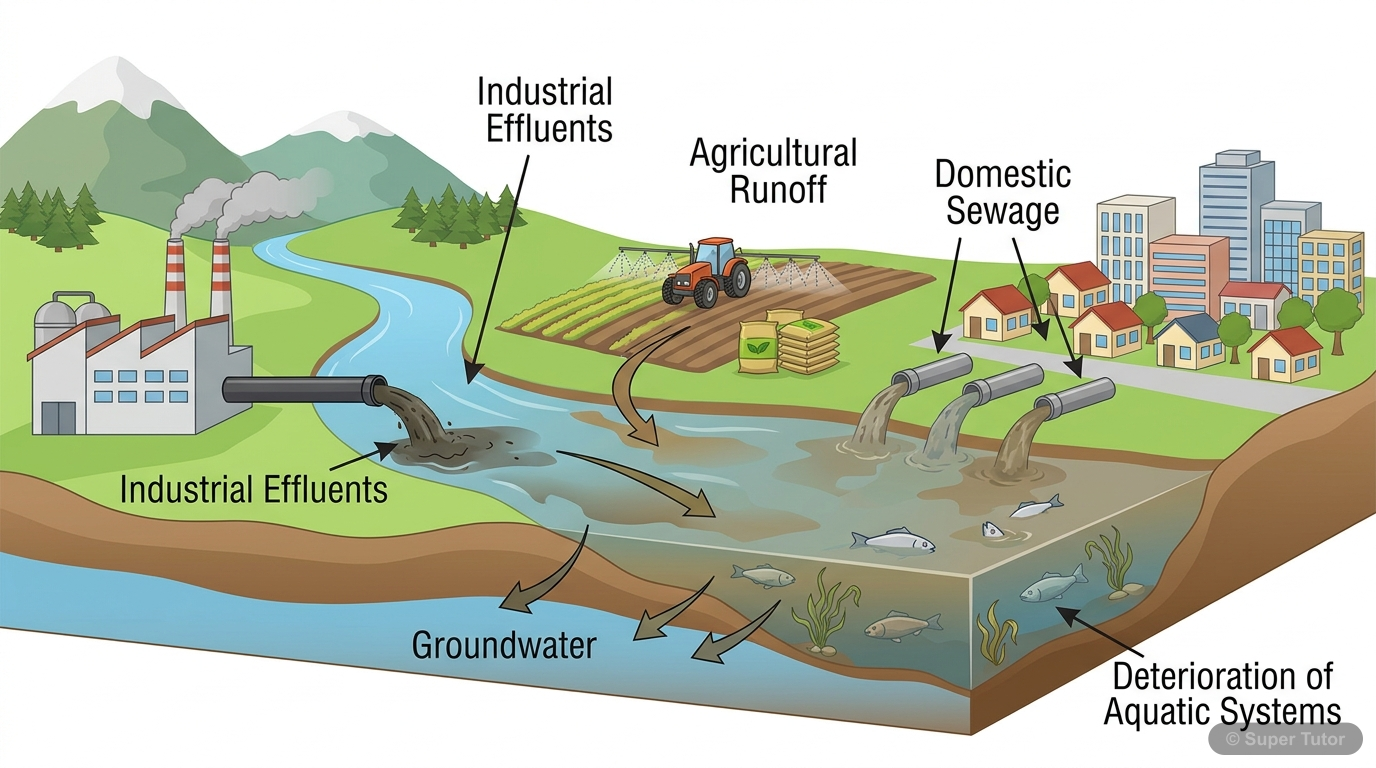
Learn better with visuals Super Tutor pairs illustrations like this with notes and quizzes for Industries.
Overview
Industries are places and systems where raw materials are changed into finished goods with the help of machinery, labour, capital, power, and management. Industries are important because they meet daily needs, create jobs, and support a country's growth. The location of industries depends on factors
Key Concepts
Manufacturing means converting raw materials into
Manufacturing means converting raw materials into finished products with the help of machinery. Industry includes the activities connected with this p
Industries satisfy growing human needs
Industries satisfy growing human needs, provide employment, and support economic growth. In 1947, about 56.6% of India's GDP came from the primary sec
Industries are located near raw materials
Industries are located near raw materials, power supply, water, transport routes, markets, labour, and suitable climate. Capital, banks, government su
Heavy industries use large amounts
Heavy industries use large amounts of raw material, capital, and power, and produce heavy goods. Light industries use less capital and produce lighter
Private sector industries are owned by
Private sector industries are owned by private individuals or firms. Public sector industries are owned and controlled by the government. Joint sector
Learning Objectives
- Understand the meaning and need of industries
- Identify the factors that affect the location of industries
- Classify industries by raw materials, management, and size
- Recognise important industrial centres of the world and India
- Explain the role of major industries such as iron and steel, cotton textile, sugar, shipbuilding, fishing, automobile, and information technology
Frequently Asked Questions
What are the important topics in Industries for ICSE Class 7 Geography?
How should I revise Industries for Class 7 exams?
Sources & Official References
Content is aligned to the official syllabus. Refer to the board website for the latest curriculum.
More resources for Industries
For serious students
Get the full Industries chapter — start free.
Quizzes, flashcards, an AI doubt solver and a study plan for ICSE Class 7 Geography. Free to start, no card needed.