Industries — Syllabus
ICSE · Class 7 · Geography
What Industries covers in ICSE Class 7 Geography: 4 topics, for the 2026-27 session. Part of the ICSE Class 7 Geography syllabus.
Interactive on Super Tutor
Studying Industries? Get the full interactive chapter.
Quizzes, flashcards, AI doubt-solver and a step-by-step study plan — built for syllabus and more.
Free trial, no card needed.
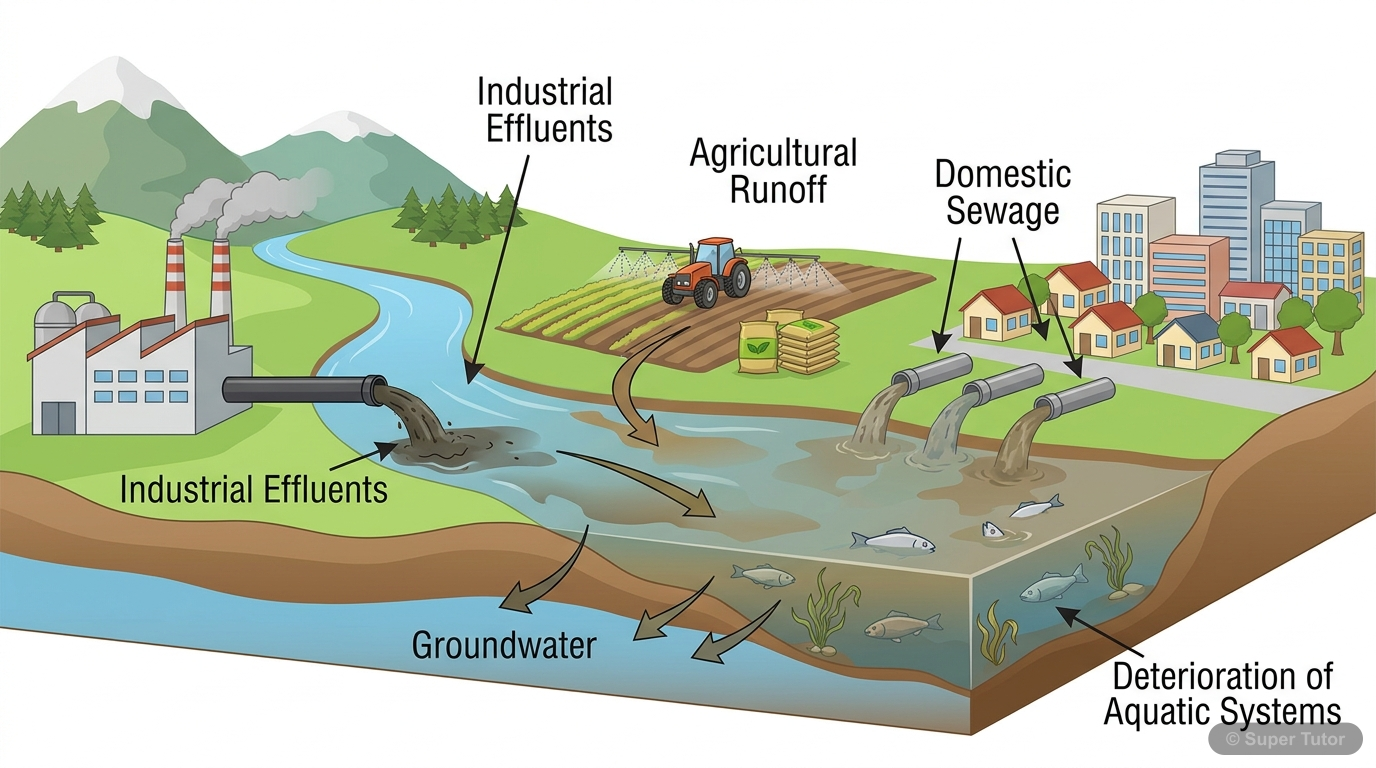
Learn better with visuals Super Tutor pairs illustrations like this with notes and quizzes for Industries.
Topics in Industries
1. Meaning and Need for Industries
- Manufacturing means changing raw materials into finished products with the help of machinery.
- Industry includes the activities related to manufacturing.
- Manufacturing can range from simple goods like a tea pot to complex goods like computers.
2. Factors Affecting Location of Industries
- Industries do not grow in random places; their location depends on many factors.
- Geographical factors include raw materials, power supply, water supply, labour, transport, market, site, and climate.
- Non-geographical factors include capital, government policies, bank and credit facilities, and efficient organisation.
3. Types of Industries
- Industries are classified on the basis of raw materials, management, and size.
- Heavy industry needs more capital, sophisticated equipment, skilled and unskilled labour, and large quantities of raw material.
- Examples of heavy industry are iron and steel, locomotives, and automobiles.
4. Major Industries and Their Centres
- Iron and steel is a basic or key industry because many other industries depend on it.
- It is called the backbone of the industrial economy.
- It needs iron ore, limestone, dolomite, manganese ferro-alloys, fuel, freshwater, capital, labour, market, and transport.
Key Concepts
Central concept: Industries as systems that transform raw materials into finished products and shape economic development, location patterns, employment, and environmental change
Work through every topic in Industries with notes and quizzes
Start This ChapterFrequently Asked Questions
What are the important topics in Industries for ICSE Class 7 Geography?
How should I revise Industries for Class 7 exams?
Sources & Official References
Content is aligned to the official syllabus. Refer to the board website for the latest curriculum.
More resources for Industries
Practice Quiz
Test yourself with a quick quiz
Important Questions
Exam-style questions with answers
Revision Notes
Key points for last-minute revision
Chapter Summary
Understand the chapter at a glance
Concept Maps
See how topics connect
Study Plan
Step-by-step plan for this chapter
Flashcards
Quick-fire cards for active recall
For serious students
Get the full Industries chapter — start free.
Quizzes, flashcards, an AI doubt solver and a study plan for ICSE Class 7 Geography. Free to start, no card needed.