Atomic Structure — Concept Maps
ICSE · Class 8 · Chemistry
4 concept maps of Atomic Structure for ICSE Class 8 Chemistry, each also written out as a text outline. Part of the ICSE Class 8 Chemistry syllabus.
Interactive on Super Tutor
Studying Atomic Structure? Get the full interactive chapter.
Quizzes, flashcards, AI doubt-solver and a step-by-step study plan — built for concept maps and more.
Free trial, no card needed.
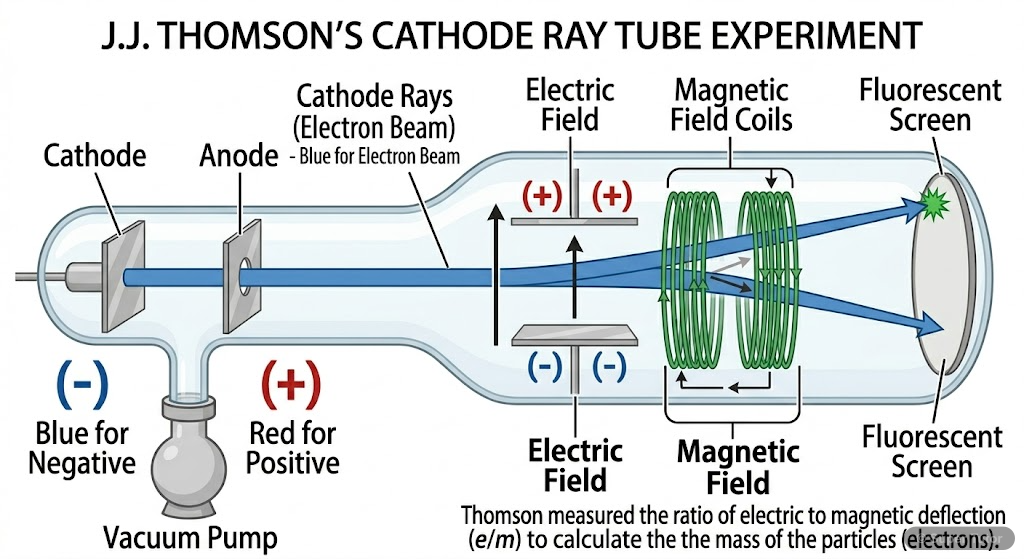
Learn better with visuals Super Tutor pairs illustrations like this with notes and quizzes for Atomic Structure.
Atomic Structure: Complete Overview
The map in words
- Atomic Structure
- Composition
- Nucleus
- Protons +1 charge
- Neutrons 0 charge
- Electrons
- Negative charge -1
- In shells around nucleus
- Nucleus
- Atomic Calculations
- Atomic Number Z
- Number of protons
- Identifies element
- Mass Number A
- Protons + Neutrons
- Determines isotope
- Atomic Number Z
- Electronic Arrangement
- Shells K L M N
- Maximum electrons 2n²
- Valence electrons
- Electronic configuration
- Key Concepts
- Isotopes
- Same Z different A
- Same chemical properties
- Ions
- Lost or gained electrons
- Positive cations
- Negative anions
- Valency
- Combining capacity
- Hydrogen reference
- Isotopes
- Atomic Models
- Thomson Plum Pudding
- Rutherford Nuclear
- Bohr Energy Levels
- Modern Standard Model
- Composition
Atomic Structure - Complete Concept Overview
The map in words
- Atomic Structure
- Subatomic Particles
- Electrons
- Charge -1
- Location Shells
- Negligible mass
- Protons
- Charge +1
- Location Nucleus
- Mass 1 amu
- Neutrons
- Charge 0
- Location Nucleus
- Mass 1 amu
- Electrons
- Atomic Models
- Thomson
- Plum Pudding
- Rejected
- Rutherford
- Nucleus discovery
- Solar system model
- Bohr
- Energy levels
- Atomic stability
- Thomson
- Atomic Properties
- Atomic Number Z
- Number of protons
- Identifies element
- Mass Number A
- Protons plus neutrons
- Total nucleons
- Electron Configuration
- Shells K L M N
- Valence electrons
- Octet rule
- Atomic Number Z
- Atomic Combinations
- Ions
- Cations positive
- Anions negative
- Isotopes
- Same atomic number
- Different mass
- Radicals
- Basic cations
- Acid anions
- Valency
- Combining capacity
- Hydrogen reference
- Ions
- Subatomic Particles
Atomic Structure - Complete Concept Overview
The map in words
- Atomic Structure
- Subatomic Particles
- Electron
- Negative charge
- Negligible mass
- In orbits
- Proton
- Positive charge
- In nucleus
- 1 amu mass
- Neutron
- No charge
- In nucleus
- 1 amu mass
- Electron
- Atomic Models
- Thomson Plum Pudding
- Disproven
- Rutherford Nuclear
- Nucleus discovery
- Bohr Model
- Fixed energy levels
- Explains stability
- Modern Model
- Combines all
- Thomson Plum Pudding
- Atomic Properties
- Atomic Number Z
- Number of protons
- Identifies element
- Mass Number A
- Protons plus neutrons
- Atomic mass
- Neutrons
- A minus Z
- Atomic Number Z
- Electronic Configuration
- Shells K L M N
- Formula 2n squared
- Octet Rule
- Valence Electrons
- Outermost shell
- Determine bonding
- Shells K L M N
- Ions and Isotopes
- Cations
- Lost electrons
- Positive charge
- Anions
- Gained electrons
- Negative charge
- Isotopes
- Same atomic number
- Different mass number
- Cations
- Valency
- Combining capacity
- Based on valence electrons
- Variable valency elements
- Subatomic Particles
Atom as the basic building block of matter
The map in words
- Atom as the basic building block of matter
- Atom
- Historical ideas about atoms
- Sub-atomic particles
- Discovery of electrons
- Discovery of protons
- Discovery of nucleus
- Atomic models
- Bohr-Bury scheme
Explore these maps interactively
Explore DiagramsFrequently Asked Questions
What are the important topics in Atomic Structure for ICSE Class 8 Chemistry?
What do the concept maps for Atomic Structure show?
How should I revise Atomic Structure for Class 8 exams?
Sources & Official References
Content is aligned to the official syllabus. Refer to the board website for the latest curriculum.
More resources for Atomic Structure
Practice Quiz
Test yourself with a quick quiz
Important Questions
Exam-style questions with answers
Revision Notes
Key points for last-minute revision
Chapter Summary
Understand the chapter at a glance
Study Plan
Step-by-step plan for this chapter
Flashcards
Quick-fire cards for active recall
Syllabus
What topics to cover
For serious students
Get the full Atomic Structure chapter — start free.
Quizzes, flashcards, an AI doubt solver and a study plan for ICSE Class 8 Chemistry. Free to start, no card needed.