Physical Quantities and Measurement — Practice Quiz
ICSE · Class 8 · Physics
Try a 4-question quiz on Physical Quantities and Measurement for ICSE Class 8 Physics: tap an answer to check it and see why.
Interactive on Super Tutor
Studying Physical Quantities and Measurement? Get the full interactive chapter.
Quizzes, flashcards, AI doubt-solver and a step-by-step study plan — built for practice quiz and more.
Free trial, no card needed.
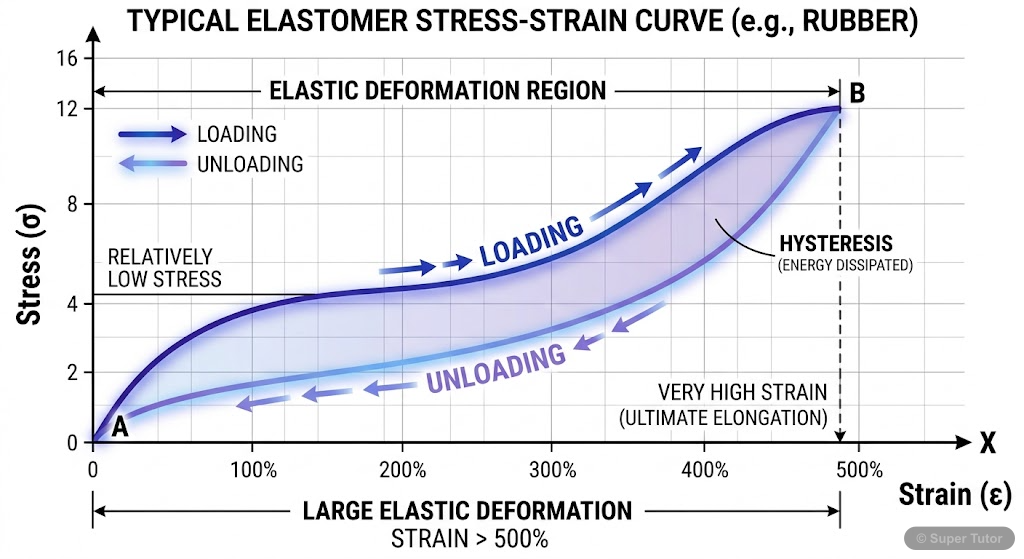
Learn better with visuals Super Tutor pairs illustrations like this with notes and quizzes for Physical Quantities and Measurement.
Quick Quiz: Physical Quantities and Measurement
0/4Tap an answer to check it instantly. No sign-up needed for these 4.
A density bottle has a mass of 20 g when empty, 70 g when filled with water, and 60 g when filled with an unknown liquid. What is the relative density of the unknown liquid?
An irregular stone is weighed and found to be 390 g. It is lowered into a measuring cylinder containing water at the 30 mL mark. The water level rises to 80 mL. What is the density of the stone in kg m⁻³?
A solid block has a density of 0.6 g cm⁻³ and volume of 500 cm³. It is placed in a liquid of density 1.5 g cm⁻³. What fraction of the block's volume will be OUTSIDE the liquid when it floats?
A Eureka can is used to find the volume of a metal piece. After immersing the metal, 120 mL of water is collected. The mass of the metal piece is 936 g. What is the density of the metal in g cm⁻³?
Sample Questions
The density of a substance is 13.6 g cm⁻³. Which of the following correctly states its density in SI units and its relative density?
Show answer
13600 kg m⁻³ and relative density = 13.6
Step 1: Conversion: 1 g cm⁻³ = 1000 kg m⁻³, so 13.6 g cm⁻³ = 13600 kg m⁻³. Step 2: Relative density = Density of substance / Density of water = 13600 / 1000 = 13.6. Step 3: Relative density is dimensionless and equals the numerical value of density in g cm⁻³. Option 2 wrongly divides instead of multiplying by 1000. Option 3 confuses the SI value with relative density. Option 4 multiplies by 10 instead of 1000.
A rectangular glass block is 40 cm long, 20 cm wide and 5 cm thick. Its mass is 8 kg. What is the density of glass in g cm⁻³?
Show answer
2 g cm⁻³
Step 1: Volume = length × breadth × height = 40 × 20 × 5 = 4000 cm³. Step 2: Mass = 8 kg = 8000 g (convert to grams). Step 3: Density = M/V = 8000 / 4000 = 2 g cm⁻³. Option 0.5 arises from not converting kg to g. Option 20 comes from using 400 cm³ as volume (missing one dimension). Option 4 results from using 2000 g instead of 8000 g.
A wooden block of mass 300 g and density 0.75 g cm⁻³ is placed in glycerine of density 1.26 g cm⁻³. Which statement correctly describes what happens?
Show answer
It floats with approximately 59.5% of its volume inside glycerine
Step 1: Density of wood (0.75 g cm⁻³) < Density of glycerine (1.26 g cm⁻³), so the block floats. Step 2: Fraction submerged = ρ_wood / ρ_glycerine = 0.75 / 1.26 = 0.595 ≈ 59.5%. Step 3: So approximately 59.5% of the block is inside glycerine and 40.5% is outside. Option 2 is wrong because the wood's density is less than glycerine's. Option 3 confuses density of wood (0.75) as a direct percentage. Option 4 has no physical basis here.
An iceberg has density 0.9 g cm⁻³ and floats in sea water of density 1.02 g cm⁻³. If the total volume of the iceberg is 1000 m³, what volume (in m³) is visible ABOVE the sea surface?
Show answer
117.6 m³
Step 1: Fraction submerged = ρ_ice / ρ_sea water = 0.9 / 1.02 = 0.8824. Step 2: Volume submerged = 0.8824 × 1000 = 882.4 m³. Step 3: Volume above surface = 1000 – 882.4 = 117.6 m³. Option 882.4 m³ is the submerged part, not the visible part. Option 100 m³ uses ratio 0.9:1 (using fresh water density). Option 900 m³ uses incorrect fraction.
+41 more questions on Physical Quantities and Measurement (ICSE Class 8 Physics)
Practise AllFrequently Asked Questions
What are the important topics in Physical Quantities and Measurement for ICSE Class 8 Physics?
How many practice questions are there for Physical Quantities and Measurement?
Sources & Official References
Content is aligned to the official syllabus. Refer to the board website for the latest curriculum.
More resources for Physical Quantities and Measurement
Important Questions
Exam-style questions with answers
Revision Notes
Key points for last-minute revision
Formula Sheet
The chapter's formulas in one place
Chapter Summary
Understand the chapter at a glance
Concept Maps
See how topics connect
Study Plan
Step-by-step plan for this chapter
Flashcards
Quick-fire cards for active recall
Syllabus
What topics to cover
For serious students
Get the full Physical Quantities and Measurement chapter — start free.
Quizzes, flashcards, an AI doubt solver and a study plan for ICSE Class 8 Physics. Free to start, no card needed.