Physical Quantities and Measurement — Flashcards
ICSE · Class 8 · Physics
30 flashcards for Physical Quantities and Measurement (ICSE Class 8 Physics) to test yourself on key terms and facts.
Interactive on Super Tutor
Studying Physical Quantities and Measurement? Get the full interactive chapter.
Quizzes, flashcards, AI doubt-solver and a step-by-step study plan — built for flashcards and more.
Free trial, no card needed.
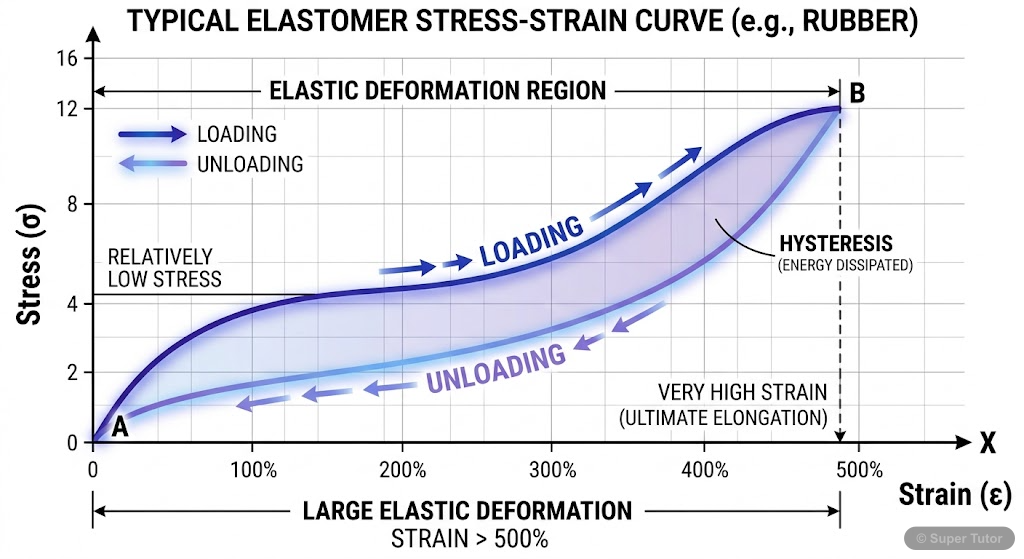
Learn better with visuals Super Tutor pairs illustrations like this with notes and quizzes for Physical Quantities and Measurement.
State the definition of density.
Answer
Density is the mass per unit volume of a substance. Formula: d = M / V Where: - d = density - M = mass - V = volume Unit: kg m^-3 in SI, g cm^-3 in CGS…
A substance has mass 210 g and volume 27 cm^3. Find its density.
Answer
Given: - Mass, M = 210 g - Volume, V = 27 cm^3 Formula: d = M / V Step 1: d = 210 g / 27 cm^3 Step 2: d = 7.78 g cm^-3 Answer: 7.78 g cm^-3…
Why can equal masses of different substances have different volumes?
Answer
Different substances have different densities. A substance with lower density occupies more volume for the same mass. For example, cotton has a much larger volume than lead for equal mass because lead…
State the SI and CGS units of density.
Answer
SI unit of density: kg m^-3 CGS unit of density: g cm^-3 Conversion: 1 kg m^-3 = 10^-3 g cm^-3 1 g cm^-3 = 1000 kg m^-3…
A block of glass is 30 cm long, 25 cm wide, and 2 cm thick. Its mass is 7.5 kg. Find its density.
Answer
Given: - Length = 30 cm - Breadth = 25 cm - Height = 2 cm - Mass = 7.5 kg = 7500 g Step 1: Volume = length × breadth × height Step 2: V = 30 × 25 × 2 = 1500 cm^3 Step 3: Density d = M / V = 7500 g / 1…
State the formula for the volume of a cuboid.
Answer
Volume of a cuboid = length × breadth × height Use this formula for rectangular solids. Unit of volume is cm^3, m^3, or another cubic unit.
A cylinder has radius 3 cm and height 10 cm. Find its volume.
Answer
Given: - Radius = 3 cm - Height = 10 cm Formula: Volume of a cylinder = π × radius^2 × height Step 1: V = 3.14 × 3^2 × 10 cm^3 Step 2: V = 3.14 × 9 × 10 cm^3 Step 3: V = 282.6 cm^3 Answer: 282.6 cm^3…
How is the volume of an irregular solid measured using a measuring cylinder?
Answer
Use the displacement method. Steps: 1. Note the initial water level V1. 2. Immerse the solid gently. 3. Note the final water level V2. 4. Volume of solid = V2 - V1 Formula: V = (V2 - V1) cm^3 This wor…
+22 more flashcards
Practise AllFrequently Asked Questions
What are the important topics in Physical Quantities and Measurement for ICSE Class 8 Physics?
How many flashcards are available for Physical Quantities and Measurement?
How should I revise Physical Quantities and Measurement for Class 8 exams?
Sources & Official References
Content is aligned to the official syllabus. Refer to the board website for the latest curriculum.
More resources for Physical Quantities and Measurement
Practice Quiz
Test yourself with a quick quiz
Important Questions
Exam-style questions with answers
Revision Notes
Key points for last-minute revision
Formula Sheet
The chapter's formulas in one place
Chapter Summary
Understand the chapter at a glance
Concept Maps
See how topics connect
Study Plan
Step-by-step plan for this chapter
Syllabus
What topics to cover
For serious students
Get the full Physical Quantities and Measurement chapter — start free.
Quizzes, flashcards, an AI doubt solver and a study plan for ICSE Class 8 Physics. Free to start, no card needed.