Medieval India (D) Composite Culture — Concept Maps
ICSE · Class 9 · History & Civics
4 concept maps of Medieval India (D) Composite Culture for ICSE Class 9 History & Civics, each also written out as a text outline.
Interactive on Super Tutor
Studying Medieval India (D) Composite Culture? Get the full interactive chapter.
Quizzes, flashcards, AI doubt-solver and a step-by-step study plan — built for concept maps and more.
Free trial, no card needed.
One of 5 illustrations for Medieval India (D) Composite Culture in Super Tutor — alongside flashcards, concept maps and practice questions.
Development of Composite Culture in Medieval India
The map in words
- 13th Century
- Delhi Sultanate established
- Cultural fusion begins
- 1236
- Khwajah Moinuddin Chishti dies
- Ajmer becomes pilgrimage center
- 15th Century
- Kabir Das teachings
- Bijak compositions
- 1498
- Vasco da Gama arrives
- Christianity spreads
- 1542
- St Francis Xavier arrives
- Jesuit missions begin
- 16th Century
- Guru Nanak Dev teachings
- Sikhism emerges
- Mughal Period
- Architectural synthesis
- Cultural consolidation
Composite Culture in Medieval India - Chapter Overview
The map in words
- Composite Culture
- Sources
- Bijak
- Kabir Teachings
- Hindu Muslim Unity
- Guru Granth Sahib
- Sikh Scripture
- Multi Religious
- Ajmer Sharief
- Sufi Shrine
- Universal Appeal
- St Francis Church
- Christian Heritage
- European Influence
- Bijak
- Bhakti Movement
- Southern Origins
- Alvars
- Nayanars
- Key Saints
- Mirabai
- Sant Jnaneswar
- Core Principles
- One God
- Devotion
- Equality
- Southern Origins
- Sufism
- Orders
- Chishti
- Suhrawardi
- Organization
- Pir
- Murids
- Khanqah
- Teachings
- Unity of Religions
- Service to Humanity
- Orders
- Cultural Impact
- Architecture
- Indo Islamic Style
- Fusion Elements
- Language
- Urdu Development
- Persian Influence
- Arts
- Music
- Painting
- Literature
- Architecture
- Sources
Development of Composite Culture in Medieval India
The map in words
- 1206
- Delhi Sultanate established
- Beginning of Indo-Islamic synthesis
- 1236
- Death of Khwaja Moinuddin Chishti
- Sufi influence spreads
- 1398
- Sant Jnaneswar writes Jnaneswari
- Bhakti movement flourishes
- 1440
- Birth of Kabir
- Hindu-Muslim synthesis in philosophy
- 1469
- Birth of Guru Nanak
- Sikhism emerges
- 1498
- Vasco da Gama reaches India
- Christian influence begins
- 1526
- Mughal Empire established
- Consolidation of composite culture
- 1542
- St Francis Xavier arrives
- Organized Christian missions
- 1556
- Akbar becomes emperor
- Peak of cultural synthesis
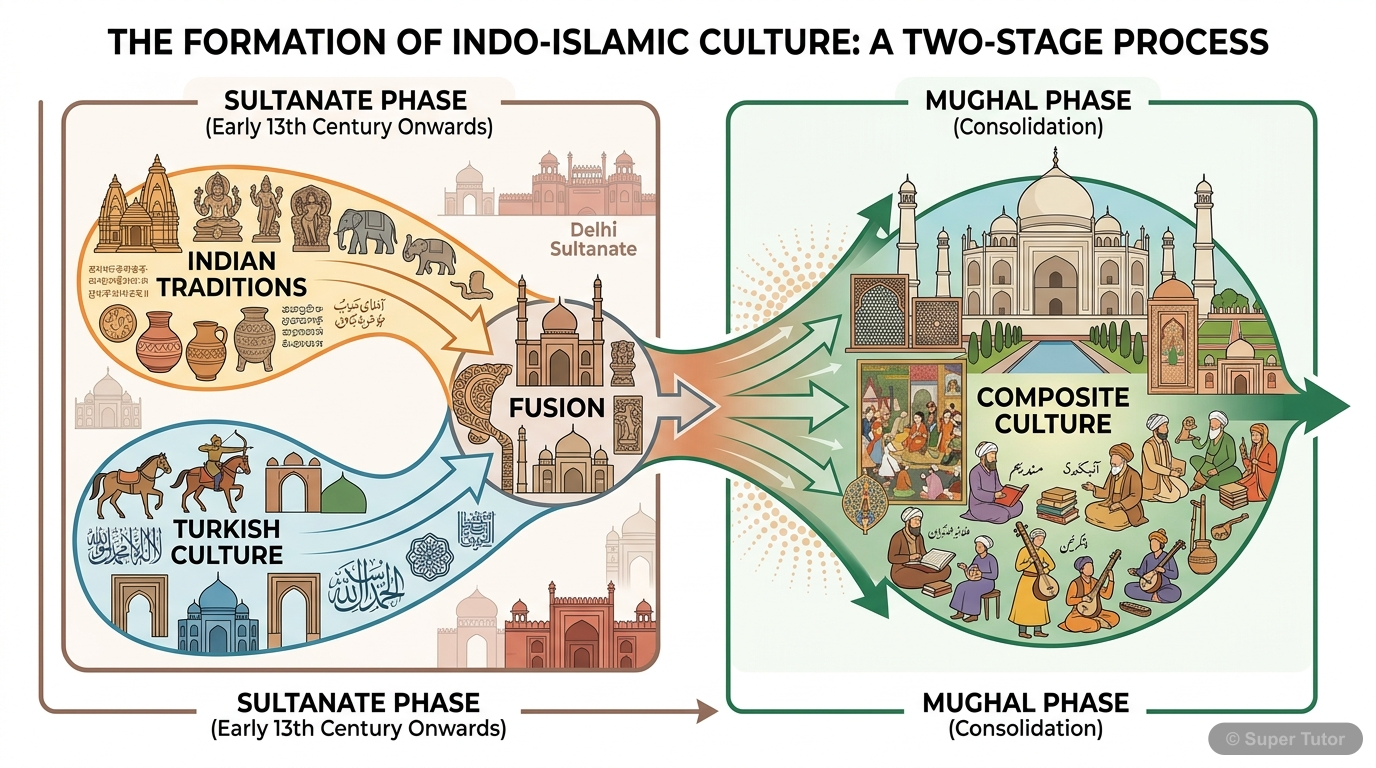
Composite culture in medieval India
The map in words
- Composite culture in medieval India
- Delhi Sultanate
- Indo-Islamic culture
- Sultanate phase
- Mughal phase
- Sources of composite culture
- Bhakti movement
- Sufism
- Christian influence
Explore these maps interactively
Explore DiagramsFrequently Asked Questions
What are the important topics in Medieval India (D) Composite Culture for ICSE Class 9 History & Civics?
What do the concept maps for Medieval India (D) Composite Culture show?
How should I revise Medieval India (D) Composite Culture for Class 9 exams?
Sources & Official References
Content is aligned to the official syllabus. Refer to the board website for the latest curriculum.
More resources for Medieval India (D) Composite Culture
Practice Quiz
Test yourself with a quick quiz
Important Questions
Exam-style questions with answers
Revision Notes
Key points for last-minute revision
Chapter Summary
Understand the chapter at a glance
Study Plan
Step-by-step plan for this chapter
Flashcards
Quick-fire cards for active recall
Syllabus
What topics to cover
For serious students
Get the full Medieval India (D) Composite Culture chapter — start free.
Quizzes, flashcards, an AI doubt solver and a study plan for ICSE Class 9 History & Civics. Free to start, no card needed.