Medieval India (D) Composite Culture — Important Questions
ICSE · Class 9 · History & Civics
57 important questions from Medieval India (D) Composite Culture for ICSE Class 9 History & Civics, with answers.
Interactive on Super Tutor
Studying Medieval India (D) Composite Culture? Get the full interactive chapter.
Quizzes, flashcards, AI doubt-solver and a step-by-step study plan — built for important questions and more.
Free trial, no card needed.
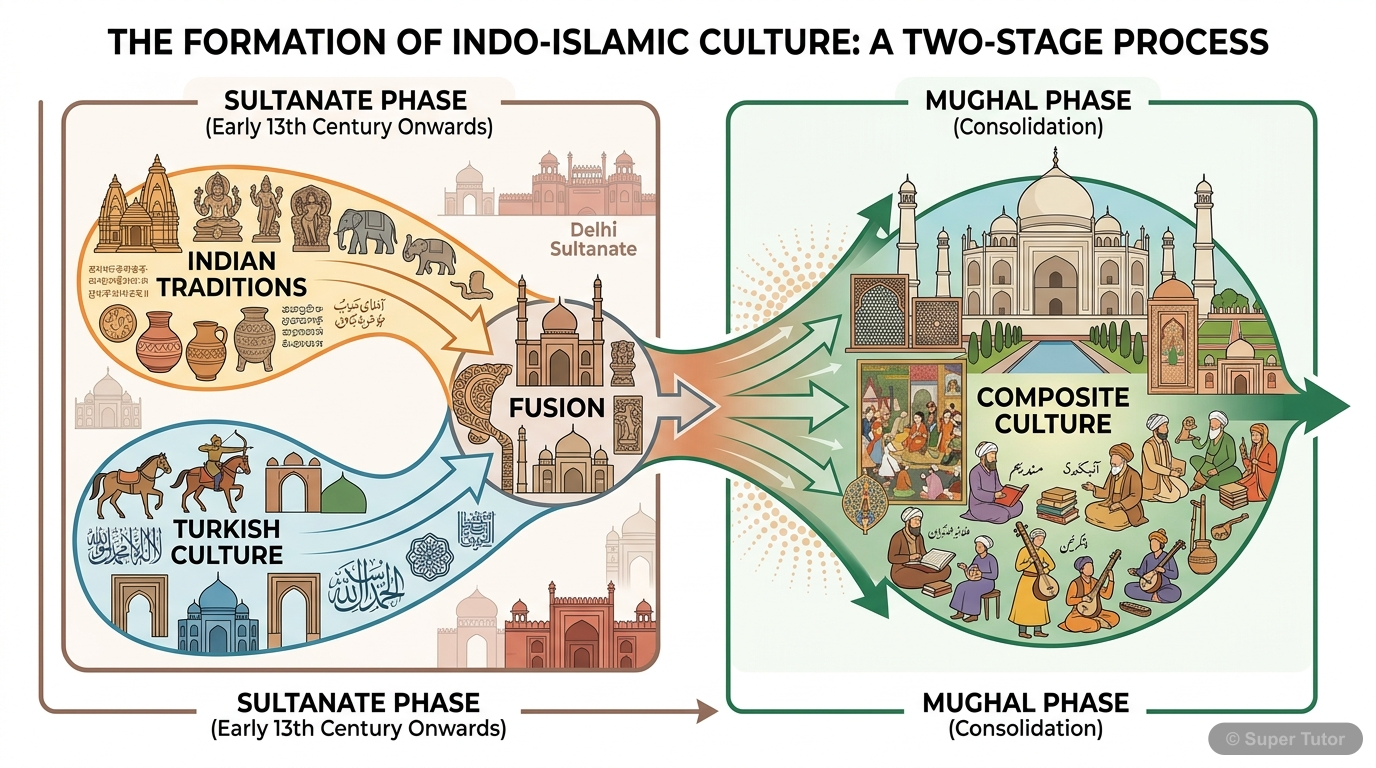
One of 5 illustrations for Medieval India (D) Composite Culture in Super Tutor — alongside flashcards, concept maps and practice questions.
Important Questions from Medieval India (D) Composite Culture
Who rescued and brought up the infant Kabir?
Show answer
Neeru and Neema
Kabir was rescued and brought up by the Muslim weaver Neeru and his wife Neema.
Kabir was a disciple of which Bhakti saint?
Show answer
Ramananda
Kabir is described as a disciple of the Bhakti saint Ramananda.
Which statement about Kabir's teachings is correct?
Show answer
There is only one God. He may be worshipped under many names.
Kabir taught the unity of God and allowed different names for worship.
Which are the three main sections of Bijak?
Show answer
Sakhi, Ramaini and Shabda
Bijak is divided into three main sections: Sakhi, Ramaini and Shabda.
+53 more questions on Medieval India (D) Composite Culture (ICSE Class 9 History & Civics)
Practise AllFrequently Asked Questions
What are the important topics in Medieval India (D) Composite Culture for ICSE Class 9 History & Civics?
How many important questions are there in Medieval India (D) Composite Culture?
Sources & Official References
Content is aligned to the official syllabus. Refer to the board website for the latest curriculum.
More resources for Medieval India (D) Composite Culture
For serious students
Get the full Medieval India (D) Composite Culture chapter — start free.
Quizzes, flashcards, an AI doubt solver and a study plan for ICSE Class 9 History & Civics. Free to start, no card needed.