Organisms and Populations — Syllabus
Madhya Pradesh Board · Class 12 · Biology
What Organisms and Populations covers in Madhya Pradesh Board Class 12 Biology: 4 topics, for the 2026-27 session.
Interactive on Super Tutor
Studying Organisms and Populations? Get the full interactive chapter.
Quizzes, flashcards, AI doubt-solver and a step-by-step study plan — built for syllabus and more.
Free trial, no card needed.
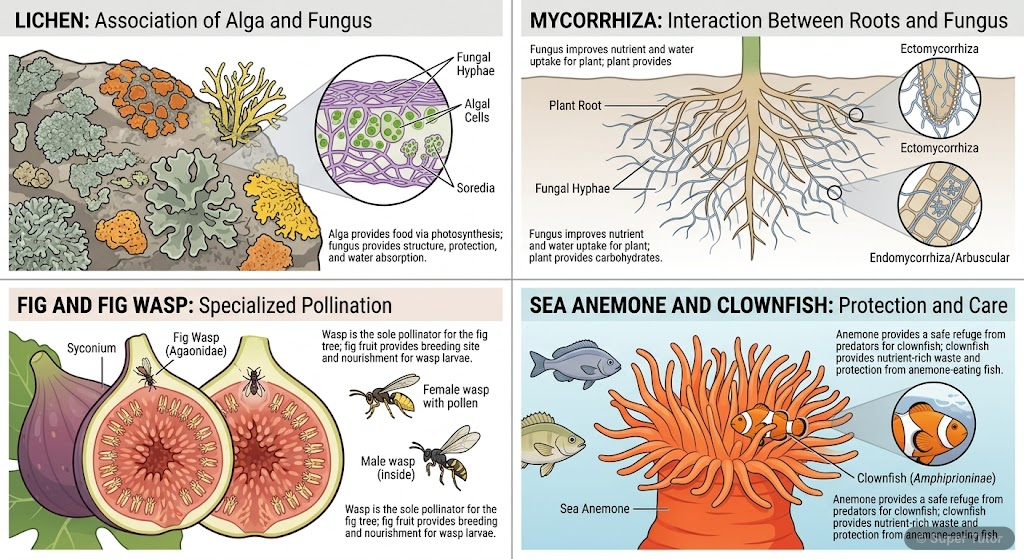
One of 13 illustrations for Organisms and Populations in Super Tutor — alongside flashcards, concept maps and practice questions.
Topics in Organisms and Populations
1. Population Attributes and Density
- A population is a group of individuals of the same species living in a defined geographical area, sharing or competing for similar resources, and potentially interbreeding.
- Population attributes do not belong to an individual organism; they belong to the group as a whole.
- An individual may have births and deaths, but a population has birth rates and death rates.
2. Population Growth
- Population density changes because of four basic processes: natality, mortality, immigration, and emigration.
- Natality and immigration increase density; mortality and emigration decrease density.
- Under normal conditions, births and deaths are the most important factors affecting density.
3. Life History Variation
- Populations evolve to maximise reproductive fitness, also called Darwinian fitness.
- Organisms evolve different reproductive strategies under different selection pressures.
- Some organisms breed only once in their lifetime, such as Pacific salmon fish and bamboo.
4. Population Interactions
- Species in nature do not live in isolation; they interact to form biological communities.
- Interspecific interactions may be beneficial, harmful, or neutral to one or both species.
- The main interaction types are mutualism, competition, predation, parasitism, commensalism, and amensalism.
Key Concepts
Central concept: Ecology at the population level: population attributes, growth, and interspecific interactions
Work through every topic in Organisms and Populations with notes and quizzes
Start This ChapterFrequently Asked Questions
What are the important topics in Organisms and Populations for Madhya Pradesh Board Class 12 Biology?
How should I revise Organisms and Populations for the Madhya Pradesh Board Class 12 board exam?
Sources & Official References
Content is aligned to the official syllabus. Refer to the board website for the latest curriculum.
More resources for Organisms and Populations
Practice Quiz
Test yourself with a quick quiz
Important Questions
Exam-style questions with answers
Revision Notes
Key points for last-minute revision
Formula Sheet
The chapter's formulas in one place
Chapter Summary
Understand the chapter at a glance
Concept Maps
See how topics connect
Study Plan
Step-by-step plan for this chapter
Flashcards
Quick-fire cards for active recall
NCERT Solutions
Every textbook question solved step by step
For serious students
Get the full Organisms and Populations chapter — start free.
Quizzes, flashcards, an AI doubt solver and a study plan for Madhya Pradesh Board Class 12 Biology. Free to start, no card needed.