Meeting Life Challenges — NCERT Solutions
Madhya Pradesh Board · Class 12 · Psychology
NCERT Solutions for Meeting Life Challenges, Madhya Pradesh Board Class 12 Psychology: 12 textbook questions solved step by step.
Interactive on Super Tutor
Studying Meeting Life Challenges? Get the full interactive chapter.
Quizzes, flashcards, AI doubt-solver and a step-by-step study plan — built for NCERT solutions and more.
Free trial, no card needed.
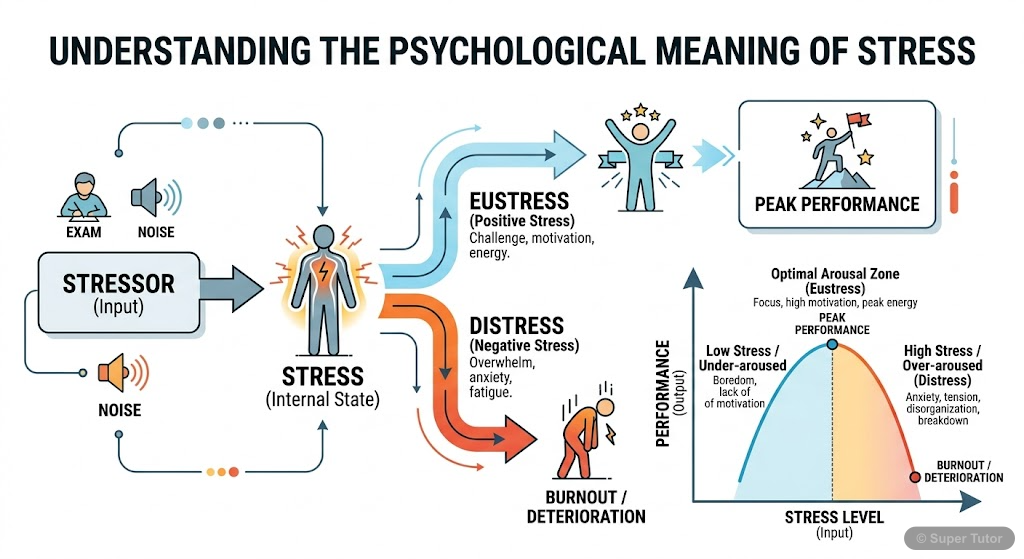
One of 12 illustrations for Meeting Life Challenges in Super Tutor — alongside flashcards, concept maps and practice questions.
The first 6 solutions are open to read. The other 6 are free with a Super Tutor account.
Review Questions — Chapter 3: Meeting Life Challenges
1Explain the concept of stress. Give examples from daily life.Show solution
Given/Concept: Stress is a central concept in health psychology. It is neither purely a stimulus nor purely a response but an ongoing transactional process.
Definition: Stress is a dynamic, ongoing transactional process between an individual and the environment, in which the individual perceives environmental demands as taxing or exceeding his/her resources and endangering his/her well-being.
Key points:
- Stress arises when there is a mismatch between the demands placed on a person and the resources available to meet those demands.
- The individual's appraisal (cognitive evaluation) of the situation determines whether it is experienced as stressful.
- Stress involves emotional, physiological, cognitive, and behavioural responses.
Examples from daily life:
- Examination stress: A student who has not prepared well perceives the upcoming board exam as threatening, leading to anxiety, sleeplessness, and inability to concentrate.
- Work overload: An employee given multiple deadlines simultaneously feels overwhelmed, experiences headaches and irritability.
- Traffic jam: Being stuck in heavy traffic when already late for an important meeting causes frustration and physiological arousal (increased heart rate).
- Family conflict: Frequent arguments at home create chronic psychological stress affecting both mental and physical health.
Conclusion: Stress is an unavoidable part of life; what matters is how an individual appraises and copes with the stressful situation.
2State the symptoms and sources of stress.Show solution
Symptoms of Stress:
Stress manifests across four dimensions:
| Dimension | Symptoms |
|---|---|
| Emotional | Anxiety, depression, irritability, mood swings, feeling of helplessness |
| Physiological | Increased heart rate, elevated blood pressure, sweating, headaches, fatigue, weakened immune system |
| Cognitive | Poor concentration, forgetfulness, negative thinking, difficulty in decision-making |
| Behavioural | Aggression, withdrawal, changes in eating/sleeping patterns, increased use of alcohol or drugs |
Sources (Stressors) of Stress:
- Life Events: Major changes in life such as death of a loved one, divorce, marriage, job loss, or moving to a new city. Holmes and Rahe's Social Readjustment Rating Scale (SRRS) identified such events as significant stressors.
- Everyday Hassles: Minor day-to-day irritants such as traffic jams, misplacing keys, arguments with colleagues, financial worries, and household chores. Though small individually, their cumulative effect is significant.
- Traumatic Events: Extreme, overwhelming events such as natural disasters (floods, earthquakes), accidents, war, or assault that exceed normal coping capacity.
- Physical and Environmental Stressors: Noise, pollution, extreme temperatures, overcrowding, and natural calamities.
- Psychological Stressors: Frustration, conflict (approach-approach, avoidance-avoidance, approach-avoidance), internal pressures, and perceived threats.
- Social Stressors: Interpersonal conflicts, social isolation, discrimination, and peer pressure.
Conclusion: Stressors vary widely in nature and intensity; their impact depends on the individual's appraisal and available coping resources.
3Describe the GAS model and illustrate the relevance of this model with the help of an example.Show solution
General Adaptation Syndrome (GAS) — Hans Selye (1936)
Definition: GAS is a three-stage physiological model proposed by Hans Selye that describes the body's non-specific response to any stressor. It explains how prolonged stress can lead to physical illness.
Three Stages of GAS:
Stage 1 — Alarm Reaction:
- The body recognises the stressor and prepares to deal with it.
- The hypothalamus activates the sympathetic nervous system and the adrenal glands release stress hormones (adrenaline, cortisol).
- Physiological changes: increased heart rate, blood pressure, and respiration; pupils dilate; digestion slows — the classic 'fight-or-flight' response.
- Resistance to the stressor is initially below normal but quickly rises.
Stage 2 — Stage of Resistance:
- The body attempts to adapt to the continuing stressor.
- Physiological arousal remains higher than normal but the person appears to cope.
- Internal resources are being consumed; the person may seem outwardly calm but is under strain.
- If the stressor is removed, the body returns to homeostasis.
Stage 3 — Stage of Exhaustion:
- If the stressor persists, the body's resources are depleted.
- The adaptive energy is exhausted; resistance collapses.
- The individual becomes vulnerable to stress-related diseases (ulcers, hypertension, cardiovascular disease) and in extreme cases, death.
Illustration with an Example:
Suppose a student is preparing for competitive entrance examinations over several months.
- Alarm stage: On learning the exam date, the student feels anxious, heart races, sleep is disturbed — the body mobilises energy.
- Resistance stage: Over weeks, the student adapts — follows a study schedule, manages anxiety, appears to cope, but is constantly fatigued and irritable.
- Exhaustion stage: If the pressure continues without relief, the student may fall ill (frequent colds due to lowered immunity), suffer burnout, or develop psychosomatic symptoms like migraines.
Relevance: GAS explains why chronic stress leads to physical illness and underscores the importance of timely coping and relaxation to prevent reaching the exhaustion stage.
4Enumerate the different ways of coping with stress.Show solution
Definition of Coping: Coping refers to the cognitive and behavioural efforts made by an individual to manage specific external or internal demands that are appraised as taxing or exceeding one's resources.
Types of Coping Strategies:
A. Based on Orientation:
- Task-Oriented Coping:
- Focuses directly on solving the problem causing stress.
- Involves gathering information, making a plan, and taking action.
- Example: A student who is stressed about poor grades makes a study timetable and seeks help from teachers.
- Emotion-Oriented Coping:
- Focuses on managing the emotional distress caused by the stressor rather than the stressor itself.
- Involves venting feelings, seeking emotional support, or reappraising the situation.
- Example: Talking to a friend about exam anxiety to feel better.
- Avoidance-Oriented Coping:
- Involves avoiding the stressful situation or denying its existence.
- May be adaptive in the short term but maladaptive if used chronically.
- Example: Watching TV instead of dealing with a pending conflict.
B. Based on Focus (Lazarus & Folkman):
- Problem-Focused Coping:
- Aims to alter or eliminate the source of stress.
- Strategies: problem-solving, time management, seeking information, assertiveness.
- Most effective when the stressor is controllable.
- Emotion-Focused Coping:
- Aims to regulate the emotional response to the stressor.
- Strategies: relaxation, meditation, positive reappraisal, seeking social support.
- More useful when the stressor is uncontrollable (e.g., death of a loved one).
C. Other Effective Coping Strategies:
- Life Skills: Assertiveness, time management, rational thinking, improving relationships, self-care.
- Social Support: Seeking help from family, friends, or professionals.
- Healthy Lifestyle: Regular exercise, balanced diet, adequate sleep, yoga, and meditation.
- Positive Thinking and Optimism: Reframing negative thoughts; focusing on strengths.
- Avoiding Unhealthy Escapes: Refraining from alcohol, smoking, or drug use as coping mechanisms.
Conclusion: Effective coping is dynamic and situation-specific; a combination of problem-focused and emotion-focused strategies, supported by a healthy lifestyle and social support, is most beneficial.
5Explain the effect of stress on psychological functioning.Show solution
Introduction: Stress has profound effects on psychological (mental) functioning. These effects can be understood across emotional, cognitive, and behavioural dimensions.
1. Emotional Effects:
- Anxiety and Fear: Persistent worry, nervousness, and a sense of impending doom.
- Depression: Prolonged stress can lead to feelings of hopelessness, sadness, and loss of interest in activities.
- Irritability and Anger: Low frustration tolerance; minor irritants provoke strong emotional reactions.
- Mood Swings: Emotional instability and unpredictability.
- Helplessness: A feeling that one cannot control or change the situation (learned helplessness).
2. Cognitive Effects:
- Impaired Concentration: Difficulty focusing on tasks; mind wanders.
- Memory Problems: Stress hormones (especially cortisol) interfere with memory consolidation and retrieval.
- Negative Thinking: Tendency to catastrophise, overgeneralise, and engage in self-blame.
- Poor Decision-Making: Reduced ability to think clearly and weigh options rationally.
- Reduced Creativity: Narrowing of attention and thinking under stress limits creative problem-solving.
3. Behavioural Effects:
- Social Withdrawal: Avoiding friends, family, and social activities.
- Aggression: Increased hostility towards others.
- Changes in Eating Habits: Stress eating (overeating) or loss of appetite.
- Sleep Disturbances: Insomnia or excessive sleeping.
- Reduced Productivity: Difficulty completing tasks at work or school.
- Unhealthy Coping Behaviours: Increased use of alcohol, tobacco, or drugs.
4. Effect on Psychological Well-being:
- Chronic stress is strongly linked to the development of psychological disorders such as anxiety disorders, depression, and post-traumatic stress disorder (PTSD).
- It reduces overall life satisfaction and sense of well-being.
Conclusion: Stress significantly impairs psychological functioning across emotional, cognitive, and behavioural domains. Early recognition and effective coping are essential to prevent long-term psychological harm.
6Describe how life skills can help meet life's challenges.Show solution
Definition of Life Skills: Life skills are abilities and competencies that help individuals deal effectively with the demands and challenges of everyday life. The WHO identifies ten core life skills including self-awareness, empathy, critical thinking, creative thinking, decision-making, problem-solving, effective communication, interpersonal relationships, coping with emotions, and coping with stress.
How Life Skills Help Meet Life's Challenges:
1. Assertiveness:
- The ability to express one's thoughts, feelings, and needs clearly and respectfully without being aggressive or passive.
- Helps in setting healthy boundaries, saying 'no' when necessary, and reducing interpersonal conflict — all of which lower stress.
2. Time Management:
- Organising and prioritising tasks effectively to avoid last-minute pressure.
- Reduces the stress of deadlines and work overload.
- Techniques: making to-do lists, setting priorities, avoiding procrastination.
3. Rational Thinking:
- Identifying and challenging irrational beliefs and cognitive distortions (e.g., catastrophising, overgeneralising).
- Replacing negative self-talk with realistic, balanced thinking reduces emotional distress.
4. Improving Relationships:
- Developing empathy, active listening, and effective communication skills strengthens social bonds.
- Strong relationships provide social support, which is a powerful buffer against stress.
5. Self-Care:
- Taking care of one's physical and mental health through adequate sleep, nutrition, exercise, and relaxation.
- Builds resilience and the capacity to handle stressors.
6. Overcoming Unhelpful Habits:
- Identifying and replacing maladaptive behaviours (e.g., procrastination, substance use) with healthy alternatives.
- Reduces the long-term negative consequences of stress.
7. Problem-Solving and Decision-Making:
- Systematic approach to identifying problems, generating solutions, evaluating options, and implementing the best course of action.
- Increases sense of control and self-efficacy.
Conclusion: Life skills equip individuals with the tools to appraise situations realistically, manage emotions effectively, and take constructive action. They are essential for maintaining mental health and meeting life's challenges successfully.
Free with a Super Tutor account
Free with a Super Tutor account
Free with a Super Tutor account
Free with a Super Tutor account
Free with a Super Tutor account
Free with a Super Tutor account
6 more solved questions in Meeting Life Challenges
They are free with a Super Tutor account, along with practice quizzes and flashcards for this chapter. Free to start, no card needed.
Frequently Asked Questions
What are the important topics in Meeting Life Challenges for Madhya Pradesh Board Class 12 Psychology?
Are these NCERT Solutions for Meeting Life Challenges free?
How should I revise Meeting Life Challenges for the Madhya Pradesh Board Class 12 board exam?
Sources & Official References
Content is aligned to the official syllabus. Refer to the board website for the latest curriculum.
More resources for Meeting Life Challenges
Practice Quiz
Test yourself with a quick quiz
Important Questions
Exam-style questions with answers
Revision Notes
Key points for last-minute revision
Chapter Summary
Understand the chapter at a glance
Concept Maps
See how topics connect
Study Plan
Step-by-step plan for this chapter
Flashcards
Quick-fire cards for active recall
Syllabus
What topics to cover
For serious students
Get the full Meeting Life Challenges chapter — start free.
Quizzes, flashcards, an AI doubt solver and a study plan for Madhya Pradesh Board Class 12 Psychology. Free to start, no card needed.